An independent heavy lift knowledge library

Heavy Lift Helicopter Services: How Industrial and Commercial Lifts Actually Work

Heavy lift helicopter services operate under FAA Part 133, placing 4,500 to 28,000 pounds on the hook at 10 to 15 picks per hour for electrical contractors, mining companies, commercial builders, and mechanical firms. This library explains how operators engineer those lifts, what the regulations demand, and when a ground crane is the better answer.

Read the Part 133 Reference
4,500 to 28,000 lb On the hook across the U.S. civil heavy lift fleet
Part 133 The FAA rule governing every legal external load operation
10 to 15 Picks per hour with zero ground footprint

The discipline

Heavy Lift Helicopter Services: The Lift Is Engineered Before Anything Flies

Serious external load work never starts with flight hours. It starts with technical vetting: certified load weights, rigging design factors, density altitude at the site, aircraft category restrictions over congested areas, and the ground crew choreography required under OSHA 1926.551. Experienced Part 133 operators assign an aircraft only when the physics and the regulations close, and estimators who understand that sequence read bids differently.

That vetting is solution-agnostic by nature. If a single heavy pick sits beside clear street access, a ground crane usually wins on cost, and an honest lift plan says so before a dollar is committed. If the job involves repetitive picks, blocked access, remote terrain, or street closure economics, rotorcraft compress the schedule in ways no crane can match. Either way, the bid should carry the right number.

American Heavy Lift Helicopters is an information project built by rotor wing enthusiasts. Nothing here is for sale. Every page exists so that estimators, mechanical engineers, and project managers can understand heavy lift helicopter operations at operator depth: the load charts, the load classes, the cost anatomy, and the failure modes.

OSHA 1926.551 Ground crew rule 14 CFR 133 External load certificate

The fleet

Capacity of the U.S. Civil Heavy Lift Fleet: 4,500 to 28,000 Pounds on the Hook

Payload is dynamic, never static. Every figure below assumes standard day conditions at sea level; density altitude cuts available power roughly 3% per 1,000 feet, and heat and humidity cut it further. Working operators run the lift-day math on every mission, and any capacity table without that qualifier should be read with suspicion.

Aircraft Max longline / hook Certification category Typical picks/hr
Columbia BV-234 Chinook28,000 lbs (20,000 lbs precision placement)Standard10-15
Boeing CH-47D Chinook26,000-28,000 lbsRestricted10-20
Erickson S-64E/F Air Crane20,000-25,000 lbsStandard (transport)15-20
Sikorsky S-61N Mk II10,000 lbsStandard12-15
Sikorsky S-70M Black Hawk9,000 lbsRestricted15-20
Bell 214B Big Lifter8,000 lbs longline; 6,614 lbs precisionStandard15-18
Kaman K-MAX K-12006,000 lbsRestricted20-25
Bell 412EP / 2123,500-4,500 lbsStandard15-20

Certification category is not trivia. Restricted-category surplus aircraft cannot operate over congested areas, so an urban rooftop set may demand a standard-category airframe like the BV-234, S-64, or S-61N. Operators match the aircraft to the load, the altitude, and the airspace, then document the match in a lift plan an estimator can drop straight into the master bid.

The honest comparison

When Does a Helicopter Beat a Ground Crane on Total Installed Cost?

The crane's daily rate hides the real number. Mobilizing a large crane means transport permits, escort loads, assembly crews, and days of setup billed before the first pick. Urban projects stack on lane-use fees, police details, and street shutdown costs. A heavy lift helicopter executes 10 to 15 lifts per hour with zero ground footprint: no outrigger mats, no ground-bearing analysis, no closed street, and a weekend change-out compressed into one morning.

The honest comparison runs both columns, including the cases where the crane wins.

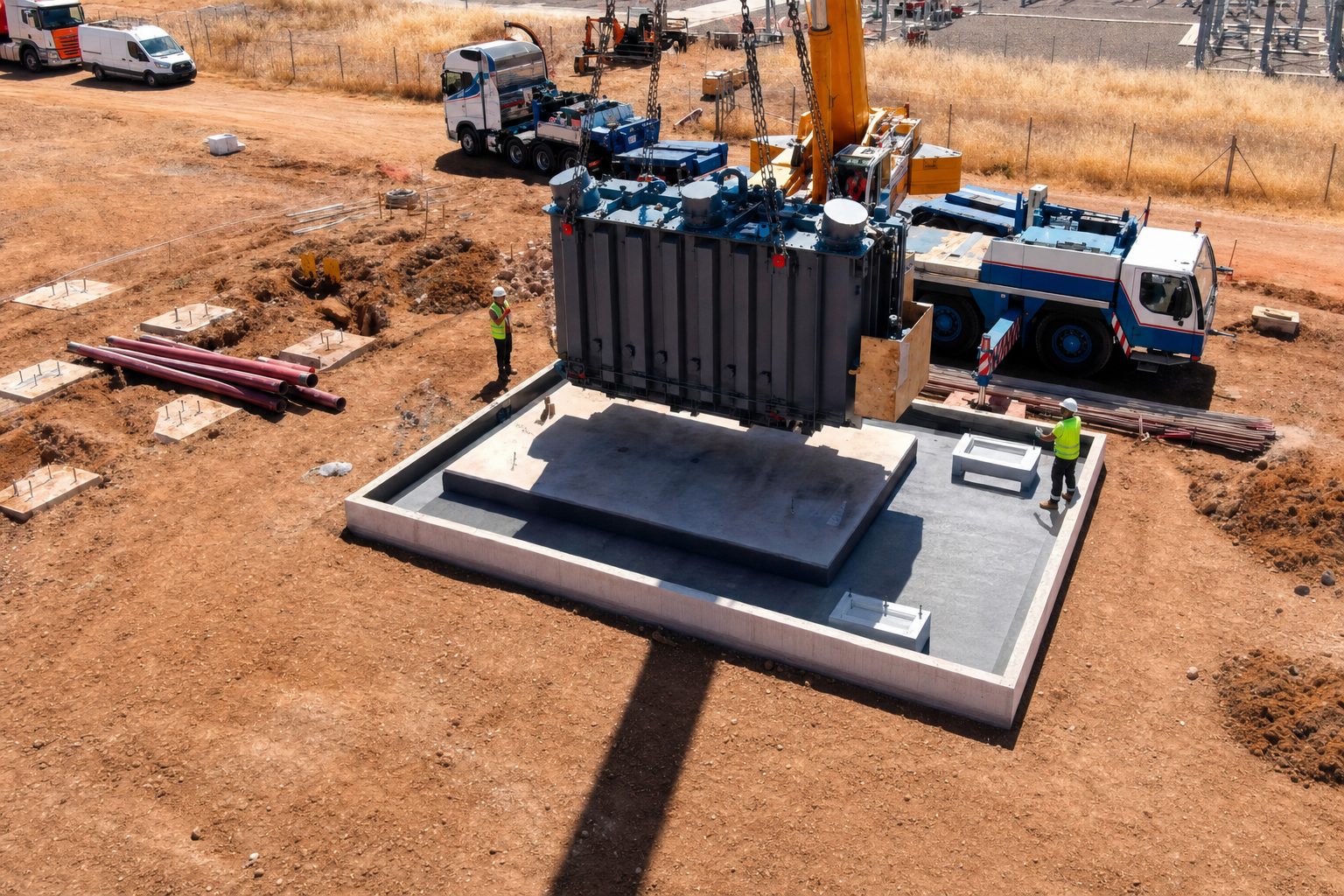
Ground crane rigged on an urban construction site, the baseline every lift plan compares against
The ground crane is the baseline. An honest lift plan prices both columns before an aircraft is assigned.

The rulebook

What FAA Part 133 Certification Means on a Lift Project

Every legitimate external load operation in the United States runs under 14 CFR Part 133, the FAA's Rotorcraft External-Load Operations rule. The certificate defines four load classes, and the class determines the equipment, the rigging, and the plan:

Load class Definition Typical mission
Class ALoad cannot be jettisoned and does not extend below the landing gearFixed external racks
Class BJettisonable load lifted free of land or waterHVAC units, steel, concrete buckets, freight
Class CJettisonable load that remains in contact with the groundWire stringing, sock line pulls
Class DHuman external cargo under dedicated provisionsSpecialized crew placement

Lifts over congested areas add an FAA Congested Area Plan: charted routes, secured fall zones, and an emergency jettison plan filed with the FSDO. Experienced operators absorb that regulatory work into the lift plan rather than treating it as the client's problem.

The reading paths

Helicopter Lifting Services: Three Mission Categories, One Knowledge Library

This site is organized the way the work is organized. Each hub below is a reading path into one branch of the discipline, written for the people who estimate, engineer, and manage these projects.

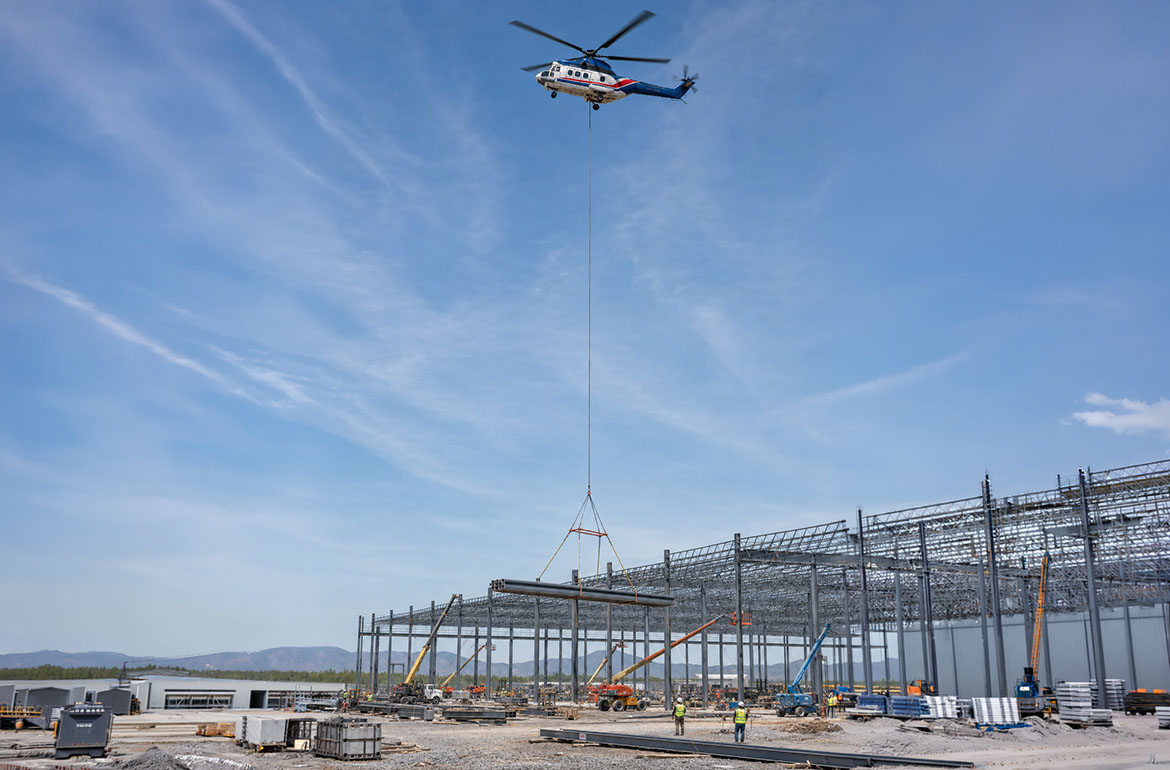
Heavy twin helicopter lifting a steel girder over an active commercial construction site

Reading path 01

Aerial Construction

How crews set RTUs and chillers, structural steel, modular buildings, and concrete on active commercial sites. Start with the highest-volume mission in the industry: HVAC and rooftop unit placement at 12 to 15 units per hour.

Four field studies
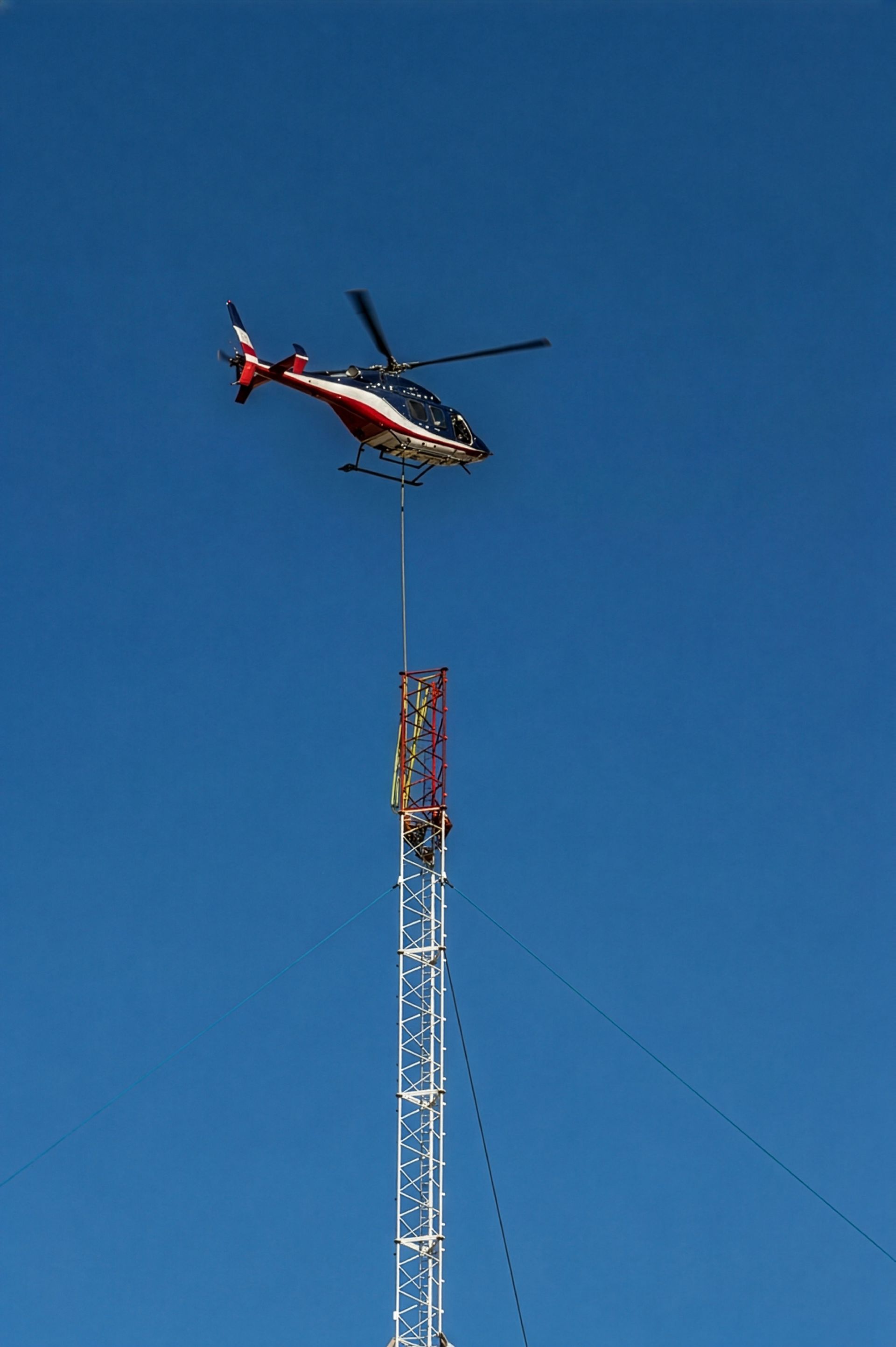
Helicopter longlining a lattice tower section with riggers waiting on the structure below

Reading path 02

Utility and Infrastructure

Tower erection, transmission line stringing under Class C, pipeline support, and mining freight where terrain defeats crane mobilization, all governed by OSHA 1926.551 helicopter operations rules.

Four field studies
Large helicopter carrying a cylindrical industrial duct section on a longline

Reading path 03

Specialized Heavy Lift

Disaster response, certification drop testing, remote site freight, and the full external load discipline, up to the 28,000 pound ceiling of the U.S. civil fleet.

Four field studies

The vetting standard

How to Evaluate Heavy Lift Helicopter Companies

Most of the confusion in this market comes from one distinction: operators hold the Part 133 certificate and fly the aircraft; coordinators arrange the right operator for the mission, and the informed ones name that operator up front. An evaluator reading past the marketing checks four things: the operator certificate and its approved load classes, the airframe matched to the load and the site's density altitude, the insurance stack (aviation hull and liability, on-hook cargo coverage, waiver of subrogation, additional insured status), and a written lift plan with named crew roles. A company that leads with those documents is an operator; a company that leads with a quote form usually is not.

This library exists to make that evaluation easier. The enthusiasts behind AHLH come from a lineage of Air Force combat aviation: the founder's father flew combat in Vietnam, and the planning and briefing standards of that world shape how every analysis here is built. The full story is on the About page.

The technical library

Cost anatomy, load charts, and lift planning, analyzed in depth.

The blog carries the long-form analyses: helicopter versus crane cost models, weight capacity comparisons, and regulatory explainers.

Browse the Technical Library

The manifest

New Analyses, Straight to the Inbox

AHLH publishes new lift analyses, cost breakdowns, and regulatory explainers on a continuing basis. Join the mailing list to get each new piece the day it publishes.

Frequently asked questions

What Estimators Ask First

A heavy lift helicopter is a rotorcraft engineered for external load work under FAA Part 133, carrying cargo on a belly hook or longline rather than inside the cabin. Capacity in the U.S. civil fleet tops out at 28,000 pounds on the Columbia BV-234 Chinook (the Russian Mil Mi-26 lifts more but does not fly U.S. commercial work), with working classes down through the S-64 Air Crane (20,000 to 25,000 pounds) and K-MAX (6,000 pounds). Real-world capacity always depends on density altitude on lift day.

A helicopter wins when crane hidden costs stack up: multi-day mobilization and assembly for large cranes, street closures and police details on urban jobs, or weeks of access road construction on remote sites. At 10 to 15 lifts per hour with zero ground footprint, rotorcraft compress multi-day crane operations into hours. A ground crane wins on long-duration steady lifting, single ultra-heavy picks beyond 28,000 pounds, and sites with clear, free street access.

14 CFR Part 133 is the FAA rule governing rotorcraft external load operations. It requires an operator certificate, an approved Rotorcraft-Load Combination Flight Manual, and defined load classes (A through D) for every lift type. For lifts over congested areas, it adds a Congested Area Plan reviewed by the local FSDO. When a contractor engages a Part 133 operator, the aircraft, crew, rigging authority, and airspace plan are all FAA-validated before the first pick.

Mobilization is measured in flight hours, not truck convoys. Once load parameters are validated and any Congested Area Plan is filed (schedules typically build in several working days for FSDO review on congested area work), the aircraft ferries to the site under its own power and begins lifting the same day it arrives. Remote and emergency missions without congested airspace can deploy in hours, which is why utilities hold standby contracts with operators for storm response.

The Part 133 operator carries aviation hull and liability coverage plus on-hook cargo coverage while the load is flying, backed by waiver of subrogation and additional insured status for the client. The client provides certified load weights and engineered pick points; the pilot in command holds final legal authority over rigging integrity and can refuse any lift. That role clarity, documented before lift day, is what keeps one point of indemnity on the operation.

Proximity matters less than capability: heavy lift aircraft ferry to the job site under their own power, and remote or rural locations are routine missions for working operators, not obstacles. What determines a project's outcome is the operator's Part 133 certificate and approved load classes, an airframe matched to the load and the site's density altitude, a documented insurance stack, and an engineered lift plan. Evaluating those four items tells more than any distance on a map.