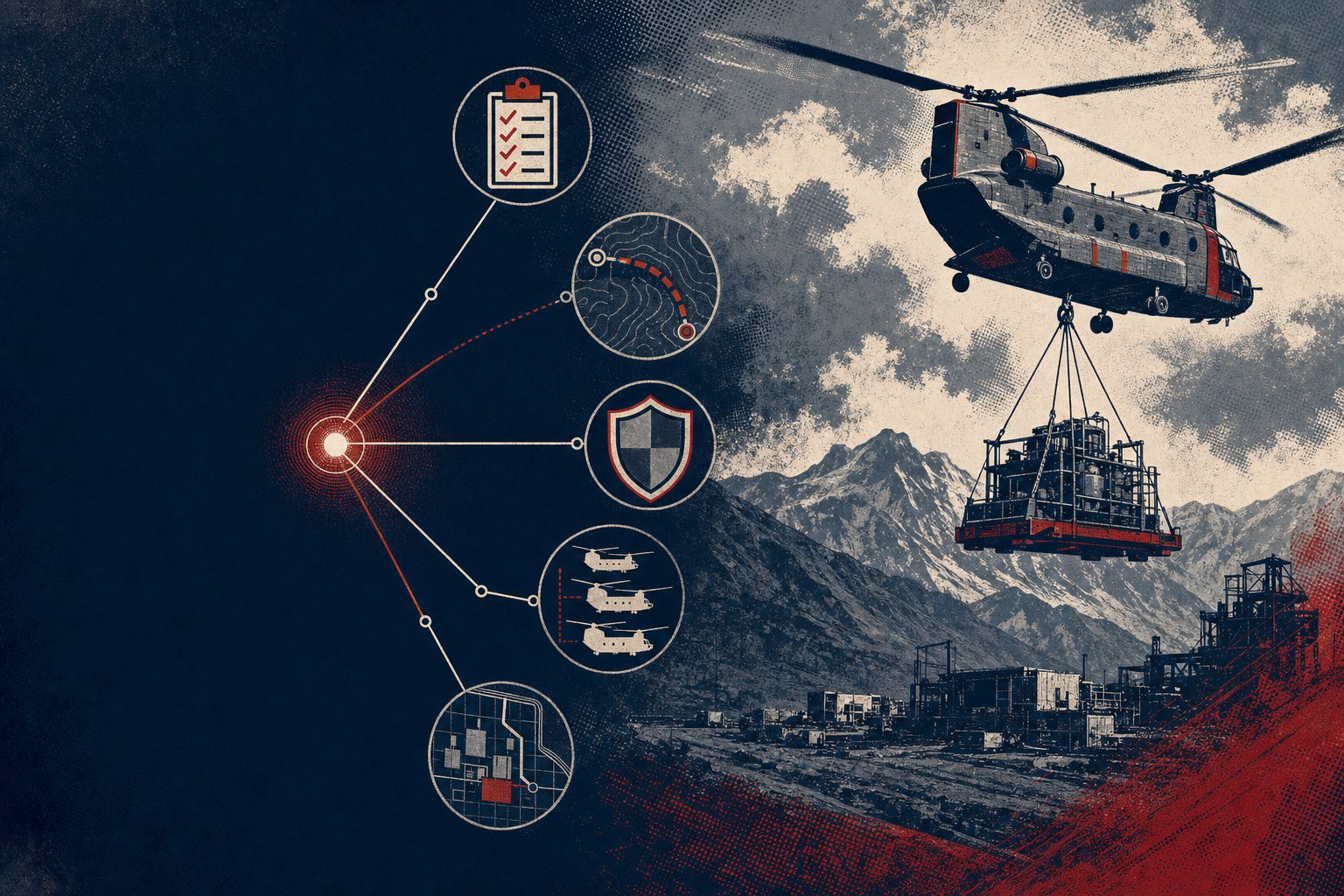
A heavy lift rewards constant, specialized experience, yet the general contractor or facility that needs one plans it perhaps once a year, or once. That mismatch is the argument for expert lift coordination. A coordination specialist does not hold the certificate and does not fly; the certificated Part 133 operator does both. What the specialist does is translate the project into a proper lift specification, identify and rigorously vet qualified operators, run a real competitive comparison instead of a single phone quote, match the aircraft to the load and to site density altitude, orchestrate the regulatory and insurance choreography, and give the client one accountable point of contact. On a routine, low-consequence pick a capable firm can reasonably coordinate in house. On a complex, congested, or high-value lift, the specialist pays for itself by lowering schedule risk, rework, and the odds of engaging an operator who was never qualified for the mission.
Aerial lifting punishes inexperience quietly. The work looks like a single dramatic moment, the load rising off the ground and settling onto a rooftop, but that moment is the visible tip of a planning discipline that a project either invested in or did not. The party that lifts steel or sets a chiller by helicopter every week develops an instinct for the questions that decide a job: what the load actually weighs once rigging is added, how thin the air will be at the site elevation on a hot afternoon, which operators are genuinely certificated for the class of work, and where the schedule will break if weather moves. The party that plans a heavy lift once a year cannot develop that instinct, because instinct is a function of repetition. This analysis makes the case for closing that gap with a coordination specialist, and it does so without pretending the specialist flies the aircraft or holds the authority that only a certificated operator holds.
The framing matters because coordination and operator excellence are often described as if they compete. They do not. The operator holds the 14 CFR Part 133 Rotorcraft External-Load Operator Certificate, employs the pilot in command, carries the aviation insurance, and owns the go or no-go decision on the hook. A coordination specialist sits on the client's side of the table and makes sure the right operator is engaged, verified the way a Part 133 prequalification requires, and the mission is planned correctly before any of that authority is ever exercised. This article argues that a professional runs that verification, on the client's behalf, at a level a firm lifting once a year cannot match.
14 CFR 133 External load certificate
The infrequent-lift problem
Most construction and facility work rewards standardization. A general contractor pours foundations, frames structures, and sets equipment on a cadence, and the crews get better through repetition. A heavy helicopter lift breaks that pattern. It is an infrequent, high-consequence event dropped into an organization whose core competence lies elsewhere. The project manager assigned to arrange it is competent, often highly so, but competent at buildings, not at external load aviation. The knowledge the lift demands is specialized, current, and perishable, and it lives with people who do this constantly.
Consider what an experienced coordinator carries that an infrequent lifter must assemble from scratch each time. They know which operators hold current certificates for the relevant load class, and which have let an authorization lapse or never held it. They know how aviation insurance is structured and which coverage lines a certificate must show. They know that a density altitude problem at a mountain site can quietly erase a third of an aircraft's rated capability, and that the fix is aircraft selection, not optimism. They know the tempo of the regulatory package, the lead times, and the seasonal and geographic realities of operator availability. An infrequent lifter can learn each of these facts, but learning them under schedule pressure, from a standing start, is how avoidable mistakes enter a project.
The consequence of the mismatch is not usually a dramatic failure. It is a quieter tax: a method chosen before the load was properly weighed, a single quote accepted because comparison seemed like delay, an operator engaged on price without the insurance stack examined, a lift window set without density altitude checked. Each is survivable in isolation. Together they describe a project that improvised a specialized event, and improvisation over an occupied site is the exact posture the discipline exists to prevent.
What expert lift coordination actually delivers
The value of coordination is concrete, not atmospheric. It resolves into a set of deliverables, each of which an infrequent lifter tends to underinvest in precisely because they do not know it is load bearing. The specialist's job is to execute all of them to a professional standard and hand the client a coherent result rather than a stack of unexamined assumptions.
| Deliverable | What the specialist does | What it prevents |
|---|---|---|
| Lift specification | Translates the project into certified load weights, dimensions, center of gravity, site constraints, and the intended lift window | A method priced against a guess rather than the real load and site |
| Operator qualification | Verifies the Part 133 certificate, authorized load class, aviation insurance stack, and multi-year safety record for each candidate | Engaging an operator who is uncertificated for the mission or underinsured |
| Competitive comparison | Runs a structured comparison of qualified operators on method, aircraft, and itemized cost, not a single phone quote | Overpaying, or paying less for an operator who was never qualified |
| Aircraft matching | Matches the airframe to the load weight, the mission profile, and the site density altitude | An aircraft that cannot perform the pick in the actual air at the actual site |
| Regulatory choreography | Sequences the airspace, permits, and site approvals against the operator's package and the project calendar | A lift held on the ground because a permit or approval was not staged in time |
| Single point of accountability | Owns the interface between client, operator, and site so the client tracks one relationship | Gaps where each party assumed another had handled a critical item |
Read the table as a whole and a pattern emerges. Every deliverable is something a certificated operator can also do well for its own scope, and the best operators do. The specialist's contribution is running the process from the client's side, across multiple candidate operators, before any one of them is engaged, and with no stake in which qualified operator wins. That independence is the point. It is the difference between a client who chose an operator after a real comparison and a client who accepted the first number that arrived.
From project to lift specification
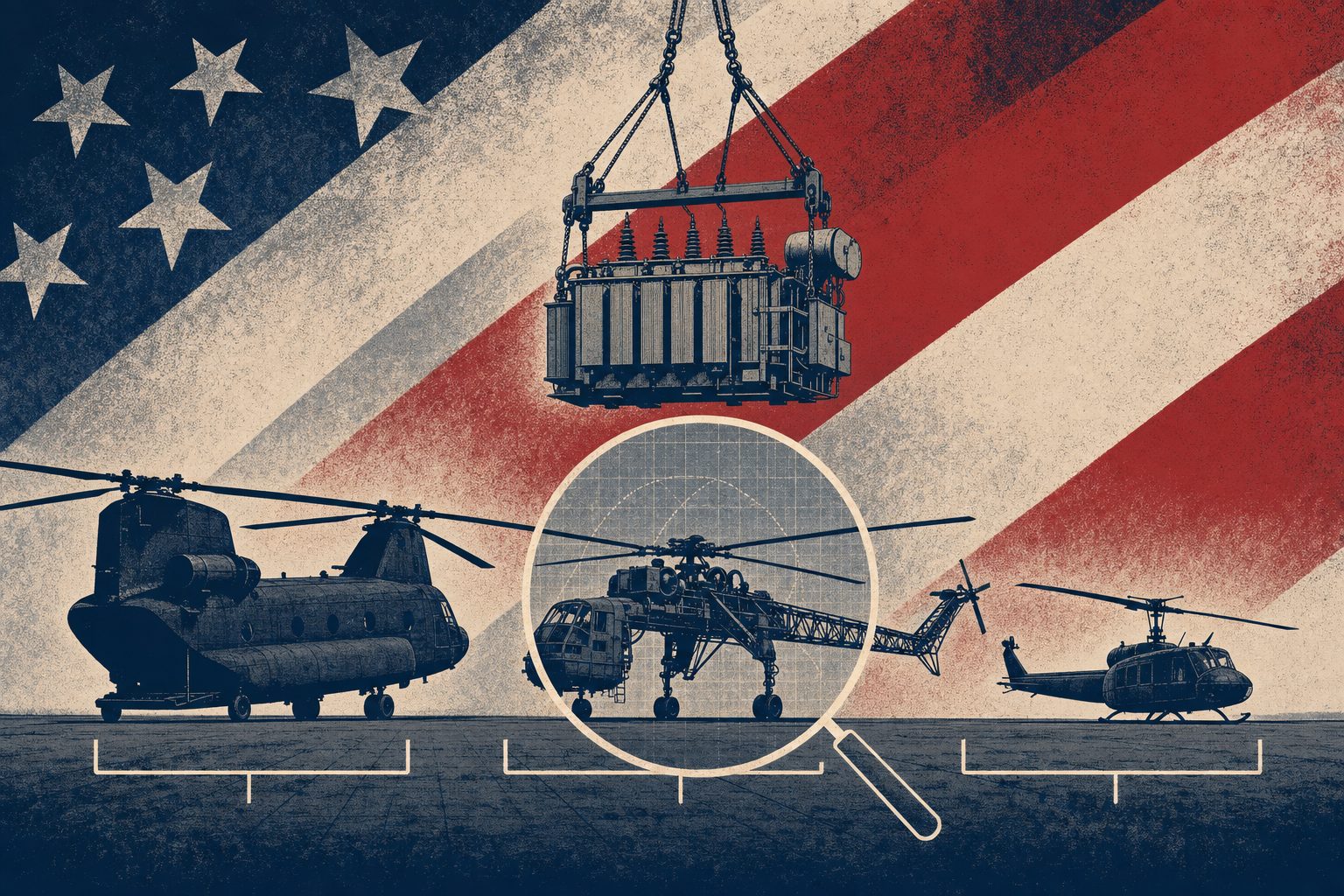
The first thing a specialist produces is a lift specification, and it is more consequential than it sounds. An infrequent lifter tends to describe the job the way it appears on the drawings: a unit of a certain nominal weight to be placed on a certain roof. An external load operation needs more. It needs the certified weight of the load with all rigging attached, the dimensions and center of gravity, the exact placement point and its obstructions, the approach and departure corridors, and the conditions forecast for the intended window. Assembling that specification is the act that converts a vague intention into something an operator can plan against.
This is also where the solution-agnostic discipline earns its keep. A specification honestly built sometimes reveals that a helicopter is not the right tool, that the load exceeds the sensible civil ceiling, that a ground crane reaches the placement more cheaply, or that a staged conventional approach carries less risk. A specialist with no stake in flying the mission can deliver that finding cleanly. The total lifted cost breakdown for estimators sets out the framework for that comparison, and a coordinator who runs it before committing to an aerial method is protecting the client's budget rather than defending a preferred outcome. The specification is where that judgment is made, on paper, before money is committed to a method.
The specification then becomes the shared reference every candidate operator prices against. This is a subtle but real benefit. When five operators quote against the same rigorously built specification, their bids are comparable. When an infrequent lifter describes the job differently to each, the quotes are not comparable, and the apparent cheapest is often the one that understood the job least. A common specification is the precondition for a comparison that means anything, which leads directly to the next deliverable.
A real competitive comparison, not a single phone quote
The default procurement posture of an infrequent lifter is to call one operator, describe the job, and accept the number. It feels efficient. It is the single most expensive habit in the whole activity, and not only in price. A single phone quote gives the client no way to know whether the number is fair, whether the method is sound, whether the aircraft is right, or whether the counterparty is even certificated for the work. It substitutes one party's convenience for the buyer's diligence.
A specialist runs the comparison the way a serious buyer runs any high-consequence procurement. Several qualified operators are identified and vetted before they are invited, so that every candidate has already cleared certificate, load class, insurance, and safety-record checks. Each prices against the shared specification. The comparison then weighs method and aircraft and itemized cost together, because the lowest headline number attached to the wrong aircraft or a thin insurance stack is not the best value. The disciplines that make an operator worth engaging, the willingness to run a site survey, to itemize flight hours and standby and ground crew, to name the flying entity plainly, are exactly the disciplines the vetting analysis teaches a buyer to demand. A coordinator demands them across the whole field at once.
The comparison also exposes an operator that is not what it claims, which a single quote never can. When one candidate cannot produce a certificate that authorizes the intended load class, or cannot show on-hook cargo coverage, or prices without asking for certified weights, the contrast with candidates that can is immediate and legible. Diligence run against one counterparty is a leap of faith. Diligence run across a qualified field is a decision. That is the structural reason a comparison protects a client that a phone quote leaves exposed.
Matching aircraft to load and to the air at the site
Aircraft selection is where specialized knowledge is least substitutable. An external load helicopter has a rated capability, but rating is measured under standard conditions, and job sites are not standard. Density altitude, the combined effect of elevation, temperature, and humidity on how thin the air is, erodes lifting capability, and it does so most at exactly the sites that look hardest already: high, hot, and still. A load that a given airframe lifts comfortably at a cool coastal elevation can exceed the same airframe's real capability on a hot afternoon in the mountains. The number on the spec sheet did not change. The air did.
A specialist selects the aircraft against the air the mission will actually fly in, not against the brochure figure. That means computing the effective capability at the site elevation and forecast conditions, adding a sensible margin, and choosing an airframe whose real performance covers the load with room to spare. It also means matching the aircraft to the mission profile: precision placement onto a structure, longline work at height, and congested-area lifts each reward different aircraft and different operator experience. An infrequent lifter, reading a rated capacity as if it were a guarantee, can select an aircraft that looks adequate on paper and is marginal in the field. That error is discovered on lift day, which is the worst possible place to discover it.
Orchestrating the regulatory and insurance choreography
A heavy lift sits at the intersection of several regulatory and contractual clocks, and the specialist's job is to keep them synchronized. The operator carries the Part 133 authorizations and the aviation insurance, and the planning framework of FAA Advisory Circular 133-1B, but those must be sequenced against airspace coordination, local permits, site and property-owner approvals, and the client's own schedule. Each has a lead time. Any one of them, left late, becomes the item that holds a fully mobilized crew on the ground burning standby.
The choreography runs on two tracks that must meet. On the operational track, a competent operator plans the lift itself through a structured sequence, from site survey and load engineering to a written lift plan and crew briefing, detailed in the analysis of how a professional helicopter lift is planned. On the coordination track, the specialist stages everything around that plan so it can execute on schedule: confirming that the insurance certificate names the right parties as additional insureds with a waiver of subrogation, that the airspace and permits are cleared for the window, and that site access and ground conditions are ready when the aircraft arrives. Neither track substitutes for the other. The operator plans the flight; the specialist ensures the world around the flight is ready for it. The full regulatory foundation both tracks rest on is set out in the external load operations reference.
The risk math
The case for coordination is ultimately a risk argument, and it is worth stating in the terms a project manager uses. Every heavy lift carries schedule risk, rework risk, and counterparty risk, and coordination lowers all three by moving decisions earlier, when they are cheap, and off the critical path, where they are dangerous.
Schedule risk falls because the specification, the comparison, and the regulatory staging are completed before mobilization, so the lift window is set against a plan rather than a hope. Rework risk falls because the aircraft is matched to the real load and the real air, so the pick is not attempted at the edge of capability where an aborted lift and a second attempt become likely. Counterparty risk, the chance of engaging an operator who was never qualified for the mission, falls the most, because vetting is run across a qualified field rather than assumed from a single reassuring call. None of this eliminates risk. Weather still moves, and the pilot in command still owns the abort authority the certificate assigns. What coordination removes is the avoidable risk, the kind that traces back to a decision made too late or made without the specialized knowledge the decision required.
The economic point follows directly. The cost of coordination is visible and bounded. The cost of the failures it prevents is large and lumpy: a held crew, a second mobilization, an unqualified operator on an occupied site, a load flown by an aircraft that could not really carry it in that air. A project does not have to suffer many of those to conclude that professional coordination was the cheaper path. That calculation, though, depends on the job, which is where an honest boundary belongs.
When a firm can reasonably coordinate in house
Coordination is not always worth buying, and a credible case for it has to say so. Some lifts are simple enough, and some firms experienced enough, that in-house coordination is a reasonable choice. The honest question is not whether to always engage a specialist but where the line sits, and the line is a function of consequence and of the firm's own repetition. The following framework sorts a given lift toward one side or the other.
- Frequency and standing relationships. A firm that lifts regularly and already holds vetted relationships with certificated operators carries much of the coordinator's knowledge in house. A firm facing its first or once-a-year lift does not, and the gap is widest exactly when the stakes feel highest.
- Load and aircraft margin. A light, well-documented load with generous margin against the aircraft's real capability leaves little room for aircraft-selection error. A load near the sensible ceiling, or a site where density altitude erodes capability, makes specialized selection decisive.
- Site density and exposure. A remote pick with a clear fall zone and no occupied structures below tolerates a simpler process. A congested, urban, or occupied-site lift raises the value at risk beneath the flight path and rewards rigorous coordination proportionally.
- Regulatory and airspace complexity. A lift in uncomplicated airspace with light permitting is easier to stage alone. Controlled airspace, congested-area rules, and layered permits multiply the lead times a specialist exists to manage.
- Internal aviation competence. A firm with a staff member who genuinely understands Part 133, aviation insurance, and external load planning can run a straightforward job well. A firm reading these terms for the first time under schedule pressure is the firm the specialist most clearly serves.
Read the framework honestly and most simple lifts land on the in-house side for an experienced firm, while most complex, congested, or high-value lifts land on the specialist side for almost anyone. The point is not to inflate the need for coordination but to locate it accurately. A specialist who tells a well-qualified firm that a simple pick is within its own competence is demonstrating the same solution-agnostic judgment that makes the specialist worth trusting on the hard jobs.
How coordination and operator excellence reinforce each other
The final point is the one most often gotten wrong. Coordination and operator excellence are complementary, not competitive, and the best outcomes come from both operating at full strength. The certificated operator remains the irreplaceable party. It holds the certificate, employs the pilot in command, carries the insurance, plans and flies the lift, and owns the authority to accept or refuse the load. Nothing about coordination diminishes that. A specialist who implied otherwise would be misrepresenting where the legal and operational authority actually lives.
What coordination adds is a client-side counterpart to that operator-side excellence. A rigorous operator produces a lift plan, an itemized quote, a valid certificate, and a described safety system. A rigorous coordinator ensures the right operator was engaged to produce them, that the comparison behind the choice was real, that the specification every operator worked from was sound, and that the world around the flight was staged to let the plan execute. The two disciplines check and strengthen each other. An operator's plan is only as good as the specification it was built on, and a coordinator's comparison is only as good as the operators in the field it compares. When both are done well, the client engages a genuinely qualified operator, on a genuinely planned mission, at a defensible cost, with one accountable point of contact throughout.
That is the whole case. A heavy lift is a specialized event that rewards constant experience, dropped into organizations whose experience lies elsewhere. Expert lift coordination closes that gap by running the specification, the vetting, the comparison, the aircraft matching, and the regulatory staging to a professional standard, on the client's side of the table, before the certificate holder ever exercises the authority only it holds. On a simple pick an experienced firm can do that work itself. On a complex one, the specialist pays for itself in schedule risk, rework, and the avoided cost of engaging an operator who was never qualified for the mission. The operator flies. The specialist makes sure the right operator flies the right plan.