Specialized heavy lift: the operations annex
Disaster Relief Helicopter Services
Disaster relief helicopter services carry external loads into areas where roads, bridges and power have been cut. The heaviest published capacity on this page is 28,000 pounds, Vertical's figure for Columbia's Model 234 UT/LR. Operators fly this work under FAA Part 133, inside the federal Emergency Support Function structure, and Corps-administered work adds the USACE EM 385-1-1 safety manual. This page is written for utility, government and infrastructure emergency managers who plan response capability before an event, and for readers who want to see where heavy lift aviation fits in a disaster logistics chain.
The logistics gap
When Infrastructure Is Severed, Disaster Relief Helicopter Services Become the Logistics Chain
A ground logistics plan depends on the road network surviving the event. After a major hurricane, flood, earthquake or wildfire, washed-out bridges, debris fields and flooded corridors can cut off substations, water plants, hospitals and whole communities for days while crews reopen routes.
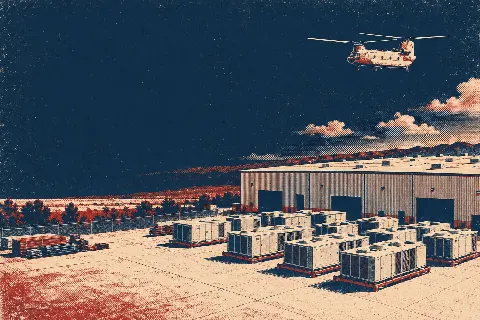
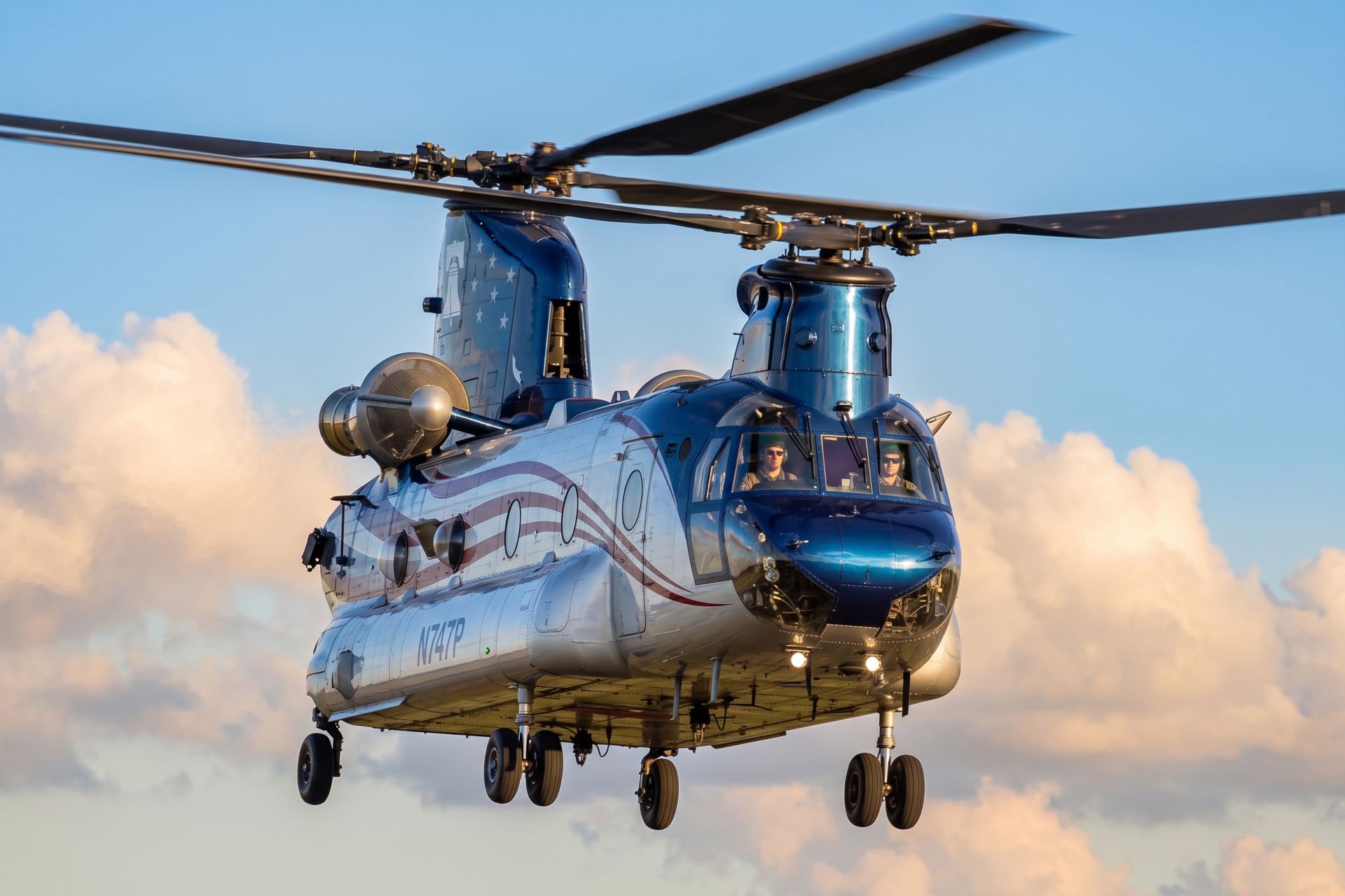
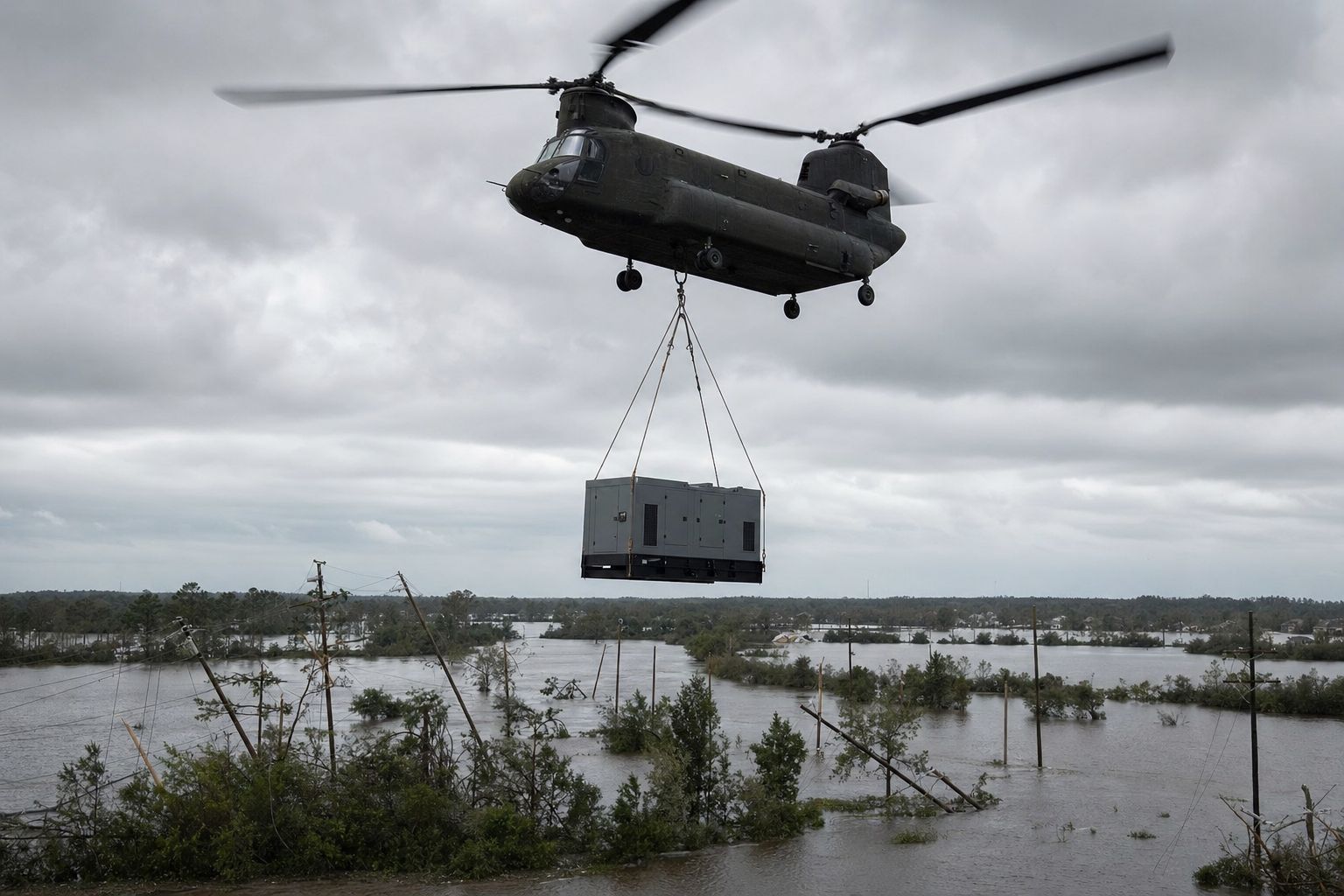
A helicopter does not need that route. A Part 133 external load operation can deliver to a clearing, parking lot or ridgeline once it has been checked and prepared as a set point, and it can carry loads heavy enough for infrastructure restoration as well as relief supplies. Vertical publishes 28,000 pounds on the hook for Columbia's Model 234 UT/LR, a civil Chinook variant. That is the scale of a transmission structure section, a skid-mounted generator or a temporary bridge component, set close to the crew that needs it.
Where ground access survives or is restored quickly, trucks and ground cranes usually cost less, and the response plan should use them. The helicopter covers the period between the event and the reopened road. In a major disaster, the length of that period drives the restoration schedule.
This page belongs to the Specialized Heavy Lift series and is organized like an operations annex. Anyone drafting an emergency response plan, an emergency operations plan annex or a standby services scope of work will find each section below matched to a question those documents have to answer.
The load list
What Loads Matter Most in the First 72 Hours of Grid Restoration?
A grid and infrastructure restoration effort tends to call for the same short list of heavy loads in its first 72 hours. Plan aircraft capacity against that list rather than a generic "relief supplies" category, because the heaviest item on it decides which aircraft the annex has to secure.
| Load category | Typical mission | Aircraft class required |
|---|---|---|
| Skid- and trailer-mounted generator sets | Emergency power for substations, water plants, hospitals, shelters | Heavy lift (CH-47D, BV-234, S-64 class) for large gensets; medium lift for portable units |
| Utility poles and transmission structure sections | Rebuilding severed distribution and transmission corridors | Medium to heavy lift; see transmission line stringing |
| Transformers and substation components | Substation restoration where access roads are gone | Heavy lift, precision placement |
| Palletized water, food, and medical supplies | Sustainment for isolated communities and crews | Medium lift on repeated short shuttle legs |
| Fuel in approved external containers | Generator and equipment sustainment at isolated sites | Medium lift, repetitive shuttle profile |
| Temporary bridge sections and matting | Restoring ground access for the follow-on truck convoys | Heavy lift, engineered rigging |
| Debris removal (external load extraction) | Clearing critical routes and structures | Medium to heavy lift with grapple or sling rigging |
Two points in this table shape the plan. Generator and transformer missions decide the aircraft class: a load that cannot be split has to fly whole, and among the aircraft with published figures, only the heaviest carry 20,000 pounds or more. Sustainment missions (water, fuel, supplies) depend more on the number of trips than on the size of each load, so a medium aircraft flying repeated short legs can suit them better. The arithmetic is the same as for remote site freight.
The airframes
Emergency Helicopter Lift Aircraft and Payload Capacity
Aircraft selection for disaster response weighs hook capacity against availability and the operating environment. The table below lists aircraft relevant to emergency heavy lift, with a source for each published capacity.
| Aircraft | Max external load | Picks per hour | Response-relevant notes |
|---|---|---|---|
| BV-234 Chinook (civilian) | 28,000 lb (Vertical: Columbia's Model 234 UT/LR) | Not published here | Heaviest published capacity on this page; generator sets, structure sections, bridge components |
| CH-47D Chinook (restricted) | Not published here | Not published here | Heavy loads; capacity and certification come from the records for the individual aircraft |
| CH-53D | Not published here | Not published here | Heavy Class B slung loads where available; capacity comes from the operator's figures |
| S-61N (Carson blades) | 10,000 lb (Helimax: external capacity at standard day, sea level) | Not published here | Pole sets and sustainment shuttles |
| S-70M Black Hawk | Not published here | Not published here | Utility restoration and sustainment; hover performance at the site comes from the operator's data |
Capacity figures are published maximums from the linked sources, not lift-day allowances. Picks per hour are not published here because the rate comes from the operator's plan for the actual loads, rigging and staging distance. Lift-day payload depends on the specific aircraft and the conditions, including density altitude, fuel state and line length; the FAA Helicopter Flying Handbook, chapter 7 explains the effect, and the external load operations reference covers the planning. Post-storm work in Gulf Coast summer heat is a practical case: hot, humid air raises density altitude and reduces available payload, so the mission plan should use the expected conditions from the first load calculation.
Certification also belongs in the plan. §133.45(d) prohibits external-load operations with rotorcraft type certificated in the restricted category over densely populated areas, in congested airways or near busy airports with passenger transport operations. A disaster zone can include all three. Check the individual aircraft's certification against the delivery points and the route from staging, rather than assuming it from the model name.
The launch package
How Fast Can Helicopters Mobilize for Storm Response?
Most of what decides response speed is arranged before the event. A heavy lift launch package includes the flight crew, the ground crew and rigging inventory, a fuel plan and the maintenance support that keeps the aircraft working from a forward operating point. When that package is planned in advance, less of it has to be assembled after the call. How long mobilization takes still depends on where the aircraft is based and what the agreement provides.
The mobilization sequence runs in four phases:
Phase 1: Alert and Validation
The activation call starts a review of the loads. The operator needs to know what must fly, what each load weighs from documented weights rather than estimates, and what the receiving site looks like. Planning staff check aircraft selection and rigging requirements against the load list while the crew and launch package are recalled.
Phase 2: Launch and Ferry
The aircraft ferries to the staging area, and ground support travels by road in parallel where routes permit. Ferry time follows from distance and cruise speed, so it is the most predictable part of the response timeline. Pre-positioning and standby agreements, covered below, exist to shorten it.
Phase 3: Forward Operations
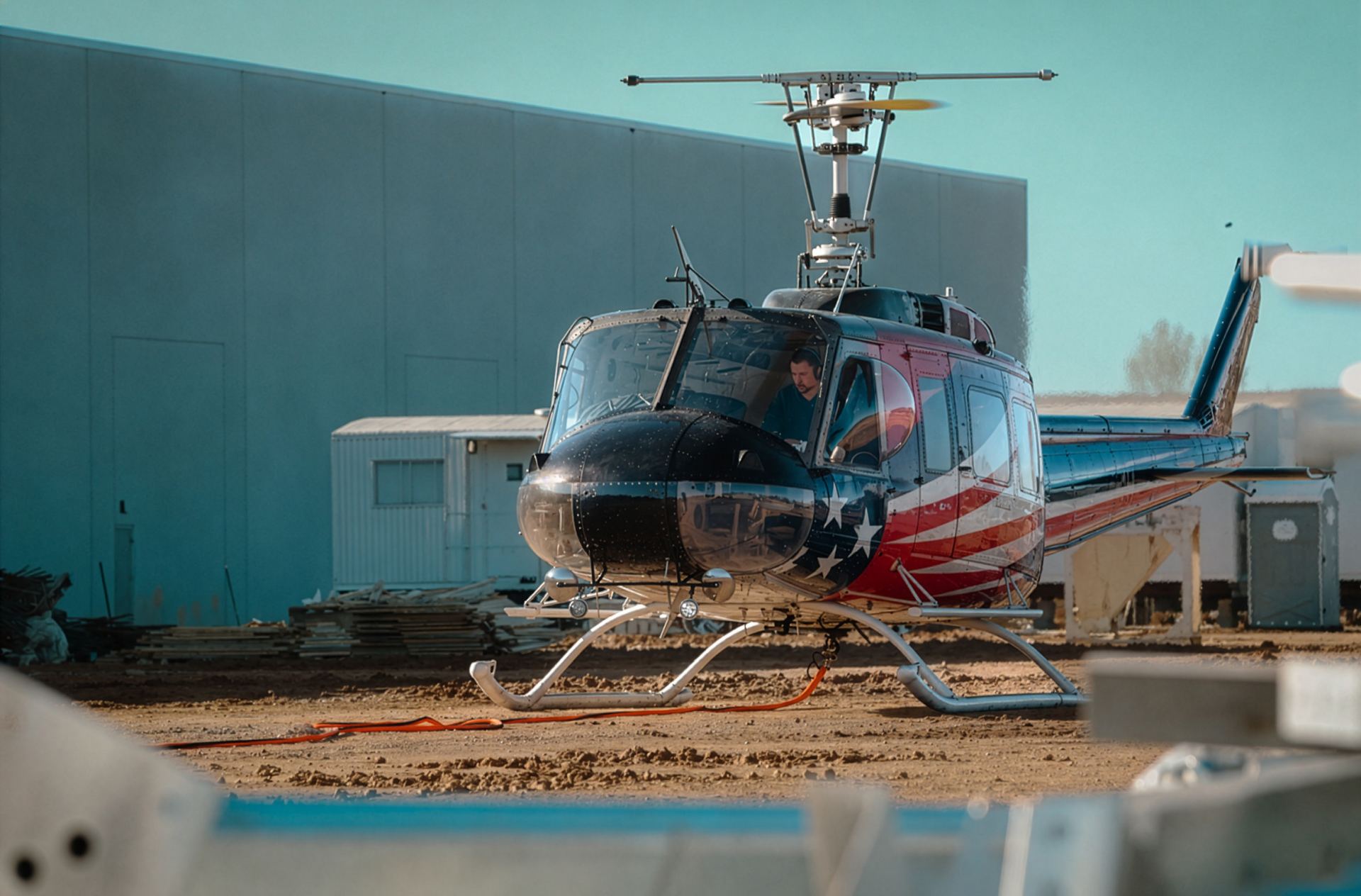
Lift operations run from a staging area outside the damage zone. Loads are rigged, cycle times are established and the aircraft flies a continuous rotation. Delivered tonnage depends on the payload per trip, the length of the shuttle and the work at both ends, so staging location deserves as much planning attention as the aircraft.
Phase 4: Sustainment or Standby Reset
Operations continue until ground access is restored. The aircraft is then released or returned to standby for the next tasking.
Response-time commitments vary by operator and contract structure. Treat any published mobilization figure as conditional on where the aircraft is based, what it is doing when the call comes and what the agreement committed in advance.
The airspace
Can Helicopters Fly Relief Missions Inside Restricted Airspace?
Yes, with coordination. After a major disaster the FAA may issue a Temporary Flight Restriction over the affected area under 14 CFR 91.137 to keep uncoordinated aircraft out of the response airspace. Aircraft participating in disaster relief operations may operate inside that TFR when flying under the direction of the official in charge of on-scene emergency response activities.
In practice, the lift contractor joins the incident's air operations structure. That means obtaining access authorization, following any airspace coordination procedures and flying assigned routes and altitudes alongside search and rescue flights, utility patrols and media restrictions. Ask how the named flight operator has worked within that structure on earlier incidents, because the answer shows how quickly it can be integrated.
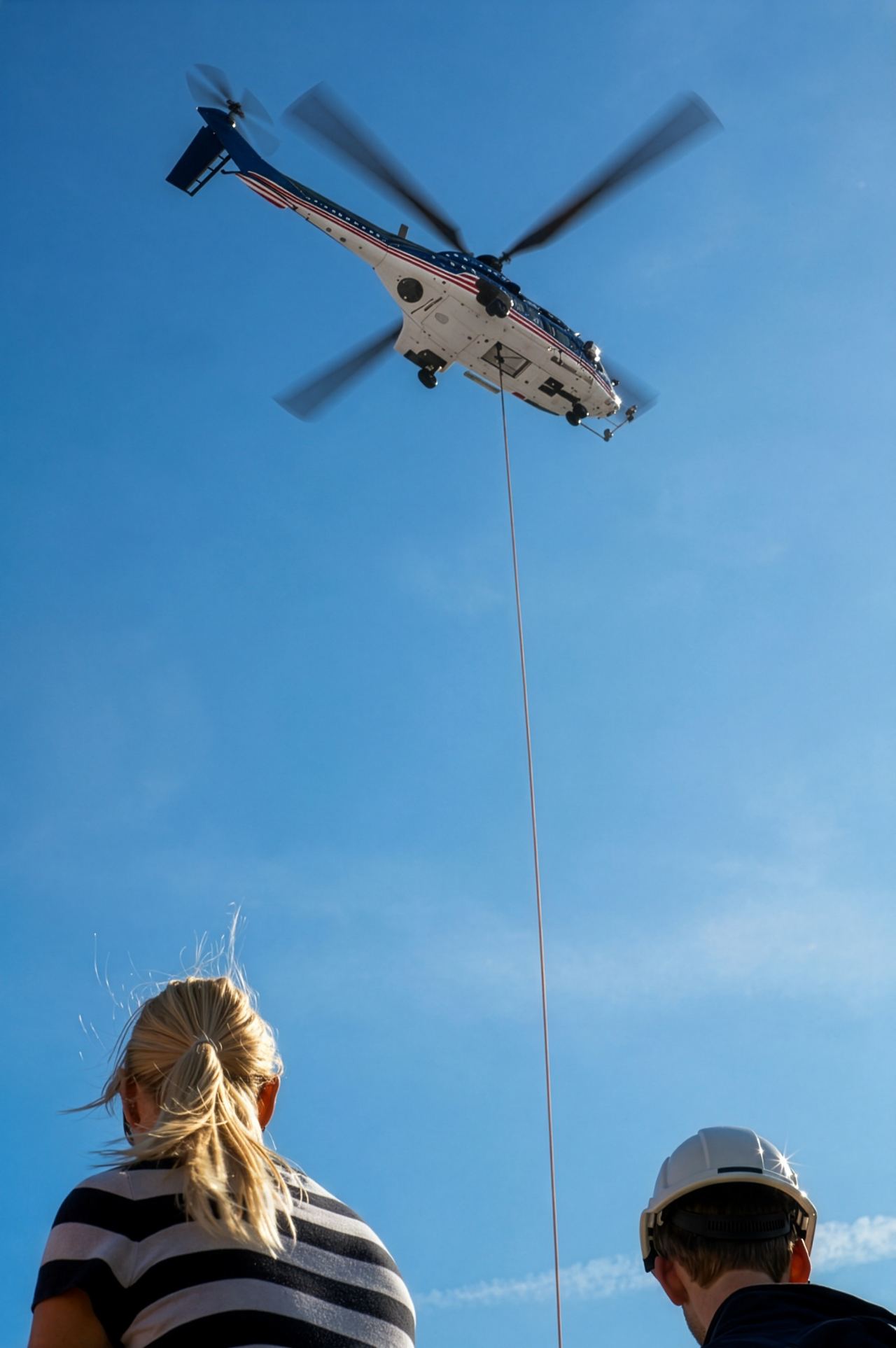
Part 133 planning carries more weight in a damaged environment. Landing zones have not been surveyed. Debris can be lifted by rotor wash at every pickup and set point. Towers and wires may be down, unlit or unreported. Ground crews may include utility and agency personnel who have never worked under a helicopter. Ground crew briefings, a site plan for each set point and the pilot in command's authority over the operation of the aircraft under 14 CFR §91.3 keep an emergency operation from creating a second emergency.
Federal coordination
How Do Operators Coordinate With FEMA and the Corps of Engineers?
Federal disaster response is organized under the National Response Framework through Emergency Support Functions, and heavy lift aviation touches several of them. ESF #1 (Transportation) and ESF #3 (Public Works and Engineering) are the main channels for infrastructure lift work, and ESF #12 (Energy) sets grid restoration priorities. The U.S. Army Corps of Engineers leads ESF #3, including temporary emergency power missions, which is where many air-placed generator requests begin.
Contractors doing lift work on Corps missions operate under USACE EM 385-1-1, the Corps safety and health requirements manual. For an aviation contractor, that means activity hazard analyses for lift operations, crew qualification records and equipment inspection documentation. An operator that keeps those records current through the year can take a federal mission assignment without assembling them under deadline. Check the contract to confirm whether the work is Corps-administered and which requirements it carries.
State and utility channels matter as well. Investor-owned utilities activate mutual assistance networks after major storms, and their contractor safety prequalification systems (ISNetworld, Avetta) still apply during a hurricane. Complete the review during blue-sky contracting: the prequalification standing, the Part 133 certificate and insurance of the named flight operator, checked against the project's actual requirements. When a coordinator arranges the aircraft, the certificate check follows the operator that will fly it. The 48 hours after landfall leave little time to onboard a new vendor.
Readiness structures
Standby and Readiness Contracting Structures
The contracting work for a hurricane response is done months before the season. Three structures are common in emergency heavy lift, and each sets a different expectation for response speed:
Call-when-needed (CWN) agreements. Rates, terms, insurance and safety documentation are negotiated in advance, and the aircraft is committed only on activation. CWN carries no standby charge until it is used, but availability is not guaranteed when a regional event activates many operators at once.
Seasonal standby. A daily standby rate holds a specific aircraft and crew in readiness for a defined window, such as hurricane season for coastal utilities or fire season in the West. Standby secures a named aircraft, and the agreement sets how quickly it has to be ready after activation.
Retainer plus activation. A smaller annual retainer secures priority activation status and completed onboarding, with full rates applying only during activation. This suits agencies and cooperatives that need assured access without funding a dedicated standby aircraft.
Whichever structure fits a program, the agreement should show the same billing lines: standby day rate, ferry time, flight hours, fuel and crew per diem. The helicopter lift cost versus crane analysis breaks down that cost structure line by line. For a utility, compare the standby cost against the consequences of a longer restoration, and confirm with the reimbursement program how pre-contracted aviation costs are treated before relying on recovery.
The honest comparison
When Ground Assets Win
Compare every method in an emergency, as on a construction project. If the road network to the work site survives, trucks usually move sustainment loads at a lower cost per ton. If a single heavy component has to be placed at a site with intact crane access and no urgent deadline, a ground crane usually wins. Helicopters justify their rate in three conditions: access is cut, each day of outage carries a real cost, or building or rebuilding access would cost more than the flight program. Confirm which condition applies before requesting an aircraft, and plan the ground method when none of them does.
The reading path
Continue the Analysis
Emergency lift capability is set up during planning, and the rest of this series covers what that planning depends on. The external load operations reference explains the Part 133 framework behind every mission above: the certificate, load classes, congested area plans and rigging design. Remote site freight covers the shuttle arithmetic behind sustainment airlift, and drop testing shows external load work at its most precise. The full set of topics is on the Specialized Heavy Lift hub. New analyses in this series are announced through the mailing list.
Frequently asked questions
What Emergency Managers Ask First
From the technical library