
Field resource
Load Weight Verification Checklist
heavylifthelicopters.us/resources/verify-load-weight-helicopter-lift
Before the pick
How to Verify Load Weight
Every number in a lift plan is downstream of one figure: the total weight that leaves the ground. This is the sequence that turns an estimate into a certified number.
Certified versus estimated
One Figure Everything Else Depends On
Every number in a lift plan is downstream of one figure: the total weight that leaves the ground. A certified weight is traceable and accountable. It has a document behind it, a date on it, and a named party who stands behind it: a calibrated scale ticket, a data plate matched to the serial in front of the crew, or a stamped engineered weight statement. An estimate is everything else. The distinction decides the lift, because aircraft selection, sling and hardware sizing, and the go or no-go margin are all computed from that one figure. This guide runs the sequence: find the number, correct it, add the rigging, locate the center of gravity, cross-check it, then sign it and hand it off.
The comparison
What Actually Leaves the Ground
Lift capacity is a comparison, and both sides of it are routinely misread. On one side sits the total flown weight: the load, plus everything attached to it, plus everything hanging below the hook. On the other sits the capability available at that site on that morning, which is not the brochure figure. A process that produces only the weight of the load has answered half the question.
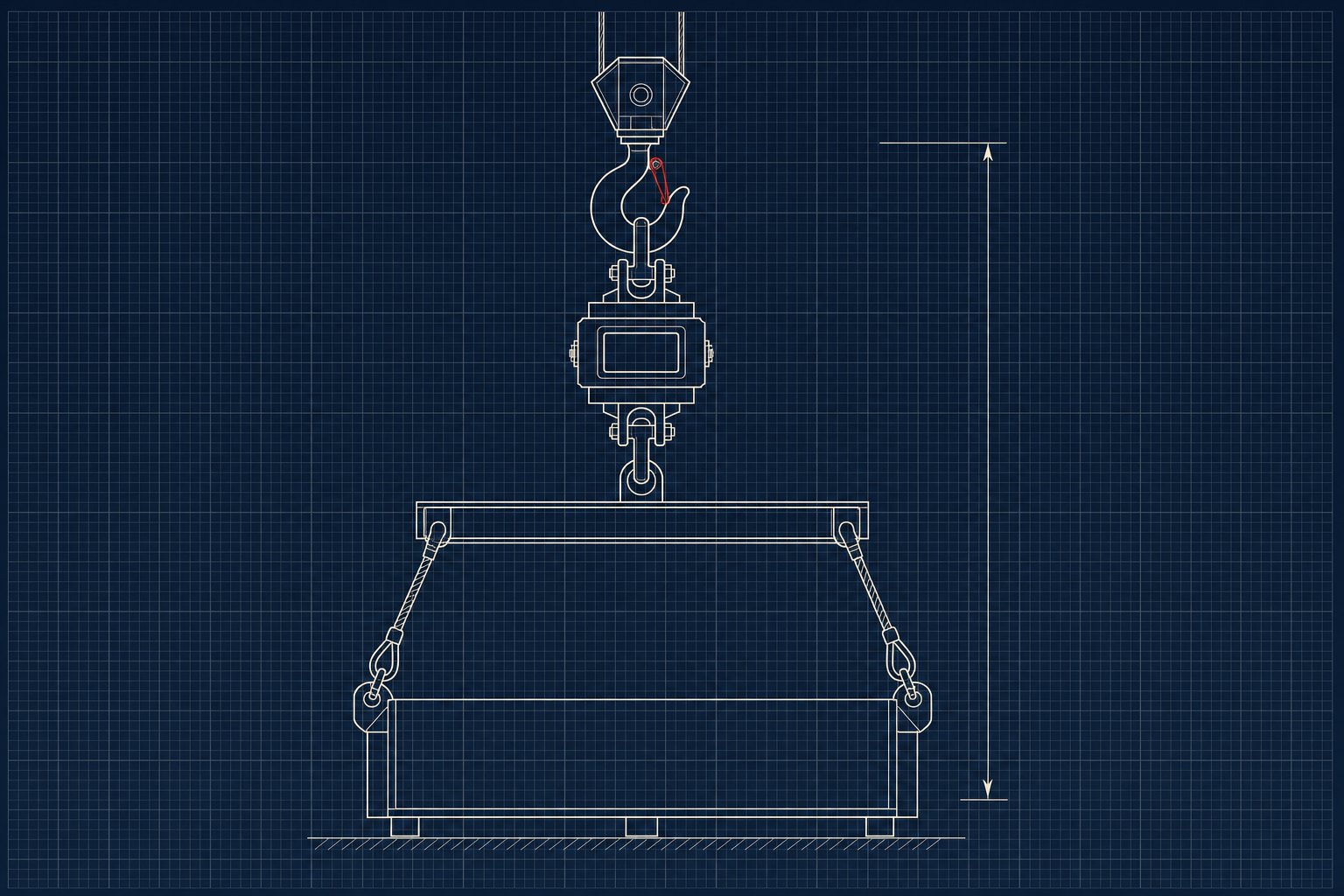
The total flown weight is built by addition, in three parts. The first is the load itself in the condition it will actually be picked: manufactured, modified, accessorized, and holding whatever fluids remain in it. The second is the rigging: every sling, shackle, master link, swivel, spreader bar or lifting beam, tag line, and the longline and remote hook where one is used. Rigging weight counts against capacity exactly as the load does, because the hook cannot tell the difference, and the hardware behind it is worked through in the rigging analysis. The third is everything left inside or bolted onto the unit that nobody thought to count: roof curbs and adapter frames, crating, standing water, snow and ice, and accessories installed long after the nameplate was stamped.
The other side of the comparison moves with the weather. Available payload falls by roughly 3 percent for every 1,000 feet of density altitude, so elevation and heat together can strip a substantial share of an airframe's rated capability, as the density altitude analysis sets out. The figure a plan is built on is the derated number at forecast density altitude, less rigging, against a total flown weight that is documented rather than described.
An estimate is therefore not a less precise version of a certified weight. A plan sized on an estimate that ran light consumes the margin engineered to absorb the dynamic loading of flight, and the shortfall is discovered on the hook, at the one moment when nothing can be recalculated.
Ranking the Sources of Weight Evidence
Not every source carries the same authority. The ranking below is the order a verification process works down, and the order a reviewer should read a lift plan in. The higher the source sits, the less argument the number needs.
| Source | What it is | How reliable | When it is acceptable |
|---|---|---|---|
| Certified scale ticket | A weighing on a calibrated scale, ticketed with date, scale identity, and what was weighed | Highest. Measures the object instead of describing it | Always. The reference every other source is checked against |
| Manufacturer data plate | The stamped plate on the unit stating model, serial number, and operating or shipping weight | High for an unmodified unit. Silent on anything added since | As the primary figure once the serial matches the paperwork |
| Engineered weight statement | A weight calculated from drawings and material takeoffs, stamped by a licensed engineer | High, and traceable to a named professional who is accountable | For fabricated assemblies and one-off units no scale can reach |
| Submittal or certified cut sheet | The project-specific document for the configuration ordered, including options | Good. Configuration-specific, but written before the unit shipped | As the early planning figure, then as a cross-check |
| Shipping documents | Bill of lading, packing list, or freight ticket showing a shipped weight | Mixed. Often gross, covering crating, pallets, and several items | As a cross-check and a disagreement flag. Never on its own |
| Catalog specification | A published weight for a model family rather than for the unit on site | Low. Options, coil configurations, and variants all move it | Feasibility screening only, replaced before rigging design |
| Verbal estimate | A weight given from memory or judgment with no document behind it | None. Nothing is traceable and nobody is accountable | Never as the basis for a lift, however experienced the source |
The bottom row is worth stating plainly, because it is the row most often ignored under schedule pressure. A verbal estimate carries no date, no signature, and no way for a reviewer to see what it was built from. It is useful for one thing only: deciding whether the real number is worth chasing today or tomorrow.
The field checklist
Load Weight Verification Checklist
Six groups, worked in order. Ticked items are remembered on this device. Printed, the list becomes a paper form with ruled lines where a number gets written down.
Find the documented weight
Correct the number for what documents miss
Add the rigging that flies with the load
Locate the center of gravity
Cross-check before the number is fixed
Document, sign, and hand it off
Where the number goes
One Figure, Three Documents
A verified weight is not an end in itself. It feeds the intake package an operator needs before the work can be assessed at all, itemized in the project intake checklist, and it feeds the load engineering phase of the lift plan, walked through in how a helicopter lift is planned. Which class of airframe the number points to is set out in the civil fleet capacity analysis, and the certificate and load-class framework governing the flight sits in the Part 133 external load reference.
The last gate is a person, not a document. The pilot in command holds final authority over the load and can refuse any pick whose weight or rigging does not meet the standard. A signed, traceable, cross-checked weight is what makes that gate a formality rather than an argument on the ramp.
New tools first
More Field Guides as They Publish
New checklists, field guides, and reference tables reach the mailing list the day they go live. Double opt-in, nothing else sent.