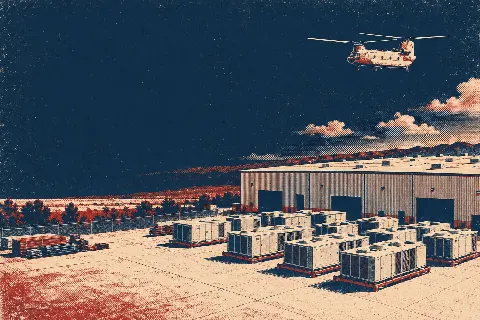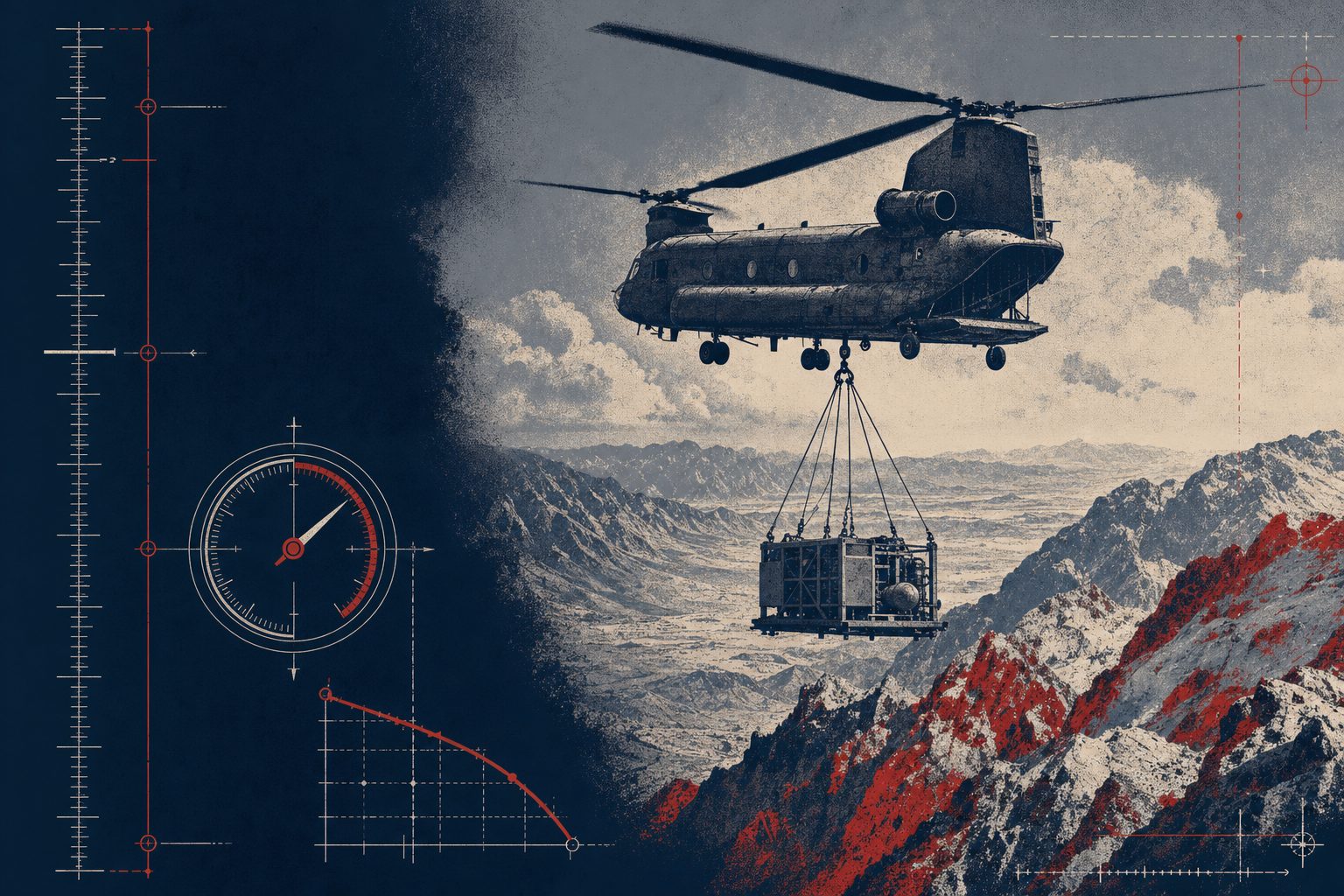
A helicopter's rated payload is a sea level standard day number, and the air on a real job site is almost never sea level standard. Density altitude, the field elevation corrected for temperature and, to a smaller degree, humidity, is the single condition that most often surprises project planners: available payload falls by roughly 3 percent for every 1,000 feet of density altitude. A machine rated at 10,000 pounds at sea level holds closer to 7,000 pounds on a 95 F afternoon at a 6,000 foot site. That is why lift days start at dawn, why mining and high desert work is called high, hot, and heavy, and why the honest capacity figure for a mountain project is calculated on the day's air, not read off the brochure.
Most capacity questions get answered with a single number, and on a high or hot site that number is quietly wrong the moment the temperature climbs. Lift capacity is not a fixed property stamped on the airframe. It is a value the atmosphere sets fresh each morning, because the same rotor system that lifts a full load through dense coastal air at first light cannot lift it through the thin, heated air of the same site at three in the afternoon. For contractors in mining, mountain construction, high desert solar, and remote western infrastructure, this is the physics that decides which aircraft can do the job and on which hours of which day.
This analysis defines density altitude in plain terms, explains why thin air taxes both rotor thrust and engine power at once, works the 3 percent rule with fully stated assumptions, and publishes an illustrative derating table across elevation and temperature. It then lays out the four planning responses a competent lift plan reaches for and shows how the same physics shapes aircraft selection and the civil lift ceiling. Every aircraft figure is a sea level standard day value consistent with the helicopter lift capacity analysis, and every derating figure is an illustrative planning number, not a flight manual value.
What density altitude actually is
Density altitude is the altitude the aircraft performs as if it were flying at, regardless of the number on the altimeter. It is built in two steps. First, field elevation is adjusted for the day's barometric pressure to give pressure altitude, the altitude the atmosphere's pressure corresponds to on a standard scale. Second, pressure altitude is corrected for temperature, because warm air expands and thins. A useful rule of thumb adds roughly 120 feet of density altitude for every degree Celsius the air sits above the standard temperature for that elevation. Humidity pushes the same direction by a smaller amount, since water vapor is lighter than the dry air it displaces, so humid air is less dense than dry air at the same temperature. The formal definitions and the performance chart methodology behind these figures live in the FAA Rotorcraft Flying Handbook.
The plain version: hot air is thin air, high elevation is thin air, and humid air is thin air, and the rotor system cannot tell the difference between them. A 6,000 foot site on a hot afternoon can present the aircraft with air as thin as a standard day at 10,000 feet. The altimeter still reads 6,000. The rotor behaves as if it were at 10,000. Density altitude is the number that reconciles the two, and it is the only altitude figure that matters to lift performance.
The standard day the brochure assumes is a specific set of conditions: sea level, 59 F (15 C), and standard pressure. Those conditions exist somewhere on some mornings. They do not exist at a copper mine bench at 7,000 feet in July, and they rarely exist at a high desert solar site by mid morning. The published payload was measured in air the job site will never see, which is why the figure has to be corrected before it becomes a planning number.
Why thin air taxes the rotor and the engine at the same time
Density altitude hurts lift twice, and the two effects compound rather than average. Understanding that they stack is the difference between a small mental haircut on the payload and the much larger real reduction.
The first tax falls on the rotor. A helicopter flies by throwing air downward, and the lift it produces is proportional to the mass of air the rotor disc accelerates. Thin air has less mass per cubic foot, so the same disc turning at the same speed and the same blade angle moves less mass and produces less thrust. To recover the lost lift the pilot pulls more collective pitch, which increases the angle of the blades, which increases drag on the rotor and demands more power to hold the same rotor speed.
That demand for more power arrives exactly when the second tax cuts the supply of it. A turbine engine also breathes the thin air, and with less oxygen mass entering the compressor each second it can burn less fuel and produce less shaft horsepower. So at high density altitude the rotor needs more power to make the same lift at the very moment the engine can make less power. The gap between power required and power available closes, and when it closes the aircraft has reached its power limited hover weight, which on a hot, high, heavy day is almost always the governing limit rather than the hook rating or the gross weight structure.
This is why the phrase high, hot, and heavy names a compounding problem, not three separate ones. High supplies thin air by elevation, hot supplies thinner air by temperature, and heavy is the load trying to fly through it. The planning consequence collapses into one number the whole industry carries.
The working rule: 3 percent per 1,000 feet
The field rule that every experienced lift planner keeps within reach is blunt and effective: available payload falls by roughly 3 percent for every 1,000 feet of density altitude. It is a planning gate, not a performance chart, and it exists to answer the first screening question quickly. Is a helicopter plausible for this weight at this site, and if so, which class of airframe should the detailed math start from? The aircraft's hover out of ground effect charts at the forecast temperature govern the final pick plan; the 3 percent rule governs whether that detailed plan is worth building.
Worked example, with every assumption stated. Take a medium twin rated at 10,000 pounds of external load at sea level on a standard day, the S-61N class figure used throughout the capacity article. Contract it for a mine or mountain site at 6,000 feet field elevation, and plan for a summer afternoon of 95 F. Standard temperature at 6,000 feet is about 37 F, so the air is roughly 32 C warmer than standard. Applying the 120 feet per degree correction adds about 3,800 feet, putting density altitude near 9,800 feet. At 3 percent per 1,000 feet, that is roughly a 29 percent reduction, leaving about 7,000 pounds of hook capability. Then the rigging comes off the top: a 150 foot longline and remote hook at roughly 400 pounds leaves about 6,600 pounds of usable payload. A 7,200 pound unit that cleared the sea level brochure figure with a comfortable margin does not fly on that afternoon, on that site, with that aircraft.
Run the same site at first light and the arithmetic changes the answer. At 6,000 feet with a 50 F morning, density altitude sits near 6,800 feet, the reduction is closer to 20 percent, and hook capability is near 7,900 pounds, roughly 7,500 pounds after rigging. The same aircraft on the same site carries about 900 more pounds at dawn than at mid afternoon. Nothing about the machine changed. Only the air did, and the air is forecastable, which is precisely why it belongs in the plan and not in the surprise column on lift day.
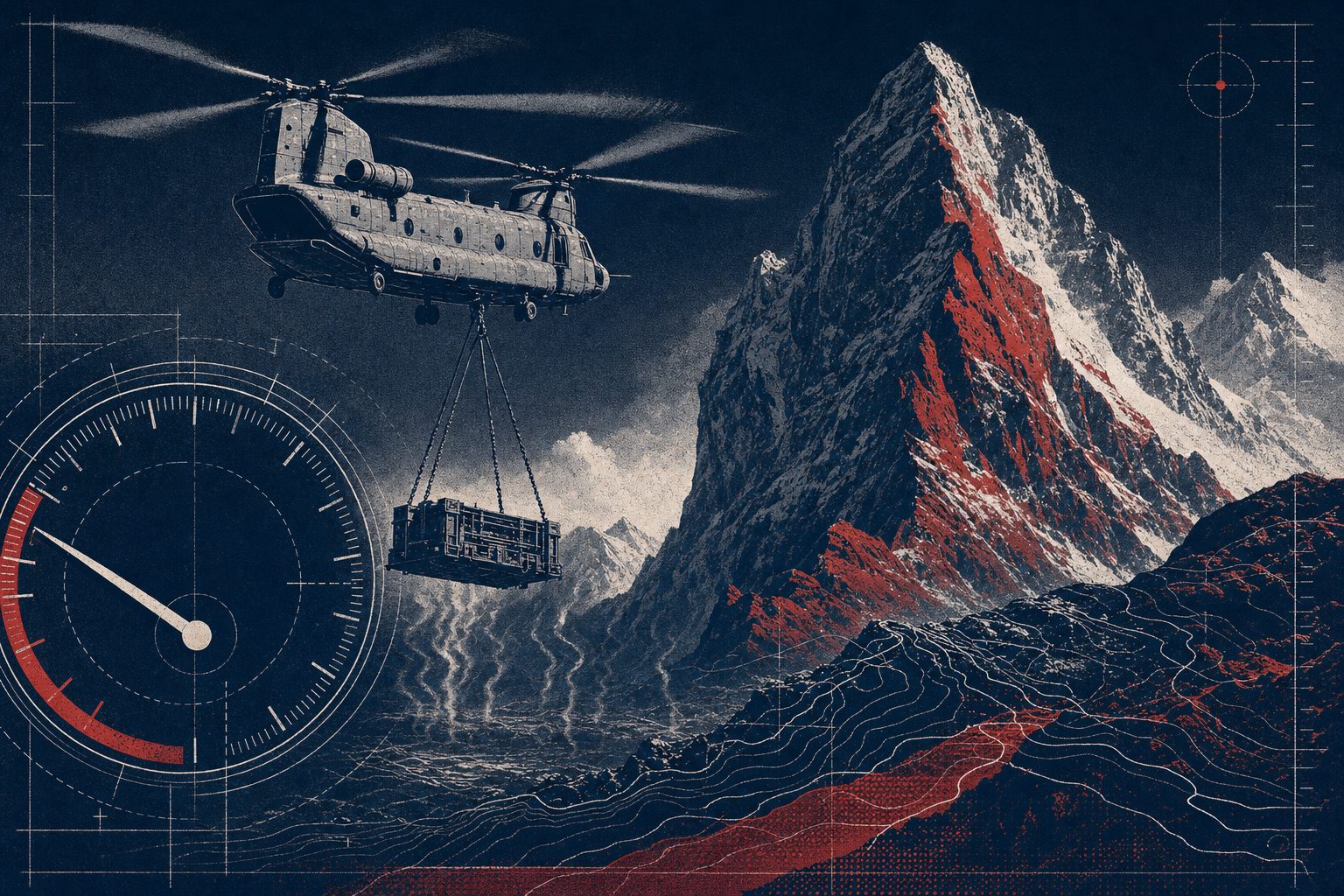
A derating table across elevation and temperature
The 3 percent rule is easiest to trust once it is seen across a grid. The table below takes a single illustrative aircraft, rated at 10,000 pounds of external load at sea level on a standard day, and derates it across four elevations and two representative daily temperatures. Every density altitude figure uses the 120 feet per degree Celsius correction against a standard lapse rate, and every payload figure applies the 3 percent per 1,000 foot rule to the same 10,000 pound baseline. These are illustrative planning numbers off a sea level standard day baseline, meant to show the shape of the effect, not to substitute for the flight manual.
| Site elevation | Cool morning temperature | Cool morning density altitude / payload | Hot afternoon temperature | Hot afternoon density altitude / payload |
|---|---|---|---|---|
| Sea level | 59 F (standard) | 0 ft / 10,000 lbs | 95 F | Roughly 2,400 ft / 9,300 lbs |
| 3,000 ft | 45 F | Roughly 2,800 ft / 9,200 lbs | 90 F | Roughly 5,800 ft / 8,300 lbs |
| 6,000 ft | 50 F | Roughly 6,800 ft / 7,900 lbs | 95 F | Roughly 9,800 ft / 7,000 lbs |
| 9,000 ft | 45 F | Roughly 10,200 ft / 6,900 lbs | 85 F | Roughly 12,800 ft / 6,100 lbs |
Illustrative, sea level standard day baseline. Three patterns are worth naming. First, temperature moves the number as forcefully as elevation: the 6,000 foot site loses nearly 1,000 pounds between a cool morning and a hot afternoon, entirely from heat. Second, the reductions are large enough to change aircraft class, not just trim a margin. A 10,000 pound machine that is a heavy lifter at the coast is a medium performer at 9,000 feet, holding little more than 6,000 pounds before rigging. Third, none of these numbers has yet subtracted the longline, remote hook, and slings, which routinely remove another 300 to 500 pounds from the top. The usable payload a load cell would show is smaller still.
The rule also has an upper boundary worth respecting. The linear 3 percent approximation tracks reality well through the density altitudes typical of North American job sites, but it understates the loss as the air grows very thin, where the hover charts steepen and the real curve bends below the straight line. On the highest sites the flight manual charts are not just the final authority, they are the only authority, and the field rule should be treated as a first screen that flags when the detailed math is going to be tight.
The four planning responses
Density altitude is a constraint, not a verdict. A competent lift plan treats a high, hot site as a design input and reaches for one of four responses, roughly in order of how often they solve the problem cleanly.
- Schedule the cool window. The cheapest fix is a clock. Density altitude on a summer site can swing thousands of feet between dawn and mid afternoon, and the payload swings with it. Heavy picks are scheduled for the first hours after sunrise for exactly this reason, when the air is densest and often calmest. On multi day programs the plan books the heaviest lifts for the coolest mornings, a scheduling discipline the pre-lift process from site survey to load sign-off treats as the final gate before the aircraft lifts a hook, and leaves lighter work for the afternoons.
- Select a larger airframe with margin. When the schedule cannot bend far enough, the load moves up an aircraft class. Sizing the airframe so its derated capability at the forecast density altitude still clears the heaviest pick with margin is the core of hot and high aircraft selection. The heavy tier exists in part to do medium tier work in thin air: a Chinook rated at 26,000 pounds at sea level still holds roughly 19,600 pounds at an 8,200 foot density altitude, and that residual capability is what a mountain contract is actually paying for.
- Reduce the load or split the pick. If neither the clock nor the airframe closes the gap, the load itself is engineered down. A module can be shipped in two sections instead of one, a tank can fly empty and be filled in place, and fuel cycles can be shortened so the aircraft launches lighter and lands to refuel between picks. Splitting one heavy pick into two lighter ones trades cycle count for feasibility, and on a thin air site that trade is often the one that keeps the aerial method viable at all.
- Conclude the helicopter is the wrong tool. The last response is the honest one. When no available airframe clears the required weight at the site's density altitude, and the load cannot be split, the aerial option is finished and the work belongs to ground equipment or a staged ground approach. Naming that outcome at the survey stage, rather than discovering it on the hook, is the mark of an engineering process rather than a sales process.
These responses are not mutually exclusive. A realistic high desert plan often combines the first three: a larger airframe than the sea level math would suggest, flying split loads, in a cool morning window, with the fourth response held in reserve as the stated no go condition.
How density altitude shapes aircraft selection and the civil ceiling
The interaction between density altitude and aircraft selection is where planning either protects a budget or blows it. The temptation is to size the aircraft off the sea level table, because that table is the one published. On a high site that produces an airframe that looks adequate on paper and cannot lift the load on the day. The discipline is to run the derating on the heaviest pick at forecast temperature first, then choose the smallest airframe whose derated number still clears the load with margin. Buying more aircraft than the pick list requires wastes money on the coast and can still be exactly right in the mountains, because the mountain is renting the margin, not the peak number.
Density altitude also reshapes the civil ceiling. In the United States, external load work on the hook tops out near 28,000 pounds at sea level, held by the Chinook family at the top of the civil fleet capacity table, with the Erickson Air Crane fleet directly behind it. That ceiling is itself a standard day figure. On a hot, high site the effective ceiling for the same fleet is lower, because the biggest civil machines derate on the same 3 percent curve as everything else. A load that sits comfortably under the 28,000 pound line at sea level can cross above the effective ceiling once the site is thin enough, which pushes it out of the civil rotorcraft envelope entirely and into ground equipment territory. The airworthiness categories and the four Part 133 load classes underneath every one of these numbers are what decide which envelope applies.
14 CFR 133 External load certificate
Two secondary factors ride alongside the payload math and deserve a place in the plan. Hover out of ground effect performance degrades faster with density altitude than hover in ground effect, so a pick that must be set precisely with no ground cushion beneath it, a tower top or a ridge structure, loses margin faster than a pick made close to a flat pad. And a steady headwind over the pick point genuinely helps hover performance, but no competent plan banks on it, because temperature and elevation are forecastable while gusts are not. Wind is a bonus when it appears and never a line in the load calculation.
Where this bites hardest: mining, mountain, and high desert work
The projects most exposed to density altitude are the ones whose sites sit high by definition. Open pit and hard rock mines work benches thousands of feet up, and the same operations that need heavy components flown to a pit rim or a remote drill pad are running that lift in the thinnest, hottest air of the day if the schedule is not managed. The physics that governs those flights, and the way payload, cool morning windows, and airframe selection interact on elevated sites, is applied to that setting in the mining operation support analysis.
High desert solar and wind construction sits in the same regime, combining real elevation with extreme afternoon heat, so the density altitude on a July afternoon can strip a quarter or more of the rated payload from an airframe that would carry the load easily at a coastal site. Mountain infrastructure, from ski area lifts to high ridge communications sites to backcountry bridge sets, adds the hover out of ground effect penalty on top of the elevation, because those loads are frequently set on points with no ground cushion. In every one of these settings the lesson is the same: the number that plans the lift is the derated number at the forecast density altitude, and the crew that treats the brochure figure as the planning figure has not planned the lift.
The one fact to carry
Available payload is dynamic, set by the air on the day rather than the number in the brochure, and it falls by roughly 3 percent for every 1,000 feet of density altitude that heat, elevation, and humidity combine to produce. That single fact reorders a high, hot project: it moves the heavy picks to dawn, it sizes the airframe off the derated number, it decides whether a load flies in one piece or two, and on the thinnest sites it concludes honestly that no helicopter is the answer. The planners who internalize it stop asking what a helicopter can lift and start asking what this helicopter can lift at this site on this morning, which is the only version of the question a real lift plan can answer.