Sikorsky S-55, S-58 and H-34: The Family Behind the S-58T
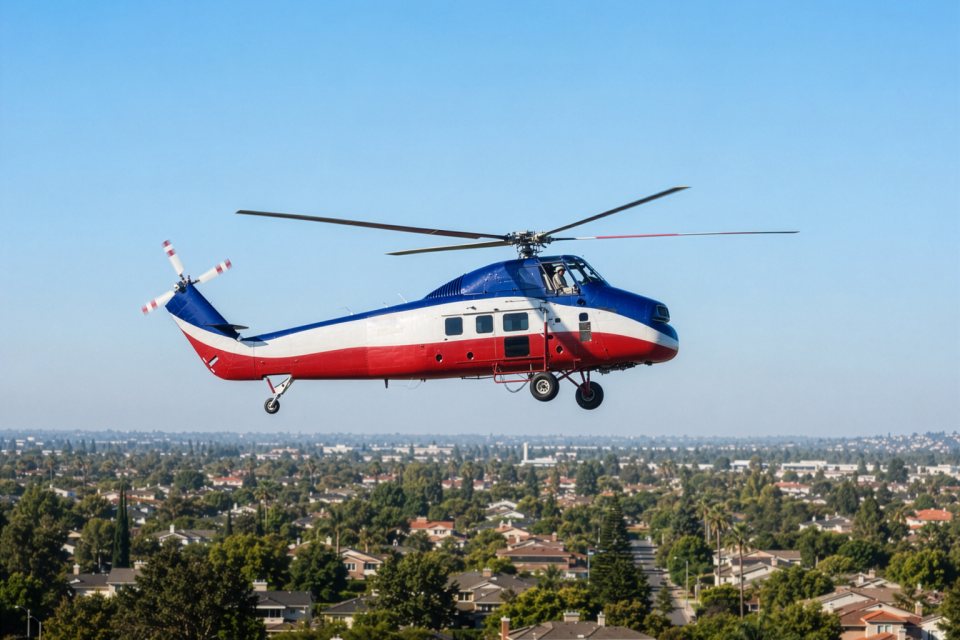
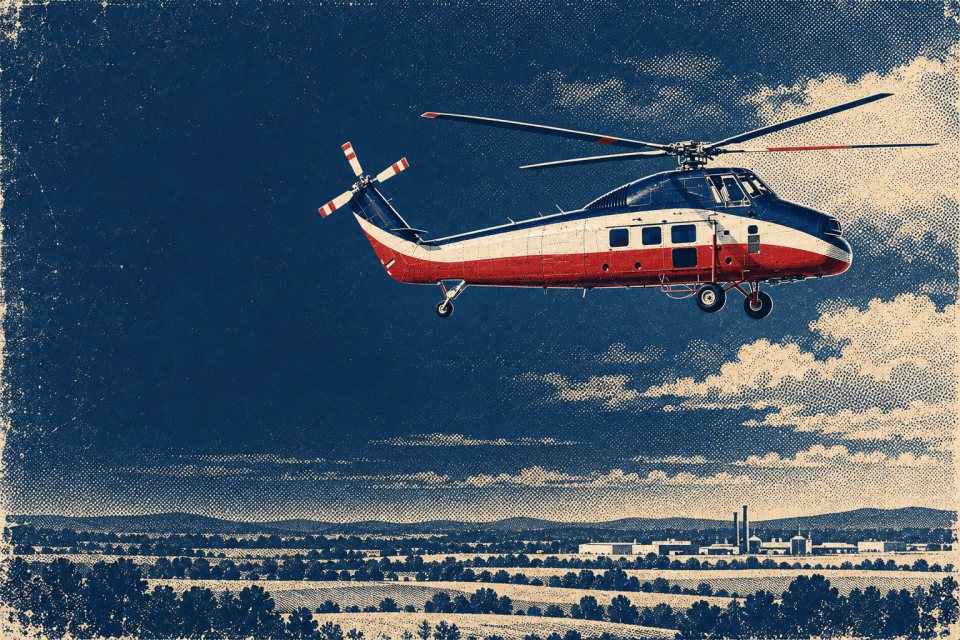
The S-55 led to the larger S-58 and military H-34 family. The turbine S-58T still appears in lift fleets, with payload limits tied to the aircraft and job.
The editorial desk
Founder and Editor, AHLH. Heavy-lift planning and jobsite coordination.
Erran F. Yearty is the founder and editor of American Heavy Lift Helicopters. He is a co-founder of Fair Lifts Helicopter Services and served as its Chief Marketing Officer. He has helped plan heavy lift operations and worked on site, under the downwash, alongside ground rigging crews and rooftop setting crews. His experience comes from coordinating the work and being there as loads move from the ground to their set points.
At AHLH, he writes and edits for readers who need to understand how a lift is planned and what can change the estimate. He pays particular attention to the qualifications behind aircraft capacity figures and regulatory requirements, including exceptions that can change how a rule applies to a job.
He is also a software engineer and web developer, and the CEO of Sputnik Digital Effects. He has managed and developed the software and portfolio projects presented on its website. The software includes VanityFilter, Sputnik Markdown Viewer, AI Stripper and Sputnik Signal. His portfolio work includes the website and AI systems built for Clean Getaway, as well as VanityFilter and Fair Lifts.
The byline
The S-55 led to the larger S-58 and military H-34 family. The turbine S-58T still appears in lift fleets, with payload limits tied to the aircraft and job.
The Sikorsky S-61N hook is published at 10,000 lb against a 12,336 lb empty weight. Variants, hull penalty, fire tanks and what to check on a proposal.
Restricted-category helicopters like the surplus CH-47D and UH-60A may not fly Part 133 loads over populated areas under 133.45(d), even with an approved plan.
The civil Huey line runs 204B, 205A-1, 212 and 214B on one airframe. A 205A-1 is certificated to 10,500 lbs external, leaving about 4,000 lbs on the hook.
OSHA 1926.551(h) puts load size, weight and connection on the helicopter operator. The pilot in command has final authority. The rest is contract.
Two Chinooks fly US civil work: Columbia's standard-category Model 234 at 25,000 lbs and restricted CH-47D conversions at 28,000 lbs. Specs, hooks and rules.
A slung load swings, spins, and bounces, and each has its own driver and its own fix. Line length, drogues and fins, and collective grip are the controls.
The Kaman K-1200 K-MAX lifts 6,000 pounds on 85 gallons an hour and seats one. Full specifications, the payload-by-altitude curve, and why only 60 were built.
Part 133 never mentions night. A lift after dark runs on the same certificate, and what changes comes from Part 91 minimums, pilot recency, and OSHA lighting.
OSHA 1926.551 names just two items for the crew receiving a helicopter load: complete eye protection and hard hats with chinstraps. The rest comes elsewhere.
No single permit authorizes a helicopter lift. Approvals stack across the FAA, the state, and the city, and New York City wants its filing 20 days out.
A contractor's general liability policy excludes aircraft, so a helicopter lift rides on the operator's aviation insurance: hull, liability, and on-hook cover.