Specialized heavy lift field study
Remote Site Helicopter Freight: Aerial Trucking for Roadless Country
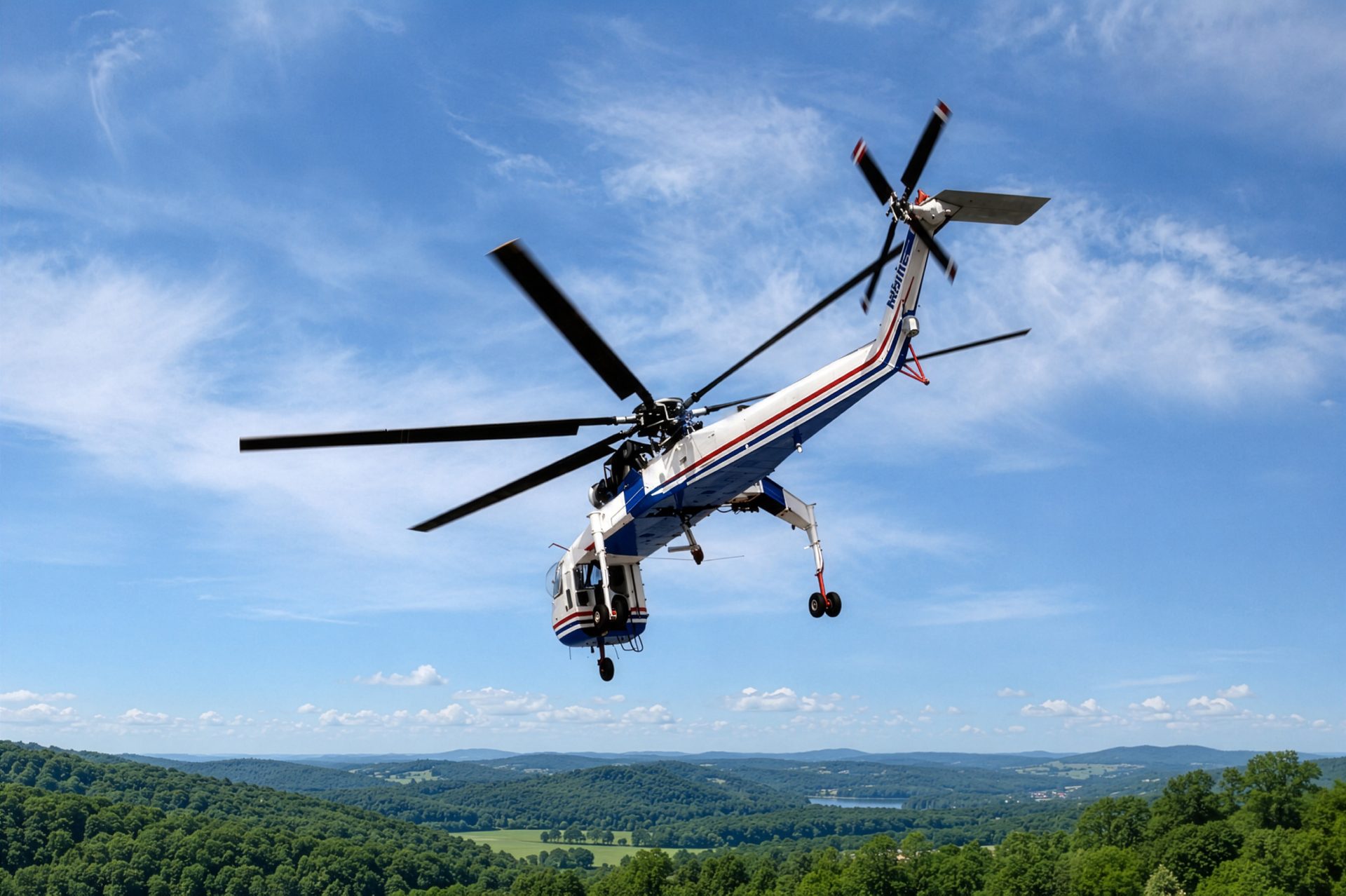
Remote site helicopter freight moves construction materials, fuel and equipment to sites trucks cannot reach, flown as Class B external loads under 14 CFR Part 133. Published maximums for the aircraft on this page reach 28,000 pounds, Vertical's figure for Columbia's Model 234 UT/LR. When the access road would cost more than the freight, the flight hours belong in the comparison, together with the staging, fuel and ferry costs the helicopter brings with it.
The access line item
Every remote project carries an access cost. A drill pad, a telecom summit site, a backcountry bridge crossing or an exploration camp exists only if material can reach it, and in roadless country that access line can exceed the cost of the work itself. Freight to a roadless site can be planned like any other supply chain, with a defined tonnage, a cycle rate for the route and a cost per delivered pound. This page explains how each of those numbers is built, so a project manager can see what a freight proposal assumes and check it against the alternatives.
The comparison
Remote Site Helicopter Freight vs. Building an Access Road
The usual answer to a roadless site is to build a road to it. That answer carries costs that often stay out of the first estimate:
- Survey, geotechnical, and civil engineering for the alignment
- Clearing, grubbing, cut and fill, culverts, and stream crossings
- Environmental permitting, wetland mitigation and agency review, each on its own timeline
- Post-project reclamation and remediation obligations, including bonding
- A construction schedule exposed to weather, thaw cycles and equipment mobilization
A temporary access road serves the project once and then has to be removed or reclaimed. Helicopter freight replaces that construction with flight hours and brings its own site costs: a staging area and pickup zone reachable by truck, fuel positioned where the aircraft can use it, a prepared delivery point, ground protection and ferry time from the aircraft's base. Put both sets of costs in the same comparison before deciding which is lower.
The aircraft does not always win, and a later section covers the cases where it loses. For a defined tonnage delivered to a defined point, run the total-cost comparison before committing to a road alignment. The method follows the helicopter vs. crane total cost analysis; the hidden costs behind crane mobilization have counterparts in road construction.
The manifest
Helicopter Cargo Services for Roadless Country: What Flies
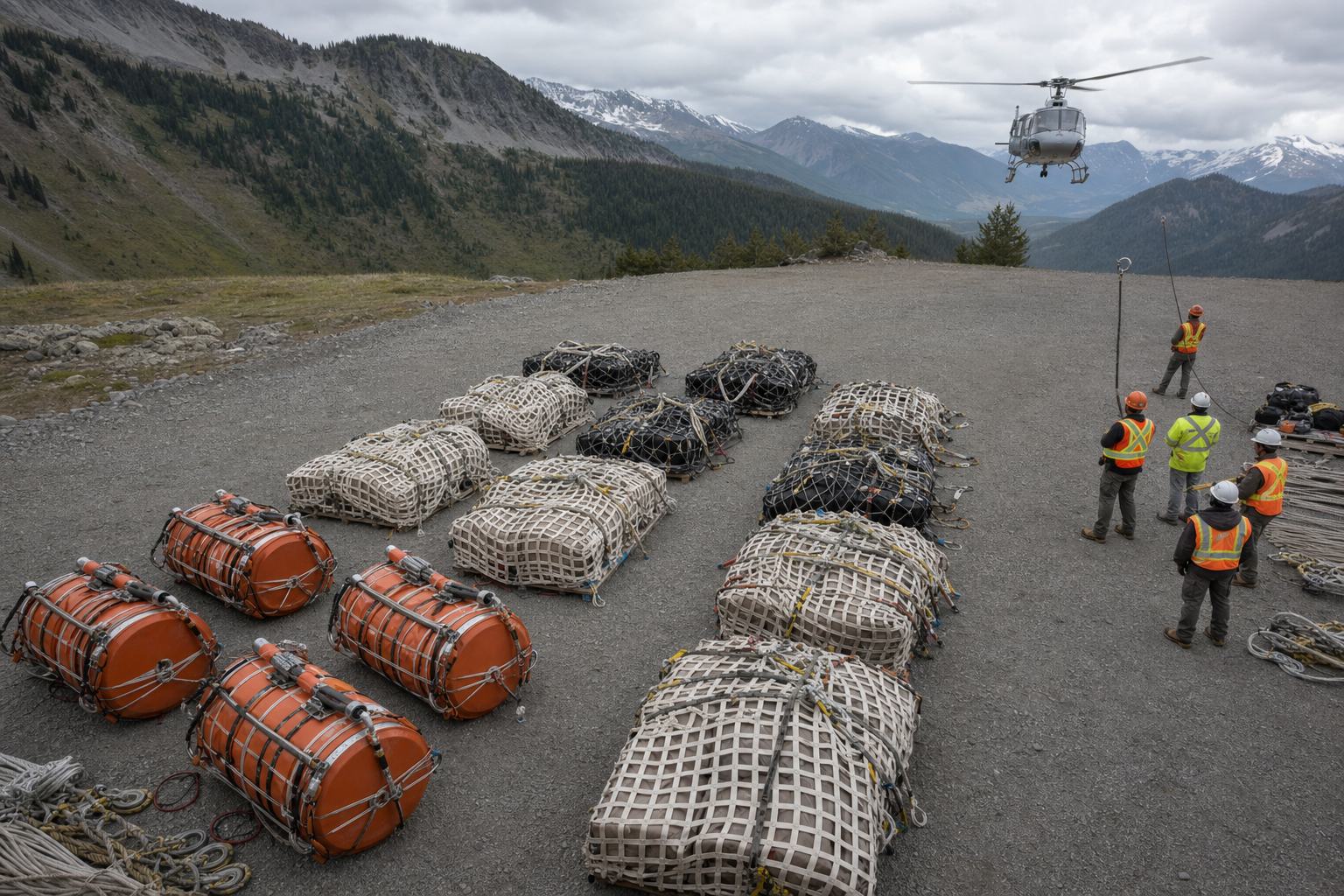
Freight to remote sites is flown as a Class B external load under 14 CFR Part 133: cargo suspended from the aircraft's hook, releasable in flight, carried on a longline or short sling to a prepared delivery point. A longline is the line suspending the load below the aircraft. It lets the pilot place the load without descending into trees, terrain or structures, and its length is chosen in the rigging design for the site.
Typical remote freight manifests flown under Part 133:
| Freight class | Examples | Typical rigging |
|---|---|---|
| Construction materials | Lumber packages, steel, aggregate bags, precast sections | Slings, cargo nets, bagged bulk |
| Bridge components | Girders, decking panels, abutment forms | Engineered spreader bars, tag lines |
| Fuel and liquids | Drummed fuel, bladder tanks, water | Certified drum nets, bladder harnesses |
| Camp and shelter | Weatherports, prefab cabins, containers, generators | Multi-point bridles, certified pick points |
| Telecom and power equipment | Shelters, antenna sections, battery banks, solar arrays | Custom bridles, non-impact placement protocol |
| Drill and mining support | Drill moves, core trays, resupply | High-cycle shuttle rigging |
Each load needs a documented weight and center of gravity before it flies, and the rigging design should name the standard covering each component along with its inspection criteria. Ground crew procedures follow OSHA 1926.551, including static discharge and tag line control. The pilot in command has final authority over the operation of the aircraft under 14 CFR §91.3 and can refuse a load, so rigging questions are best settled before lift day.
The airframes
The Airframes: 3,500 to 28,000 Pounds Per Pick
Aircraft selection follows the heaviest load on the manifest, the site's altitude and temperature, and the length of the shuttle. The freight plan sets the aircraft, and the operator has to show capacity for the actual loads at the site's conditions.
| Aircraft | Max external load | Category | Cycle rate (short radius) | Remote freight role |
|---|---|---|---|---|
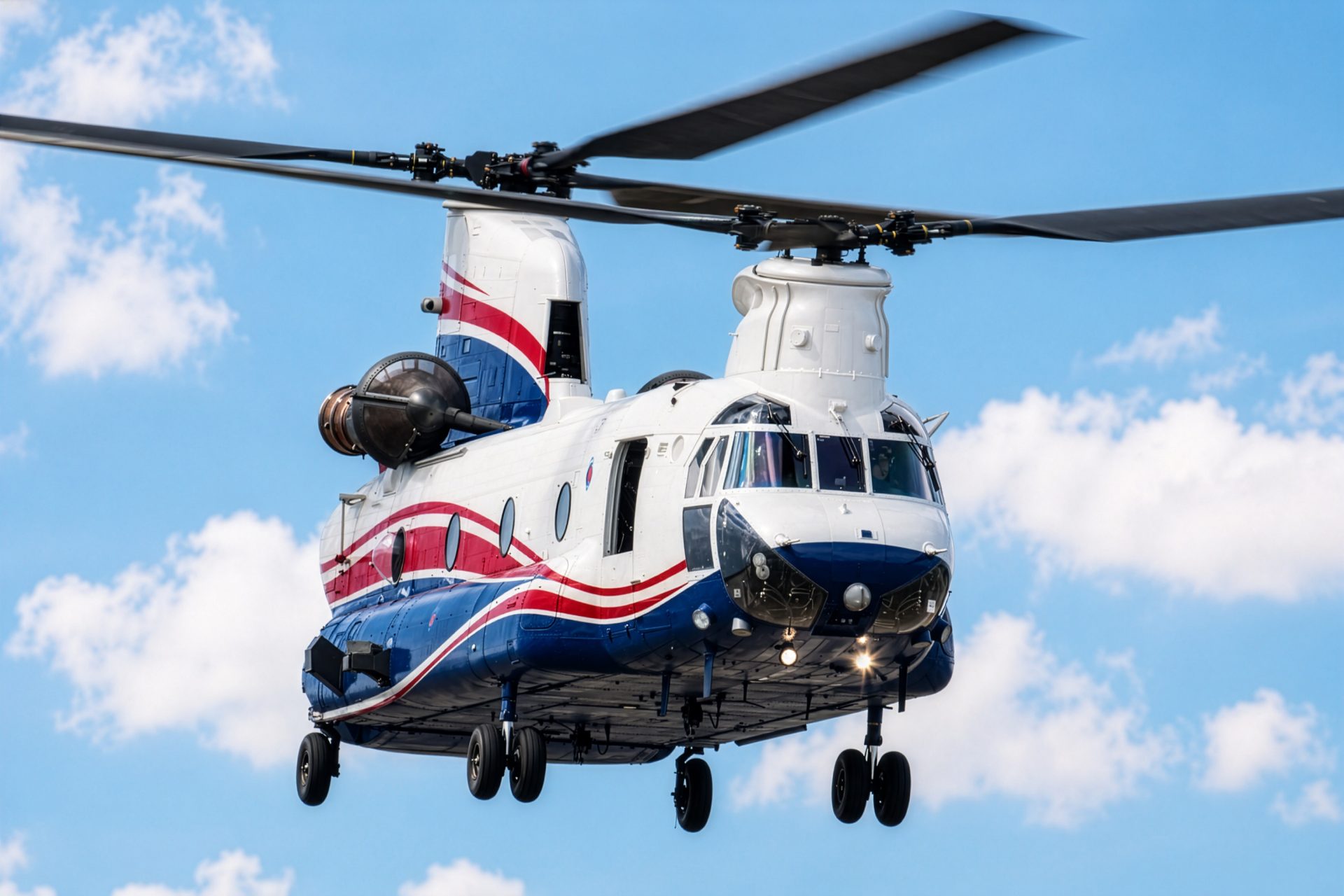
| Columbia BV-234UT/234LR Chinook | 28,000 lb (Vertical: Columbia's Model 234 UT/LR) | Not published here | Not published here | Heaviest published capacity on this page; bridge sections, containers, bulk campaigns |
| Boeing CH-47D Chinook | Not published here | Not published here | Not published here | Heavy freight; capacity comes from the civil operator's figures |
| Sikorsky S-61N Mk II | 10,000 lb (Helimax: external capacity at standard day, sea level) | Not published here | Not published here | Twin-engine medium-heavy aircraft for mixed manifests |
| Sikorsky S-70M Black Hawk | Not published here | Not published here | Not published here | Mid-weight freight; hover performance at the site elevation comes from the operator's data |
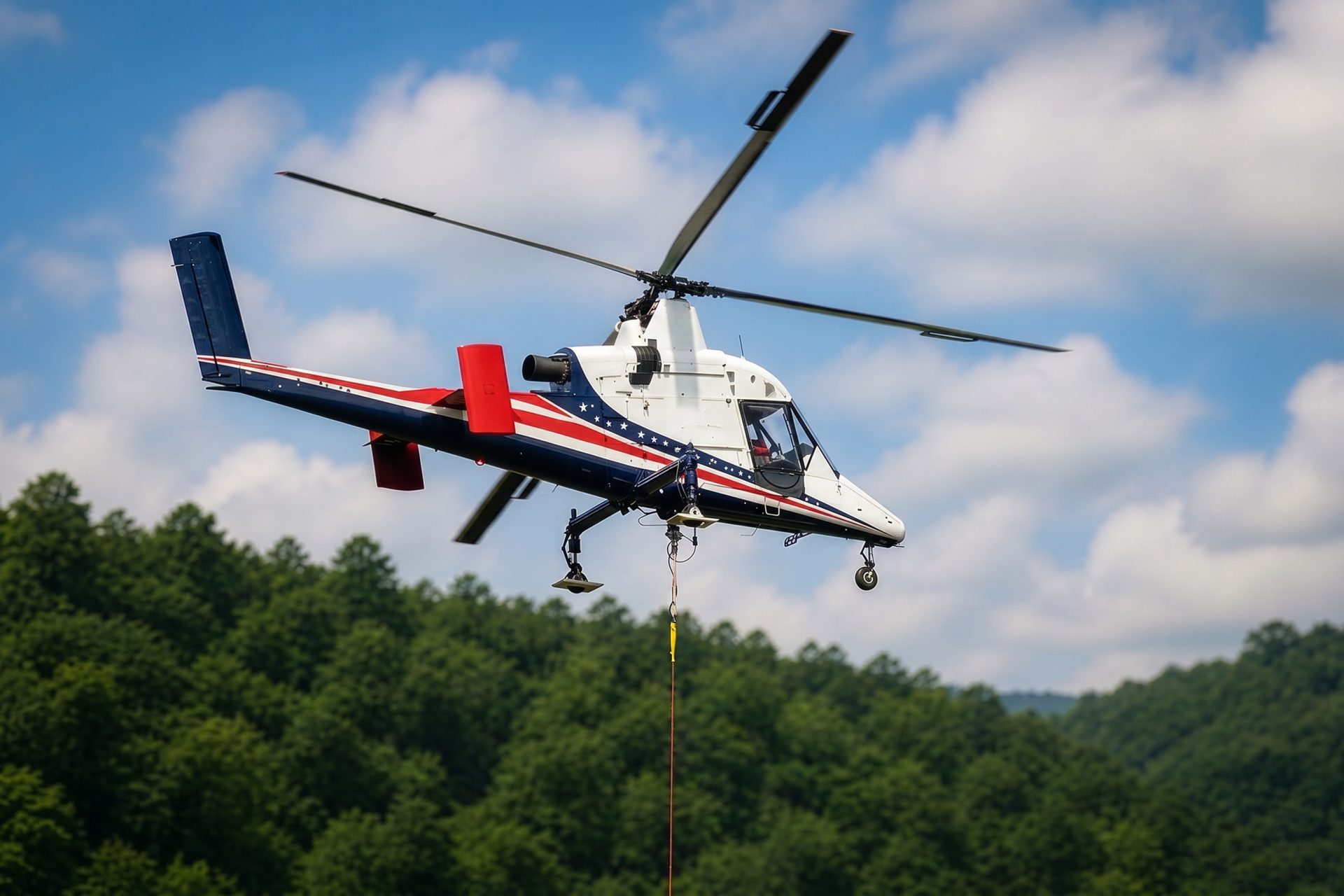
| Kaman K-MAX K-1200 | 6,000 lb (Kaman: published lifting capacity) | Not published here | Not published here | Repetitive shuttle work |
| Bell 212 / 412EP class | 4,500 lb (Avincis: Bell 412EP maximum hook load) / Bell 212 not published here | Not published here | Not published here | Resupply shuttles and camp support |
Capacity figures are published maximums from the linked sources, not lift-day allowances. Density altitude and the specific aircraft set the working number; the FAA Helicopter Flying Handbook, chapter 7 explains how conditions affect performance, and the density altitude section below covers what that means for mountain freight. Certification category is not published here because it belongs to the individual aircraft. Cycle rate is not published here because it comes from the operator's plan for the actual manifest and route.
Certification still matters on a remote job. §133.45(d) prohibits external-load operations with rotorcraft type certificated in the restricted category over densely populated areas, in congested airways or near busy airports with passenger transport operations. Many roadless sites are far from all three, but the route from the staging area needs the same check as the delivery point. Check the individual aircraft's certification and operating limitations rather than assuming them from the model name.
The arithmetic
Off-Grid Helicopter Delivery Math: Tonnage Per Flight Day
Remote freight throughput is arithmetic: payload per cycle multiplied by cycles per hour multiplied by flight hours. Cycle rate depends on the shuttle distance, the hookup work at the staging area and the release work at the delivery point, so the staging layout deserves the same planning attention as the flight.
Take each input from the operator's plan for the actual manifest. Payload per cycle comes from the aircraft's performance at the site's conditions and the weight of each load as rigged. Cycles per hour come from the route and the work at both ends. As the shuttle lengthens, time per cycle grows, and flight time rather than payload can end up setting the delivered tonnage; the freight plan then trades cycle count against load size to keep the cost per delivered pound down.
Two planning rules follow directly:
- Stage close. Every mile between the staging area and the delivery point is flown twice on every cycle. Check candidate staging locations against truck access, fuel positioning and airspace before the first load is rigged.
- Match the airframe to the manifest. A manifest of many 4,000 pound loads can cost less on a smaller aircraft flying full than on a Chinook flying half-empty. A manifest anchored by a single 22,000 pound generator narrows the choice to the heaviest aircraft, and the operator has to show capacity for that load at the site's conditions.
The invoice, itemized
Helicopter Freight to Remote Locations: The Cost Structure, Published
A freight proposal that shows only a total gives the estimator little to check. Knowing the line items makes it possible to compare proposals on the same basis and to ask what a vague one leaves out. Hourly pricing is not published here; it depends on the aircraft the manifest requires and belongs to the operator's proposal.
| Line item | What it covers | What drives it |
|---|---|---|
| Flight hour rate | Aircraft, flight crew, on-aircraft maintenance reserve | Airframe class; a K-MAX and a Chinook are different machines at different rates |
| Ferry time | Repositioning the aircraft from its base to the staging area and back | Distance from the nearest based asset; on remote corridors, ferry can exceed on-job lift time, so staging strategy matters |
| Fuel | Fuel burned on the job plus fuel positioning to remote staging | Fuel truck access or drummed/bladder fuel flown to a forward point |
| Standby | Aircraft and crew held on site between flight windows | Weather days, client-side delays, phased delivery schedules |
| Ground crew and rigging | Riggers, load masters, certified slings, nets, spreader bars | Manifest complexity, number of unique load configurations |
| Permits and coordination | FAA coordination, land-manager permits, agency notifications | Land ownership (federal, state, private), airspace considerations |
| Insurance | Aviation hull and liability, cargo on-hook coverage | Declared cargo values, additional insured and waiver of subrogation requirements |
Two billing distinctions worth understanding before any contract is signed:
Ferry versus flight time. Ferry is a real cost whether it appears as its own line or inside the hourly rate, so check where each proposal puts it. On a remote corridor, the staging plan decides how much useful tonnage each ferry hour supports.
Cargo on-hook versus cargo liability. A policy covering cargo liability does not necessarily cover cargo while it hangs from the hook. Check the actual policy wording for on-hook coverage and the declared-value basis, and compare the additional-insured and waiver-of-subrogation provisions against the project's requirements.
The altitude tax
Density Altitude: The Mountain Delivery Tax
Much of the roadless freight in the American West is also high-elevation freight. Density altitude expresses air density as an altitude. Elevation, heat and humidity raise it, and a higher density altitude leaves less performance available for lifting. The FAA Helicopter Flying Handbook, chapter 7 explains the effect. How much capacity a given aircraft loses depends on that aircraft and the conditions on lift day.
A load at the published maximum at sea level may be too heavy for the same aircraft at a high pad on a hot afternoon. Mountain freight plans work from the aircraft's performance charts for the expected conditions rather than its published maximum, and delivery windows are scheduled for the cooler hours when more payload is available. The same planning governs mining operation support, where drill moves depend on density altitude planning.
The regulatory line
Crews Do Not Ride the Load
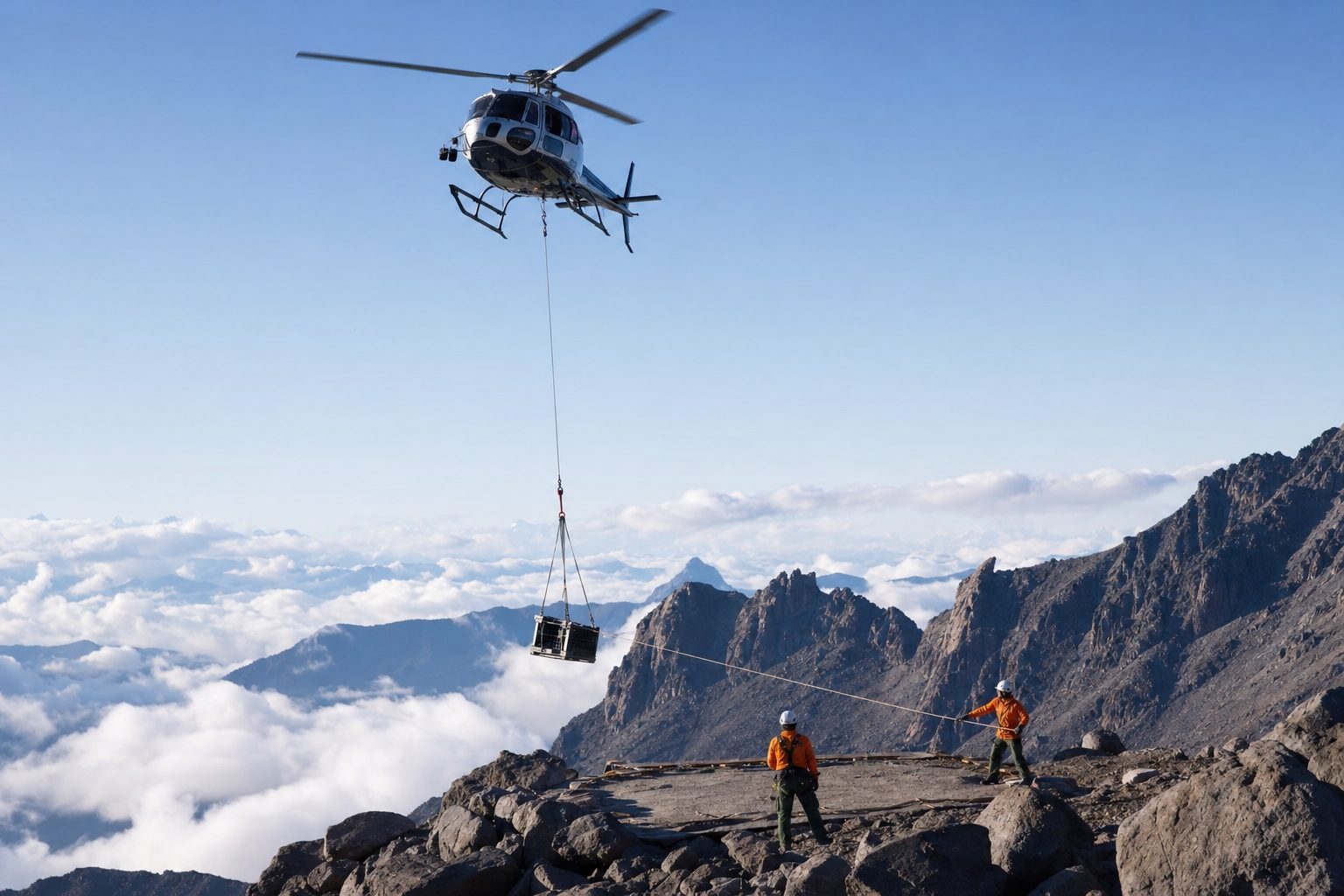
Personnel are not carried on Class B cargo. During external-load operations, 14 CFR §133.35 limits who may be carried to flight crewmembers, trainees and people performing an essential function or necessary to the work. Moving a work crew to a remote site as passengers is a separate operation under 14 CFR Part 135, flown on separate flights and sometimes by a separate aircraft.
The mobilization plan has to sequence around that. A typical remote campaign interleaves crew insertion flights with freight cycles, so the crew that lands is ready to receive loads when they arrive. Keep the two operations distinct in the plan and in the proposal, because they fall under different rules.
The honest no
When the Helicopter Is the Wrong Tool
Compare every method that can do the job, as the ground crane wins the lift analysis does for construction lifts. Rotorcraft freight usually loses the total-cost comparison when:
- A serviceable road already exists. Where a usable road reaches the site, trucking usually costs less per pound than flight hours. The aircraft competes with the road that would have to be built, not one that is already there.
- The tonnage is massive and sustained. A multi-year haul of thousands of tons can justify permanent access. Helicopter freight suits defined campaigns better than permanent supply chains.
- Water access is available. A site served by barge with dock capacity usually moves bulk more cheaply by water, with the aircraft kept for the final leg.
- A single load exceeds 28,000 pounds. That is the highest published capacity on this page, Vertical's figure for Columbia's Model 234 UT/LR. A heavier load has to be broken down or moved another way.
- Loads are aerodynamically unstable and cannot be re-rigged. Large flat panels, high-drag shapes, and loads that cannot take a tag line or drogue may be refused by the pilot in command. Raise these during load review, before lift day.
When the road, the barge or the crane comes out ahead, the freight plan should say so before anything mobilizes.
The mission sequence
How a Remote Freight Mission Executes
- Validate the manifest. Documented weights, dimensions, center of gravity and pick points for every load. A load without a documented weight is weighed rather than flown on an estimate.
- Engineer the plan. Aircraft selection, staging location, shuttle radius, fuel positioning, density altitude windows, a rigging design that names the standard for each component, and the delivery-point layout with dunnage set.
- Coordinate the airspace and the land. The operator handles its Part 133 requirements. The plan assigns land-manager permits and agency notifications to named parties so none is left unowned.
- Deploy and execute. Ground crew briefed per OSHA 1926.551, loads flown in the planned sequence, every pick logged against the manifest.
- Close out. Delivered-tonnage reconciliation, staging and delivery areas cleared and restored as agreed, and a documentation package for the project record.
The same Part 133 framework applies to disaster relief mobilizations and to the other work covered in the Specialized Heavy Lift section. The loads differ; the regulatory basis and the planning steps carry over.
The reading path
Keep Reading
The Part 133 external load operations reference covers the regulations behind every remote freight cycle. For related work in this section, continue with disaster relief operations and helicopter drop testing. New cost and capability analyses are announced through the mailing list; the signup opens from the Join the Mailing List button in the header and footer.
Frequently asked questions
Remote Freight Questions, Answered
From the technical library