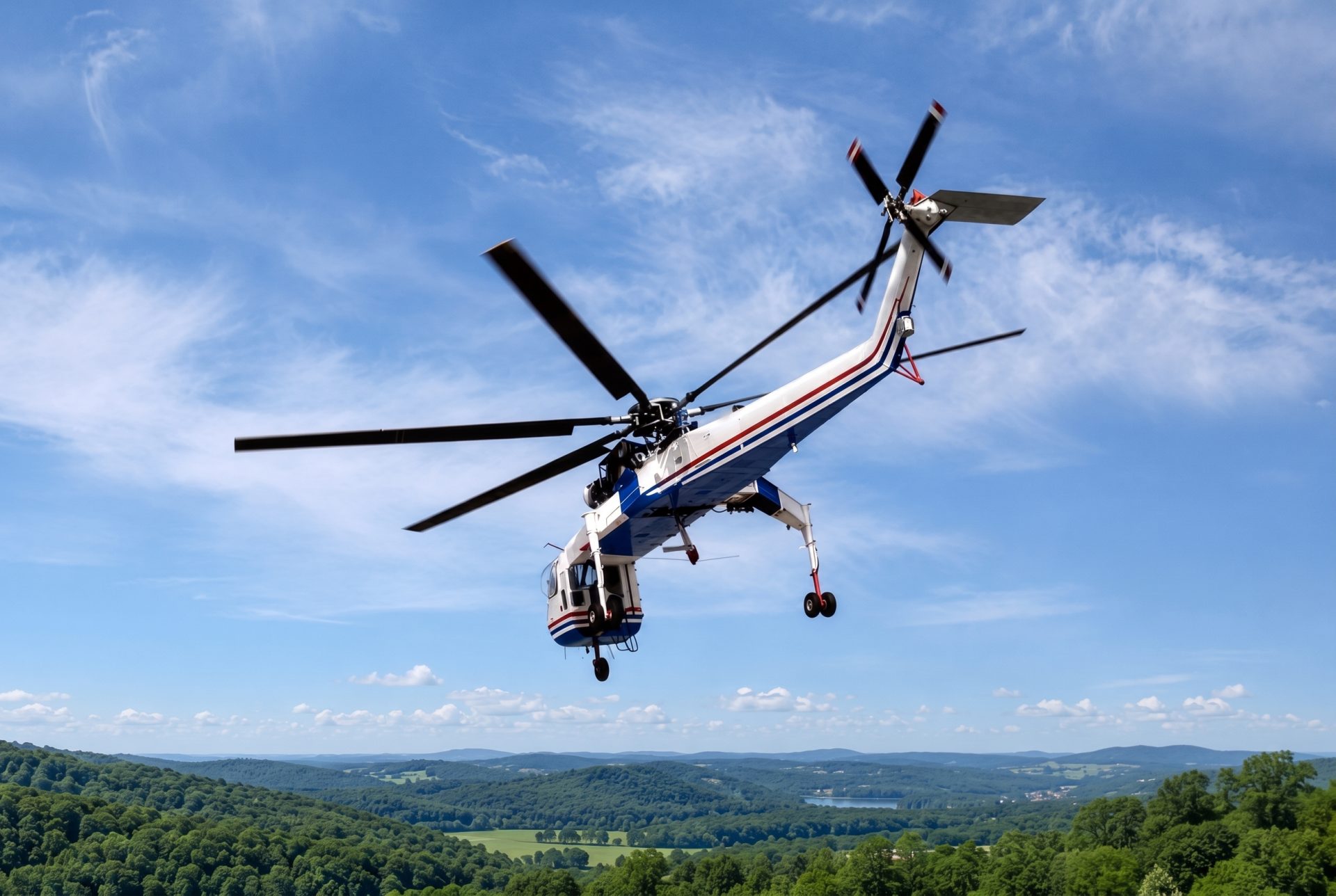
For early planning, helicopter lift rates run roughly $2,000 to $25,000 or more per flight hour across aircraft classes. The decision is Total Lifted Cost: the complete project bill for either method, including mobilization and required site controls on both sides. Add labor and schedule exposure. On access-constrained lifts, an expensive flight hour can still produce a lower project cost.
Every estimator who prices a rooftop unit change-out, a remote tower set, or a steel pick over an occupied structure eventually runs the same comparison: a crane quote that looks cheap per day against a helicopter quote that looks expensive per hour. Both numbers are real. Both numbers are also incomplete, and the gap between the quoted rate and the invoiced project is where bids die.
This analysis builds the comparison the way an estimator has to build it: total dollars from notice to proceed through demobilization, not equipment rate against equipment rate. It names the three cost traps that daily crane rates hide, works the math on each, and states plainly where the ground crane remains the correct engineering answer. The framework applies whether the load is a 4,800 pound rooftop air handler or a 24,000 pound transmission structure.
How much does a helicopter lift cost?
This broad planning range reflects the publisher's industry experience. A light utility single in the Bell 206L class can start near $2,000 per flight hour. Utility twins and repetitive-load specialists fill the lower and middle bands; the S-64 Air Crane and Chinook class sit toward the upper end, reaching $25,000 or more. The aircraft's hourly rate is the starting point. Ferry and job-specific billing terms determine the complete project cost.
For a document-backed heavy lift helicopter hourly rate, Montana's 2026–27 Billings Flying Service contract lists Boeing CH-47D N404AJ at $10,900 per flight hour and $39,950 per day for dry availability. These are separate charges in a tanked-aircraft wildfire agreement with 90 consecutive days of mandatory availability, not a national construction-lift range. The contract runs July 1, 2026 through June 30, 2027. Its section 5.1 pricing table, pages 2–3 establishes the contracted rates, not the amount actually paid or the price of a rooftop lift. Construction estimates need the aircraft and billing terms for that job.
The FAA registry lists N404AJ's airworthiness classification as Restricted. A documented rate does not establish that the aircraft is eligible for an urban lift; the Part 133 restrictions discussed below still apply.
Production depends on the pick, one lift of a load. For a simple illustration, assume five minutes per complete pickup, flight, placement and return cycle: 12 picks take one hour of elapsed cycle time before pauses. A 40-unit rooftop HVAC change-out may require 80 picks just to remove old units and set replacements. At that assumed pace, those picks take 6 hours 40 minutes before refueling or changes to rigging, the slings and other attachment gear. These are cycle durations, not billable flight hours. The operator's project quote must define when the billing clock starts and stops. A fast lift sequence can compress the schedule; an aircraft name alone cannot establish its duration.
Test the schedule against a range as well. As an illustrative assumption for a prepared construction sequence, 10–15 picks per hour puts those 80 picks at 8 hours to 5 hours 20 minutes of elapsed cycle time before pauses. For K-MAX planning, the publisher uses 12–20 picks per hour, with 20 only in perfect conditions, informed by helicopter-lift industry experience. That is planning guidance, not a manufacturer production specification or a guaranteed average. Distance between pickup and set point, load readiness and placement precision must support the pace.
The complete helicopter invoice contains more than the on-job flight hour. An estimate needs enough itemization to show what is included and what remains separate. The recurring line items:
| Line item | What it covers | How it behaves |
|---|---|---|
| On-job flight time | Aircraft and pilot during lift cycles; identify whether fuel is included | Check the hourly basis, billable clock and minimum |
| Ferry time | Repositioning the aircraft from its base to the project and back | An agreed hourly ferry rate, which may be negotiated separately; price both directions |
| Fuel and support | Fuel supply, support vehicles, mechanic and staging | Examples: daily support charge or fuel billed per gallon. Do not count fuel already included in a flight rate |
| Ground crew | Rigging and receiving crews; signals and briefing under OSHA 1926.551 | Examples: crew-day price or daily rate per person. Identify the included headcount and separate labor |
| Standby | Weather holds and client-caused delays | A negotiated daily hold rate is one possible structure. Check minimums, cancellation and return-visit terms |
| Permits and planning | Congested-area plan under 14 CFR 133.33(d) where applicable; local coordination and site controls | Example: fixed plan-preparation fee, with required local controls priced separately |
Set aside any quote whose scope and exclusions cannot be established in writing. A bundled price still needs a clear scope and the name of the certificated flight operator.
Two structural facts govern every figure in this article. First, published maximum payload is not a lift-day allowance. Density altitude, the altitude equivalent of the day's air density, affects performance. The aircraft's approved performance data must account for temperature and elevation, along with fuel and the weight of the load and its attachments; there is no single percentage discount for every rotorcraft. The FAA Helicopter Flying Handbook explains the performance effects. Second, external load work is a certificated activity under 14 CFR Part 133, the external load rulebook for operators. The named flight operator's certificate, approved load combination and flight manual matter.
14 CFR 133 External load certificate
The Total Lifted Cost model: what the day rate hides
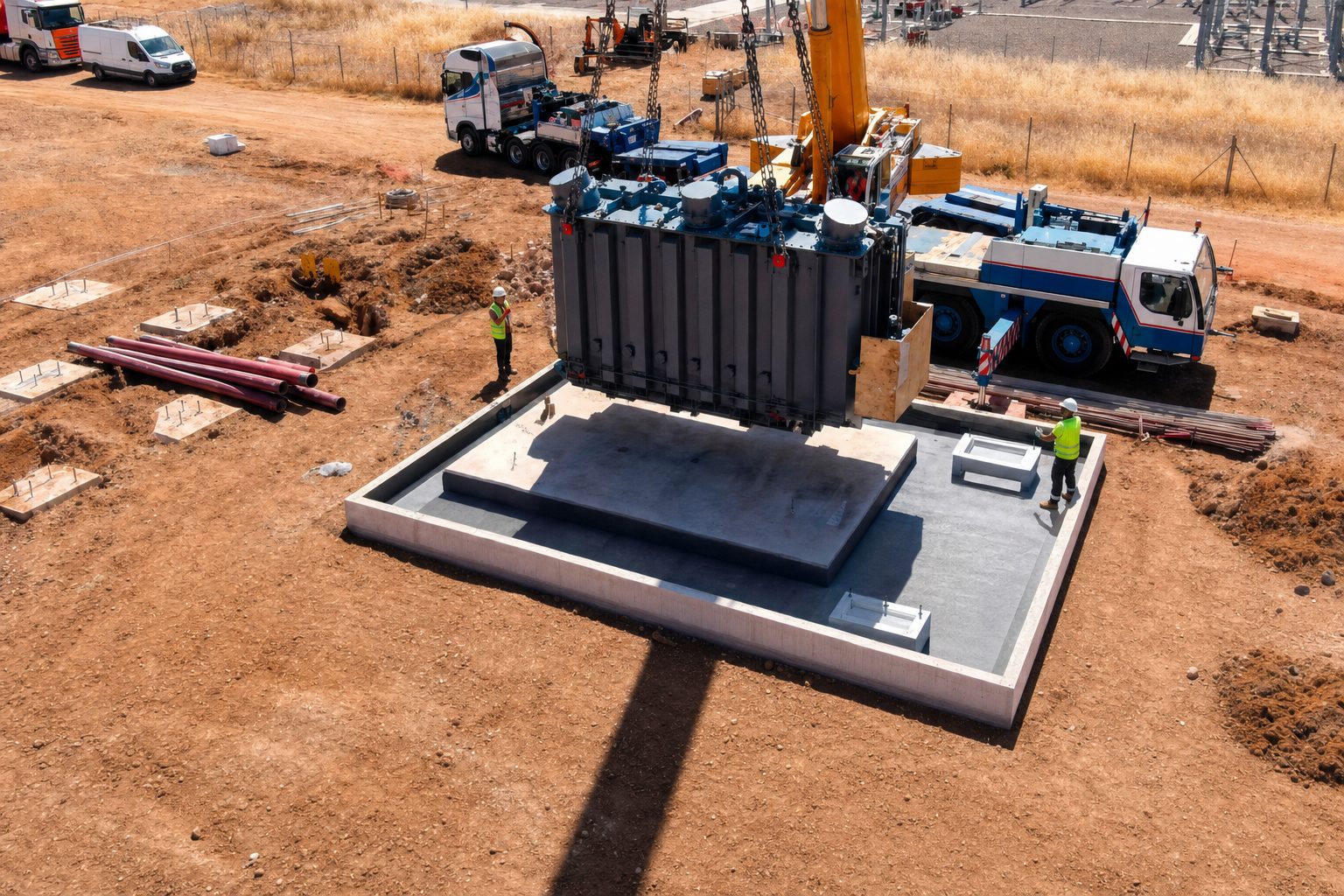
A crane rental rate needs a scope before it means much. A bare rental supplies equipment while the customer supplies operating personnel and other agreed responsibilities. Operated service includes an operator, with other inclusions defined by the supplier. Bigge publishes a broad $300 to $1,500 per hour crane range, but its page does not supply a matched 100-ton crane schedule with a common configuration, location and minimum. Total Lifted Cost is the sum of every dollar required to move the load from the ground to its set point. Compare an operated crane package with a crewed aircraft package, then add the exclusions.
The model itemizes both columns honestly:
| Cost component | Ground crane exposure | Helicopter exposure |
|---|---|---|
| Equipment rate | Bare or operated? Identify crew, fuel, rental period and minimum | Identify aircraft, flight crew, fuel, billable time and minimum |
| Mobilization | Transport both ways; support trucks, permits and escorts if needed | Ferry both ways plus support-vehicle travel and positioning |
| Site access | Street closures, lane-use fees, police details, sidewalk protection | Required exclusion areas, roadblocks, building restrictions and security |
| Ground works | Ground-bearing analysis, mats, pad construction, utility protection | Load staging, fueling/support access, hookup and receiving areas |
| Assembly time | Configuration-specific setup and teardown; rigging and receiving teams | Rigging, briefing and site preparation before flight; receiving teams |
| Schedule exposure | Minimum rental, attributable idle labor, weather extensions and return charges | Flight minimum, attributable idle labor, standby and return ferry charges |
| Regulatory | Applicable permits, engineering reviews and closure approvals | Operation-specific FAA plan where required, plus local coordination |
| Final reconciliation | Mark each line included, separate or unknown. Add applicable tax/fees. Count shared installation labor once; an unknown charge is not $0. | |
A cheap crane day does not erase an expensive site. Where the crane needs a road or a prepared pad, that access bill remains even if the lift takes an hour. Flight time changes with the helicopter's work, so a short sequence can limit that part of its bill. Ferry and minimum charges still have to be paid. On an access-constrained project, compare the fixed cost of making room for the crane with the complete cost of bringing in the aircraft. The lower equipment rate alone cannot settle it.
Three traps in the crane column deserve names, because they are the three places estimators get hurt after award.
Trap one: The Street Shutdown Trap
The crane cannot reach the roof from the loading dock. It sets up in the street, and the street belongs to the city. Lane-use fees, full or partial closure permits, police details, pedestrian protection, and business-disruption exposure can attach to the crane before the first pick. Price the local requirements. A closure window may also force weekend or overnight work, adding premium-time labor to the same bid line.
A worked comparison on a mid-rise rooftop equipment replacement over an occupied street follows. Every dollar and duration is an illustrative assumption, not a bid or market rate. Assume both methods are feasible, all required picks fit the aircraft's approved capability, and the scope fits the stated working time.
The $1,500 daily allowance for the crane, operator and operating fuel deliberately favors the crane in this teaching model. It is a hypothetical input, not a validated daily package price or a conversion of Bigge's hourly range. Its purpose is to show how site costs can outweigh a low equipment allowance.
| Line | Crane scenario | Helicopter scenario |
|---|---|---|
| Equipment, operator and operating fuel | $1,500/day × 3 days = $4,500 | $8,000/flight hour × 4 hours = $32,000 |
| Both-direction mobilization | Transport, setup and teardown: $6,000 | 1 total ferry hour × $8,000 = $8,000 |
| Street/site controls | Permits, police, lane fees and protection: $50,000 | Required exclusion/traffic controls and security: $4,000 |
| Rigging and receiving crew | $2,000 | $2,000 |
| Weekend premium labor | $2,000 increment above shared installation labor | No premium assumed in this schedule |
| Planning and additional support | Included in the lines above | Plan preparation $2,000 + ground support $3,000 = $5,000 |
| Modeled total | $64,500 | $51,000 |
The modeled difference is $13,500. Shared building-installation labor is excluded from both columns. The estimates assume minimums are met, no hold or return trip occurs, applicable fees/taxes are included in the listed allowances, and flight fuel is already in the aircraft rates. Ground support therefore excludes that fuel. A real estimate must replace each assumption, including the four-hour lift sequence.
Break-even closure cost. Let H be the $51,000 helicopter total and C the $14,500 crane total before its street/site controls. The break-even crane access cost is H − C = $36,500. With a $10,000 crane access package, the crane totals $24,500 and wins this model. At $50,000, it totals $64,500 and the helicopter is lower. This threshold belongs to these assumed inputs; helicopter controls are already inside H and are not subtracted again.
The regulatory work still exists on the helicopter side. For external-load operations over congested areas, 14 CFR 133.33(d) requires a coordinated, FAA-approved plan for the complete operation. Local officials must agree to exclude unauthorized people from the operating area. The plan also includes a chart of flight routes and altitudes, with air traffic coordination if necessary. The FAA sample plan in AC 133-1B, Figure 3-1 expressly allows for streets or roads to be blocked. Exclusion boundaries follow the operation and its hazards, not a universal radius or a fixed multiple of the longline length. Section 133.33(d) does not prescribe a universal number of building floors to evacuate. The approved plan, site hazards and applicable local requirements determine restrictions on occupied areas.
The aircraft constraint matters too. Under 14 CFR 133.45(d), restricted-category rotorcraft operating under Part 133 cannot conduct external-load operations over densely populated areas, in a congested airway, or near a busy airport where passenger transport operations are conducted. That is a specific certification limitation, not a conclusion based solely on the aircraft model. Section 133.33(d) requires aircraft type-certificated under and meeting Part 27 or 29, including their load-attaching equipment. Certification alone is not approval for a particular lift; the operation-specific plan and the FAA external load operations rulebook still apply.
Trap two: The Mobilization Bleed
Large lift capacity travels badly on the ground. A large mobile crane may arrive as a convoy: the carrier plus support trucks hauling counterweights, boom sections, and mats. Permits or escorts depend on the loads and route. Tower cranes also carry assembly and teardown costs before productive lifting begins. Those costs sit on the project regardless of how few picks the crane actually makes. For a handful of heavy sets, preparation can overwhelm the lifting bill.
The helicopter's main aircraft mobilization is the ferry flight. Ferry hours are real dollars, and the estimate needs both directions at the agreed rate. The aircraft avoids transporting crane counterweights, but its fuel and support vehicles still need access. Staging, rigging and site briefing must be ready before productive flight starts. A distant aircraft can lose a cost comparison before the first pick.
A worked comparison on a remote structure set, eight heavy picks, no improved road within two miles: all figures and durations below are illustrative assumptions. Assume each method can perform the loads. The helicopter plan uses a reachable staging/fueling site and includes ground access for its support team. Its two on-job flight hours are an assumed allowance for this pick list, not a production average.
| Line | Crane scenario | Helicopter scenario |
|---|---|---|
| Access | Temporary road, restoration and pad: $120,000 | Support access and staging preparation: $8,000 |
| Mobilization | Both-way transport, permits, escorts and setup/teardown: $25,000 | 3 total ferry hours × $8,000 = $24,000 |
| Equipment time on site | Operated crane and operating fuel: $12,000 | 2 on-job hours × $8,000 = $16,000; ground support $5,000 |
| Planning, permits and site controls | $8,000 allowance | $4,000 allowance |
| Rigging and receiving crews | $5,000 | $5,000 |
| Modeled total | $170,000 | $62,000 |
The modeled difference is $108,000. Shared construction labor is excluded from both sides; applicable taxes/fees are assumed included, minimums satisfied, and no hold or return visit is assumed. Aircraft rates include operating fuel; separate support excludes that fuel. Add two ferry hours at the assumed $8,000 rate and a hypothetical $6,000 weather hold, and the helicopter total becomes $84,000. A return mobilization or an unusable staging area needs another estimate.
Remote work is where the bleed compounds, because the road itself can become the largest line on the crane side. Environmental and land-access requirements depend on actual disturbance and jurisdiction for either method. The remote site freight breakdown follows the same cost anatomy for roadless delivery: ferry, fuel and standby on multi-day remote programs.
Trap three: The Labor Stagnation Bleed
The quietest trap may never appear on an equipment quote at all. It lives in the labor column. A crane waiting on permits or wind can leave trades waiting too. So can a delayed helicopter. The cost belongs to the comparison only when those workers cannot be reassigned to productive work and the delay is attributable to the lifting method.
A worked illustration, stated as a model with its assumptions visible: assume a 10-person combined crew at a loaded labor rate of $85 per hour, including employer costs, working 10-hour days. That assumed crew costs $8,500 per day. If every worker is unavoidably idle for five crane-related days versus one helicopter-related day, the exposure is $42,500 versus $8,500: a $34,000 difference. That is an upper-bound illustration for those assumptions, not automatic savings from replacing five site days with one.
If only four workers lose six hours per day over four additional days, the attributable difference is 4 × 6 × 4 × $85 = $8,160. Workers installing connections or doing other scheduled work are not idle. Count actual affected worker-hours, subtract any helicopter-related idle exposure, and keep already-budgeted installation labor out of the claimed saving. This labor example stands alone; it is not another charge silently added to the preceding scenarios.
Weather can compound the effect for either method. A shorter flight window may reduce on-site exposure, but wind or poor visibility can also postpone the entire lift, prolong standby or trigger another ferry. Compare the actual hold, cancellation and return terms with the crane's rental extensions. Neither method has inherently capped overage risk. A shorter planned sequence does not establish which method overruns less often; that comparison needs comparable project histories.
The anchor case: four hours over Destin
A published account of a rooftop equipment lift in Destin, Florida shows how access can decide the method before costs are compared. Wireless Estimator reports that placing a mounting platform and radio equipment took approximately four hours of helicopter service. The resort owner did not allow crane use. The account is undated and does not identify the aircraft.
The account supplies no crane quote, so it cannot establish comparative savings. With crane use barred, it demonstrates an access decision rather than a measured cost contest. Compare feasible methods first, then price their complete scope. High-count rooftop programs, the workflow the helicopter HVAC lift analysis walks unit by unit, still need the same preparation and pick-count review.
Helicopter lift cost by aircraft class: capacity and fit
Aircraft selection drives the hourly rate, and mission requirements drive aircraft selection. Matching an aircraft to the heaviest pick, including rigging weight and lift-day performance, avoids paying for unusable capacity. The relative price positions below reflect the publisher's industry experience within the broad planning range. Published load figures retain their separate source basis: a hook rating, manufacturer maximum and operator-published fleet limit are different measures.
| Aircraft / class | Published load limit | Relative hourly price | Useful work and cost effect |
|---|---|---|---|
| Utility twin: Bell 412EPI | 4,500 lb cargo hook capacity, Bell | Lower band; above the light-single entry point | Smaller rooftop units, line hardware and light freight within approved capability. A nearby utility aircraft may avoid the ferry cost of a larger machine. |
| Repetitive-load specialist: Kaman K-1200 K-MAX | Up to 6,000 lb, Kaman lift maximum | Mid band | Purpose-built repetitive external-load work, including powerline construction. A prepared sequence can spread ferry and setup costs over many picks. |
| Medium-heavy: Sikorsky S-61 (A/N/V) | 10,000 lb maximum external load, Helicopter Express fleet | Mid band | Larger rooftop units and structural loads beyond a utility aircraft's allowance. Compare the complete package before stepping up to an Air Crane. |
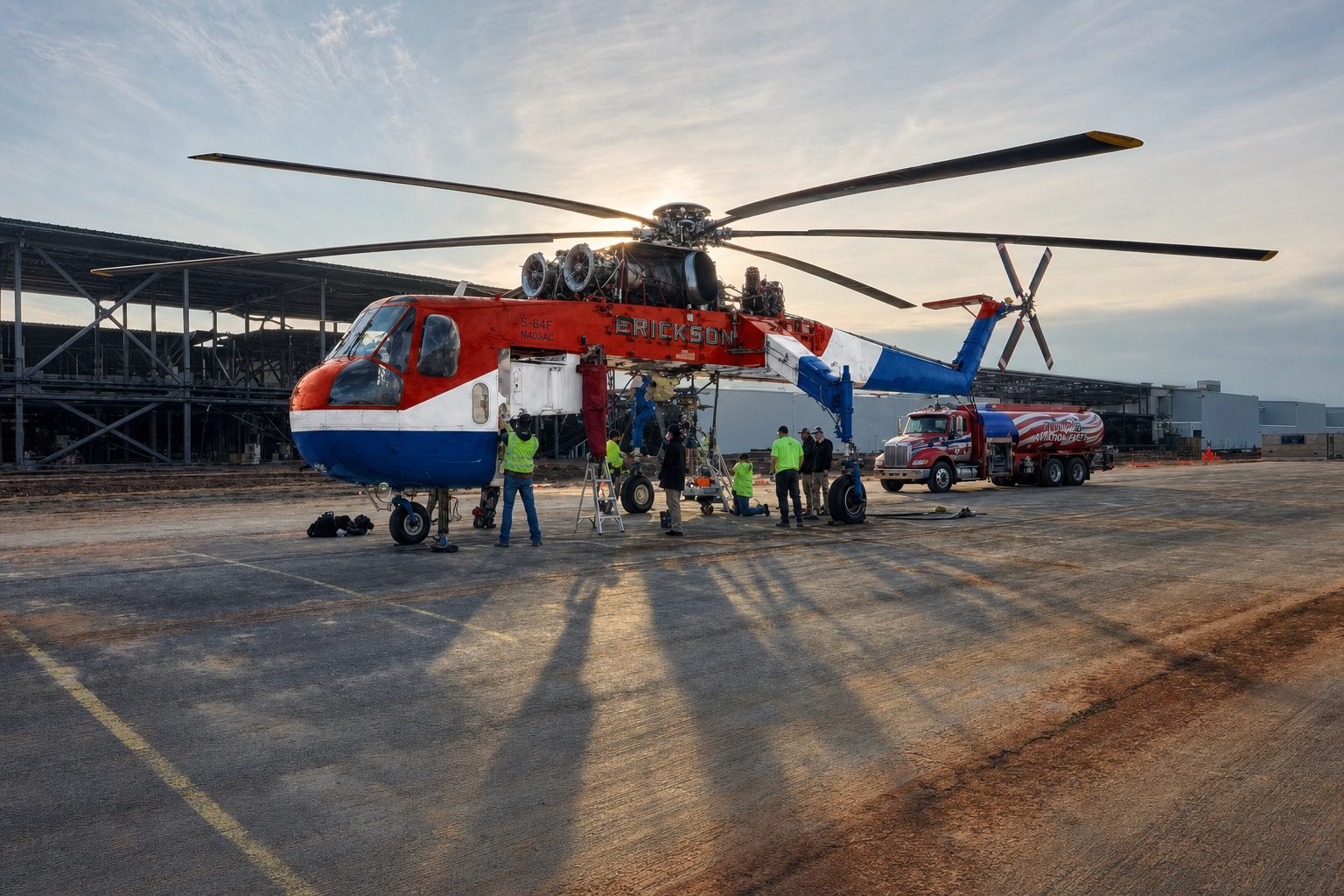
| Heavy: Erickson S-64E / S-64F Air Crane | 20,000 / 25,000 lb maximum external cargo, Erickson | Upper band, toward $25,000+/hour | Industrial chillers and large structural pieces. The aft-facing pilot station supports accurate load placement. |
| Heavy tandem rotor: Columbia 234UT / Boeing CH-47D | 234UT: 25,000 lb maximum hook weight, Wildcat; CH-47D: 26,000 lb external load, Billings p. 5 | Top of band | Heavy structures and concentrated cargo moves that exceed smaller aircraft's allowance. Match the individual aircraft's certification and performance to the site before comparing packages. |
Load figures are published reference limits, not guaranteed job payloads or a universal civilian lifting ceiling. Actual capability depends on the individual aircraft, approved load combination and lift-day conditions. Relative price tiers are experience-based planning guidance, not fixed model rates or a ranking of complete project costs. The CH-47D wildfire contract above is a separate example, not a construction price list.
Compare the smallest suitable aircraft's complete package with the next suitable option, including ferry distance and support. A larger nearby aircraft can cost less overall than a smaller one with a long positioning flight. Have the operator establish approved lift capacity at the project's conditions before contracting, then check conditions again before flight. For urban work, confirm the individual aircraft's certification and the operator's approvals early; a model name does not settle eligibility.
Grouping components can change the pick count. If an engineered rigging plan and the operator's approved load combination permit several components to move as one assembly, compare that sequence with separate picks. Include the combined weight and rigging, and check geometry and stability. Spare hook capacity alone does not make a batch safe to fly.
Removing components or dividing an HVAC unit into smaller assemblies may reduce each pick's weight, but only where the actual manufacturer's procedures permit it. Establish the weight and center of gravity, its balance point, for each resulting configuration and use its designated lifting points. The Johnson Controls Premier rooftop-unit manual illustrates the need for model-specific handling instructions and weight data. If the work opens the refrigerant circuit, the sealed system carrying the refrigerant, EPA recovery requirements apply, with appropriately certified technicians handling covered work. An intact, sealed unit does not automatically need refrigerant removed simply because it is being lifted.
Published cruise references. Manufacturer-listed maximum cruise speeds give useful context for aircraft positioning:
Bell 412EPI: 122 kt maximum cruise at maximum gross weight.
Erickson S-64E: 115 kt maximum cruise.
Erickson S-64F: 104 kt maximum cruise.
These are maximum cruise references, not promised ferry groundspeeds or speeds with a suspended load. Use the operator's route, expected winds and fuel stops to estimate billable ferry time. For the other chart aircraft, obtain model-specific planning figures from the operator.
When the ground crane wins
A cost analysis that only ever finds for the helicopter is marketing, not analysis. The crane can be the correct engineering answer in the following situations, and a competent lift plan names them up front.
Long-duration steady lifting. A crane that will serve a project for weeks or months, feeding steel or forms on a continuous cycle, spreads its mobilization across many picks. An erected tower crane can make repeated lifts without another aircraft dispatch or ferry charge. That is a strong crane case, especially when loads arrive throughout the build instead of in one prepared batch.
Single picks beyond the available aircraft's approved capacity. A 60-ton press needs a suitable ground-based lifting or jacking system, not an aircraft selected from the table above. The cutoff for a smaller load is specific to the available aircraft and approved rotorcraft-load combination, including attachments and site conditions. A nominal crane class is no shortcut either: OSHA crane load-chart requirements tie capacity to working radius and configuration.
Clear street access with no closure cost. A single unit going onto a low building with an open parking lot beside it is a strong crane candidate. The hidden-cost traps above attach to constrained sites; remove those constraints and compare the local operated crane package with aircraft mobilization and minimums. A long helicopter ferry strengthens the ground option.
There is a fourth, softer case: loads that are aerodynamically unstable or cannot tolerate rotor downwash without engineered protection may favor ground handling even when access is poor. That determination belongs to a rigging review, not a rate sheet.
Airport proximity requires a site check, not an automatic rejection of cranes. A temporary crane may trigger FAA obstruction-notice criteria under Part 77 because of its height or location. Where notice applies, Form 7460-1 begins airspace review; filing alone is not permission to operate. Aviation restrictions on the proposed helicopter operation need a separate check.
The decision framework
Crane size and rooftop-unit count alone cannot determine whether a helicopter is feasible or costs less. Check capacity at the actual working radius and site conditions, then compare access costs and the complete lifting packages. A unit count leaves out each load's weight and the work needed between picks.
The comparison reduces to five questions, answered in order, with dollars attached to each:
- Can each method handle the heaviest individual pick? Include attachments. Check the crane's chart at working radius and the operator's approved aircraft/load combination at site conditions. Exclude infeasible methods before comparing prices.
- What does site access actually cost? Price the closure package and required ground preparation. Include helicopter staging, security and traffic controls. Use the project's break-even calculation, not a universal dollar threshold.
- How many picks, and over what duration? Count removals separately from installations. A prepared batch may favor a flight sequence; loads arriving over months may favor a standing crane. Use a project-specific cycle estimate with pauses included.
- What is the loaded cost of the crew during equipment days? Multiply only attributable idle worker-hours by loaded hourly cost for each method. Keep productive or reassigned time out of this charge and avoid adding labor already included in equipment/rigging packages.
- What does the schedule risk cost? Check outage windows and tenant disruption. Where the contract makes them applicable, delayed completion can trigger liquidated damages or delay release of retainage, money withheld until specified work is accepted. Compare weather holds, minimums, change orders and return trips on both sides. Price a shorter sequence only when the preparation and operating window support it.
Complete estimates show whether the helicopter's flight and ferry costs are offset by the crane's access costs and schedule exposure. Compare those totals before selecting a lifting method.
A mixed pick list may justify a hybrid plan: a crane handles the accessible or oversized loads while a helicopter handles the roof or remote sets. Count both mobilizations and the coordination between them. Splitting the work is useful only if those extra charges buy a lower complete cost or solve a feasibility problem.
The model works when the estimate identifies its inclusions. Compare flight time and ferry with standby, support and site controls. State the load capability at the project's conditions rather than carrying a brochure figure into the budget. The helicopter lift mobilization cost breakdown follows the charges that begin before the first productive pick.
Plain-English lift cost glossary
Pick and cycle. A pick is one load lift. A cycle includes getting from pickup through placement and returning ready for the next load. Replacing one rooftop unit can require more than one pick.
Mobilization, demobilization and ferry. Getting equipment and support to the job, then removing them. Ferry is the aircraft's positioning flight; price outbound and return travel.
Knots (kt). One knot is one nautical mile per hour. Airspeed measures movement through the air; groundspeed measures progress over the ground and changes with wind.
Bare versus operated crane. Bare rental is equipment with agreed customer responsibilities for operation. Operated service supplies operating personnel; the written scope decides which rigging, fuel or support costs are included.
Working radius and load chart. Radius is the horizontal distance from a crane's rotation center to the load. The chart gives permitted capacity for the actual setup, not simply the crane's advertised tonnage class.
Density altitude and approved load combination. Density altitude describes air density as an equivalent altitude. Approved capability depends on that condition and the particular aircraft, external load and attaching equipment.
Availability, standby and minimum. Availability pays for an aircraft or crew being committed under the contract. Standby is time held without productive work; its charges depend on the agreement. A minimum is the least billable time or amount, even if the picks finish sooner.
Congested-area plan. The operation-specific plan required by §133.33(d) for qualifying work over a congested area. It is separate from an ordinary visual flight rules (VFR) flight plan. The FAA AIM, section 5-1-5 says a VFR flight plan is not normally required within the continental United States, while special airspace rules may require one.