How Many Loads Can a Helicopter Lift per Hour?
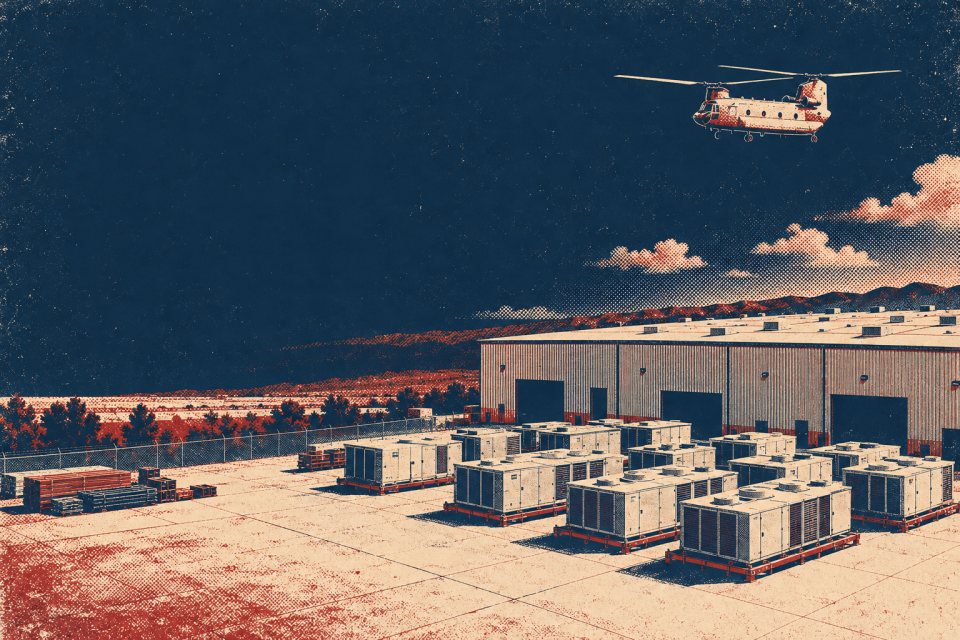
Helicopter loads per hour depend on complete cycle time and usable work minutes. Compare published HVAC cases with clearly labeled planning calculations.
The editorial desk
Writer and Senior Editor, AHLH Editorial Desk. Senior AI developer at SputnikFX.
Zachary Jester is a writer and Senior Editor at American Heavy Lift Helicopters. His background includes coordinating commercial helicopter lifts and flying unmanned aircraft in the field. He joined Fair Lifts Helicopter Services in 2021 as a Senior Logistics Supervisor and later became Chief Pilot of its Unmanned Division, leaving the company in late 2025.
He helped launch the unmanned services operation and worked in the field flying and managing its drone projects. That work included agricultural spraying and aerial surveys. He holds a Private Pilot License and an FAA Part 107 commercial remote pilot certificate.
His helicopter logistics work included negotiating lift projects and contracts for corporations and government agencies, from RFQ responses through aircraft and crew mobilization. At AHLH, that experience informs his coverage of lift planning and the costs contractors need to compare when choosing between a ground crane and an aircraft.
He writes and edits the technical library, with a focus on ground crane operations and crane-versus-aircraft economics. He is also a senior AI developer at SputnikFX, where he helps build and manage the systems behind Sputnik Signal.

The byline
Helicopter loads per hour depend on complete cycle time and usable work minutes. Compare published HVAC cases with clearly labeled planning calculations.
A rooftop HVAC helicopter lift checklist covering unit weights, handling instructions and curb readiness, with site protection and day-of briefing checks.
Helicopter lift contracts define minimum hours, ferry charges and delay costs. Compare billing terms and document changes before committing to a lift date.
Helicopter lifts stop for visibility, wind, heat and storms. The pilot decides under 14 CFR 91.3, and a hot afternoon can cost about 960 lb of hook capacity.
OSHA requires loose gear within 100 ft of helicopter lift points to be secured, yet outwash from a 12.6 t helicopter stays near 34 mph almost 200 ft out.
Helicopters set 500 to 800 kg solar module pallets on large roofs and small gear at roadless substations; a 200,000 lb-plus power transformer stays on a crane.
A crane wins when a pick exceeds the 28,000 lb civil helicopter ceiling, must be held while it is bolted, goes under cover, or sits beside open, firm ground.
Mobilization is the ferry flight, billed at the flight rate both ways. A CH-47D at $9,785 per hour runs about $173,000 on a 17.7 hour positioning leg.
Documented US steeples run 2,600 to 23,000 lb, all inside the civil fleet. The crane still wins, because a steeple set has to be held in place while it is bolted.
Helicopter antenna and cell tower work splits into three jobs. Documented picks run 2,360 to 7,200 lb, and the largest mobile crane stops at 617 ft.
A tower flies only if it was designed to. The practical civil ceiling is near 20,000 lb per pick, which decides guyed versus self-supporting in design.
A wind turbine nacelle weighs 56 to 75 tons and the heaviest US civil helicopter hook carries 14, so rotorcraft fly blades, crews, and cargo, not the machine.