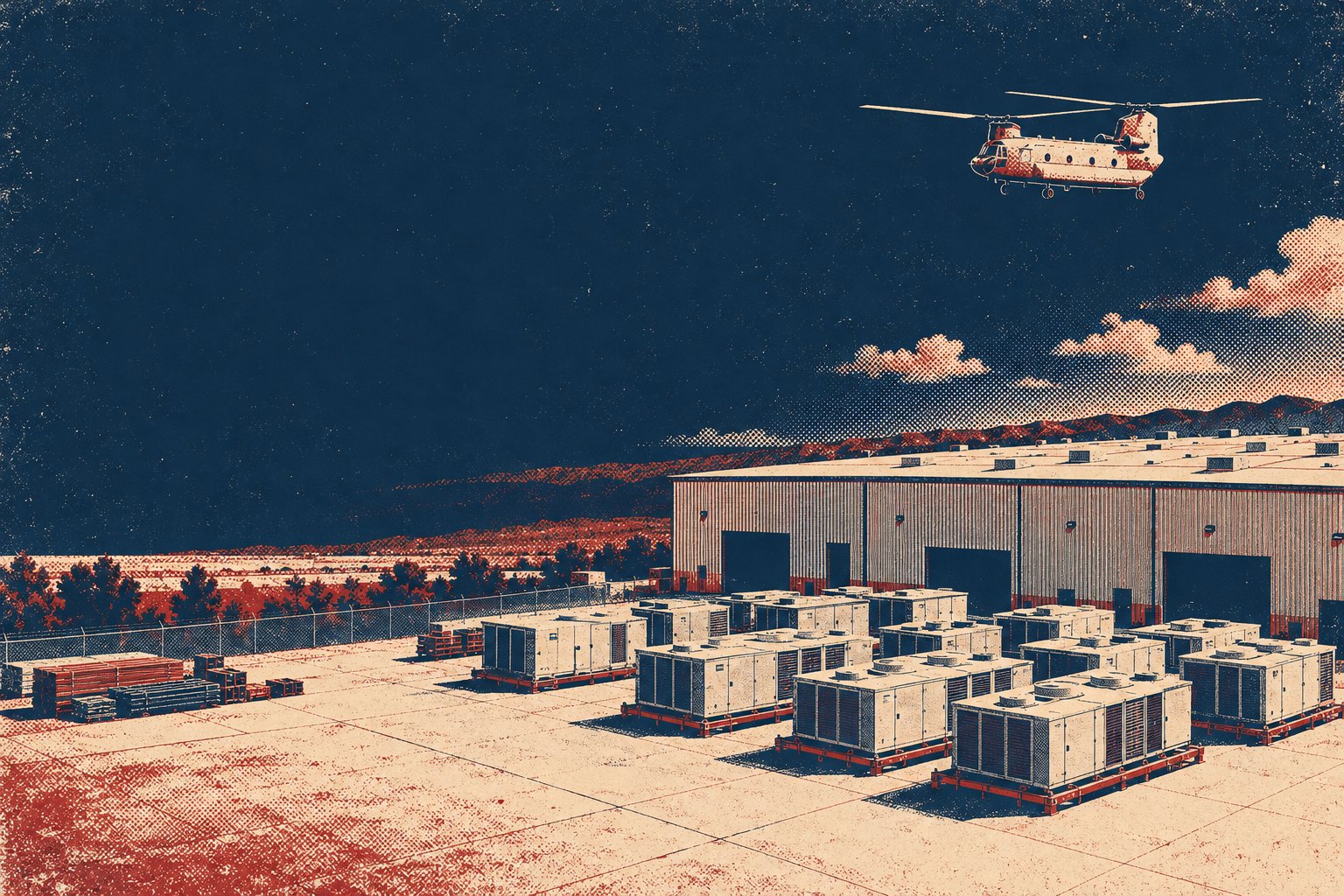
A helicopter completing one full lifting cycle every 3 to 6 minutes would move 10 to 20 loads per productive hour. Those are calculated examples, not a universal production range. Actual output depends on the route and handling work, with fuel stops and interruptions accounted for separately. Count complete cycles, then test the available work window.
An hourly figure is useful only when its clock is clear. Twenty picks, meaning twenty separate lifts of loads, might describe an uninterrupted hour of repetitive work. It says little about an entire morning that includes a briefing and a fuel stop. Neither figure alone establishes the flight time charged under a contract.
The first estimating question is therefore simple: what does the proposed rate count? For a rooftop project, a load placed on the roof is also different from an air-conditioning system fully assembled and commissioned, or tested for operation. Start with the load schedule and the required completion milestone. The HVAC helicopter lifting field study puts that work into the broader comparison with a ground crane.
Count a complete helicopter lift cycle
Use the same start and finish point for every cycle. One workable planning definition starts when the helicopter is ready to connect the next load at the pickup area. It includes connection and pickup, travel with the load, placement and release, then the empty return to that same ready position. A timing sheet that ends at release leaves out the return leg and overstates the repeatable rate.
For an illustrative route, a four-minute complete cycle produces 60 ÷ 4 = 15 picks per productive hour. Here, a productive hour means sixty minutes available for those repeated cycles. It excludes the separate interruptions deducted elsewhere in the schedule. The calculation does not establish whether any particular aircraft or site can sustain that cycle.
| Assumed complete cycle | Calculation | Picks per productive hour |
|---|---|---|
| 3 minutes | 60 ÷ 3 | 20 |
| 4 minutes | 60 ÷ 4 | 15 |
| 6 minutes | 60 ÷ 6 | 10 |
Illustrative arithmetic only. These cycle times are assumptions, not observed benchmarks, operator commitments or recommended flying speeds. Every cycle includes handling at both ends and the empty return.
Distance belongs inside that timing, but a straight-line map measurement cannot supply the whole answer. The operator must assess the actual route and operating conditions. A short loaded leg can still accompany a long placement task. Record those parts separately so the estimate identifies what would need to change to support a different rate.
Ask the operator to establish the planned airspeed for the aircraft and load combination rather than substitute a brochure cruise figure. Under 14 CFR 133.33(a), external-load operations must follow the rotorcraft-load combination flight manual, the operating document for that combination. Source: 14 CFR 133.33(a).
What published HVAC projects actually report
Two contractor reports show why published lift counts need their original context.
Mortenson's 2020 account of the Vermeer Plant 7 project in Pella, Iowa, reports 31 rooftop units assembled from 138 picks over two days. Approximately 520,000 pounds were lifted using a CHI Aviation Sikorsky S61N. The reported average turnaround was five minutes. Dividing 60 by that interval gives an arithmetic equivalent of 12 per hour. Mortenson does not define the turnaround's timing boundaries or supply total productive hours, so this is neither a verified complete-cycle rate nor an average across both days. Source: Mortenson's Vermeer project account.
The difference between 31 units and 138 picks matters. A finished equipment count cannot replace a lifting count when a unit arrives in separate pieces. Mortenson also describes grouping similar units to make the setting sequence more consistent. That is useful planning information, without turning this project's turnaround into a rate for another building.
A second report, published by Amplius Group on October 21, 2026, describes AE Smith's October 11 HVAC replacement operation in Brisbane, Australia. It records 52 helicopter lifts in a three-hour window, including three refueling landings. That is approximately 17.3 lifts per elapsed window hour by division. It is a different measure from an uninterrupted cycle rate, and the Australian project is not a U.S. production benchmark. Source: Amplius Group's AE Smith case study.
The broader Brisbane project involved removing 13 existing units and installing six new packaged air-conditioning units. Installation continued after the equipment was positioned. The reported 52 lifts therefore should not be read as 52 complete replacement systems handed over for use.
Turn the cycle time into an available work window
Suppose an illustrative work window lasts 120 minutes. The planner reserves twenty minutes for identified interruptions and other time outside repeated cycles, leaving 100 productive minutes. At the assumed four-minute cycle, that supports 25 complete cycles. The twenty-minute allowance is an input chosen for this example, not a recommended fuel or contingency allowance.
Now add one minute of handling to every cycle. With the same 100 productive minutes, five-minute cycles produce twenty complete cycles. The modeled output falls by five loads, or twenty percent, even though the flying route has not changed. That is why the sequence needs to include the time spent connecting and receiving each load.
For a finite window, round down to whole completed cycles under the chosen definition. With 99 productive minutes and a four-minute cycle, the model fits 24 full cycles with three minutes left. That count includes the empty returns. If the deadline concerns the final load's placement, time the last trip through release separately: placement can finish before the helicopter completes its return.

Keep each allowance in one place. If receiving delays are already included in the assumed cycle, subtracting them again as a separate delay understates output. Conversely, a cycle sampled during a smooth run needs separate provision for interruptions excluded from that sample. The estimate should show which treatment was used.
For a mixed load list, calculate batches separately rather than apply one convenient average. A group of similar replacement cabinets may have a different handling time from awkward removals. Add the batch times and the separate allowances, then compare the total with the available window. Weather uncertainty needs its own treatment; the weather-delay guide explains why a reserved date is not a promise of flyable conditions.
Check what the cutoff means for the remaining work. Completing a removal just before the window closes can leave a different site condition from completing its replacement. Identify those dependencies in the load sequence instead of presenting a bare count that treats every stopping point as equivalent.
Compare payload as well as picks per hour
Pick count measures movements. It does not measure the amount of useful material moved. Compare two illustrative one-hour windows: twelve completed loads carrying 2,000 pounds of useful cargo each deliver 24,000 pounds. Twenty completed loads carrying 1,000 pounds each deliver 20,000 pounds in the same time. The faster pick count moves less cargo in that example.
These assumed weights are not aircraft ratings. Before using them in a real plan, establish the weight of each load and its suspended lifting equipment, or rigging. Then have the operator assess the proposed combination. The load-weight verification guide covers the information needed to reconcile conflicting weight figures.
The FAA's Helicopter Flying Handbook explains performance through the particular helicopter's limitations and performance information. Conditions include density altitude, air density expressed as an altitude. That is why a generic aircraft capacity figure cannot establish the usable payload on the proposed day. Source: FAA Helicopter Flying Handbook, Chapter 7.
The project's output measure should match its purpose. Pounds delivered may suit bulk freight. For an equipment replacement, track the identified components placed and the installation milestone reached. Counting a second lift of the same item as another pick is accurate for aircraft activity, but it does not mean twice as much equipment was installed.
The receiving work has to keep up
Walk one load through the proposed sequence before relying on a rate. At pickup, identify how the correct item becomes ready for connection. At the destination, identify what must already be finished before it can be received. For rooftop equipment, that includes the prepared support, often called a curb, and any adapter needed to fit the replacement to it.
Consider an illustrative replacement with an adapter that can be installed only after the old unit leaves. That work belongs between removal and replacement in the schedule. An estimate that treats those as consecutive identical picks misses the intervening task. The rooftop HVAC readiness checklist follows these handoffs in detail.

Keep the load identifiers consistent between ground and receiving teams. A change in sequence needs to reach both ends. The lift roles and responsibilities guide helps separate who supplies readiness information from who makes operating decisions.
Faster output should come from resolving avoidable waiting and matching the plan to the work. A target count supplies no reason to rush attachment checks or present a load before the destination is ready.
Validate the rate before building the schedule around it
A useful production estimate states the load count, complete-cycle assumption and available minutes. It also identifies which interruptions are excluded, what preparation must be finished, and who has reviewed the operating assumptions. Ask for the basis of a proposed rate: a comparable recorded job, a route assessment or a clearly labeled planning assumption.
For work governed by OSHA's helicopter construction standard, 1926.551 requires a daily briefing and communication arrangements. Paragraph (h) makes the helicopter operator responsible for load size, weight and attachment, and prohibits a lift the operator believes cannot be made safely. A production target does not change that decision. Source: OSHA 1926.551.
OSHA 1926.551 Ground crew rule
During the job, record cycle start and finish times alongside interruptions and changes in load type. That distinguishes an unexpectedly slow route from a receiving delay or a planned fuel stop. Review the record before carrying its average into a different site.
Finally, keep the production sheet separate from the billing clock. Elapsed site time, productive cycle time and flight time can describe different intervals; the applicable charging basis comes from the agreement. The contract-terms guide covers the questions to resolve before treating a production calculation as a cost calculation.