Utility and infrastructure field study
Helicopter Tower Construction: Comm, Broadcast, and Transmission Tower Erection
Helicopter tower construction sets communication, broadcast, and transmission tower sections where reaching the structure with a crane would mean building an access road first. Each section flies as an FAA Part 133 Class B external load, matched to the section's weight and the aircraft's performance on lift day. Where a ground crane reaches the site economically, the crane usually wins.
The schedule math
Why Helicopter Tower Construction Wins the Outage Window
On a transmission rebuild, the aircraft rate is only part of the estimate. Every day a circuit stays de-energized carries its own cost: liquidated damages exposure, standby crews and a utility client tracking the schedule. The outage window often decides the bid, so the lifting method belongs in the schedule as well as the price.
Aerial erection shortens that window by taking access work off the critical path. Tower sections stage at a landing zone, fly to the structure and stack in sequence, at a rate that depends on the airframe and the cycle distance. Structures that would otherwise wait on access road construction and crane pad work can go up on flight days instead. The landing zone, the flight route and ground protection still need preparing, so compare the schedule the aircraft recovers against the cost of the flight days and that setup.
Telecom and broadcast work follows the same comparison. A carrier's site acquisition team does not control the mountaintop terrain around a proposed cell site, and broadcast masts often stand where a crane cannot easily reach. Aerial erection turns the access problem into a rigging and flight-planning problem, which the lift plan can put on a schedule.
The hidden bill
What Aerial Erection Replaces
Ground-based tower erection in remote or steep terrain carries costs that the crane quote may not show:
| Ground-method cost driver | What it involves | What aerial erection does to it |
|---|---|---|
| Access road construction | Cut, fill, culverts, grading to crane-transport standard, often through permitted or environmentally restricted corridors | Replaced by a staging LZ; the flight route still needs protection |
| Crane mobilization and assembly | Multi-load transport, assembly and teardown crews, pad and mat work | Replaced by the aircraft's ferry flight, fuel and support equipment, which belong in the comparison |
| Environmental permitting for ground disturbance | Wetland crossings, erosion control plans, revegetation obligations | Limited to the LZ and structure work areas, which still need their own permits |
| Weather exposure on a long ground schedule | Weeks of calendar exposed to rain, snow, and freeze-thaw on temporary roads | Shorter exposure, but flight days still depend on the operator's weather limits and carry standby terms |
| Restoration and reclamation | Regrading and revegetating temporary roads and pads after demobilization | Limited to the LZ and staging areas, with any restoration the permits require |
The crane is still the right choice on many sites. The crane quote is not the whole ground-method cost, though. Price the access package with it, then compare that total against the helicopter's flight days, ferry and setup costs.
The deciding variable
Density Altitude Decides the Aircraft
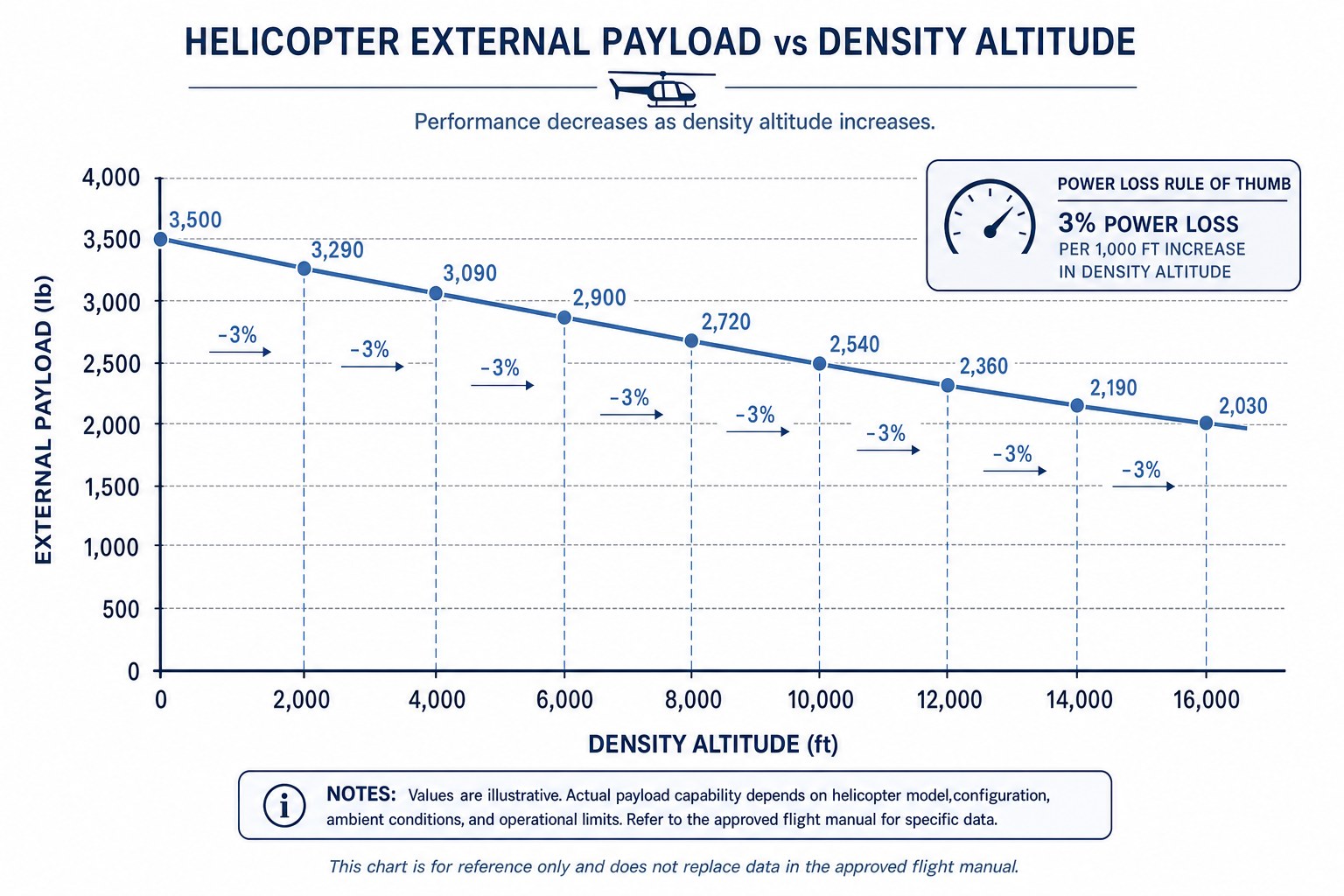
Published capacity is a maximum, usually stated for standard conditions. Tower work often happens on ridgelines, and the deciding variable on a high-elevation set is density altitude: air density expressed as an altitude. It rises with elevation, heat and humidity, and higher density altitude leaves the engines and rotor system less performance to lift with.
The effect on payload depends on the specific aircraft and the conditions on lift day, so no single percentage carries from one aircraft or site to another. The FAA Helicopter Flying Handbook, chapter 7 explains how temperature, altitude and humidity affect performance. An August afternoon on a high ridge can leave far less margin than the published figure suggests. Plan tower sets against the operator's performance figures for the forecast conditions in the lift window, then check them again on the day.
| Aircraft | Max external load | Picks/hr | Tower-work note |
|---|---|---|---|
| Boeing CH-47D Chinook | Not published here | Not published here | Tandem-rotor heavy lifter for large lattice sections; capacity comes from the civil operator's figures |
| Erickson S-64F Air Crane | 25,000 lb (Erickson: maximum external cargo) | Not published here | Aft-facing pilot station for precision stabs on tall structures |
| Sikorsky S-70M Black Hawk | Not published here | Not published here | Hover performance at the site elevation comes from the operator's data |
| Bell 214B Big Lifter | About 8,000 lb (McDermott Aviation: 3,636 kg maximum hook load) | Not published here | Density-altitude performance comes from the operator's data |
| Kaman K-MAX K-1200 | 6,000 lb (Kaman: published lifting capacity) | Not published here | Repetitive external-load work on lattice and antenna sets |
Table note: the sources above state different measurement bases, so the figures are not interchangeable lift-day allowances. Working payload on a given site is checked against the forecast density altitude, longline weight and rigging before the aircraft mobilizes, and that check belongs in the lift plan rather than a later change order. Cycle rate belongs to the operator's estimate against the actual section list and is not published here.

The flight cycle
How Does Helicopter Tower Erection Work?
Every tower set is a Part 133 Class B external-load operation: the load lifts free of the surface on the cargo hook and flies to the structure. A "longline" is the synthetic or wire line suspending the load below the aircraft. Its length is set in the rigging design, and the distance it creates reduces the rotor downwash reaching the crew working the steel.
Staging and sequencing
Sections arrive at the landing zone pre-assembled to the aircraft's working payload for the day, rigged, weighed and tagged in stack order. Certified section weights come from the fabricator, and the operator checks them against the lift plan before anything leaves the ground. A section heavier than the plan allows does not fly until it is re-engineered or the plan changes.
Alignment and bolt-up
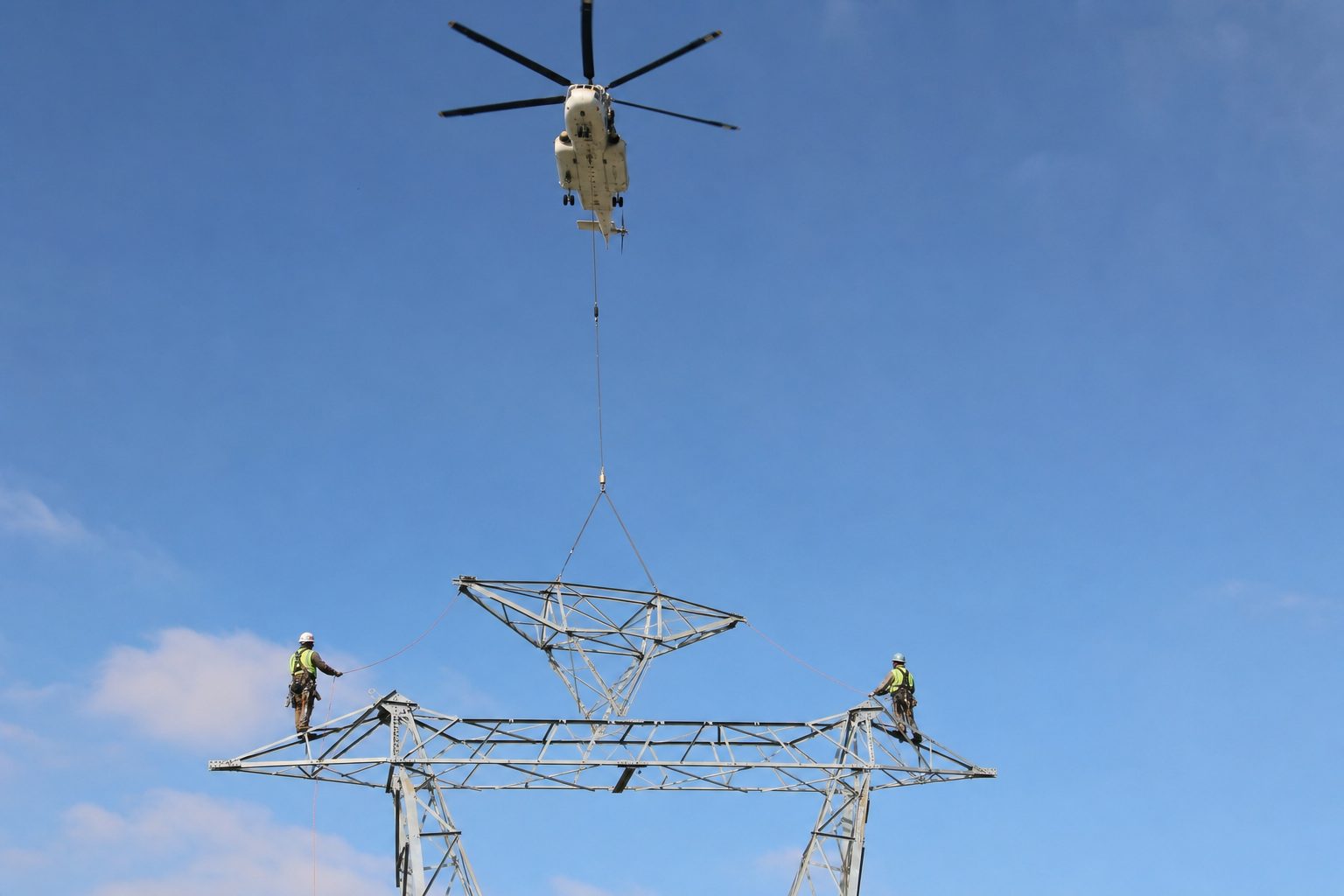
The aircraft flies the section to the structure and holds it in a stabilized hover while the tower crew controls rotation with tag lines: ground-tended ropes that let riggers orient the section without touching it during descent. Stabbing guides and drift pins on the standing steel capture the section legs as the pilot eases the load down. Once the legs seat, the crew sets enough bolts to make the joint self-supporting, the load releases and the aircraft returns for the next section. Torque-up crews complete the bolted connections behind the flight cycle, so bolting does not hold the aircraft at the structure.
The pilot in command has final authority over the operation of the aircraft under 14 CFR §91.3. If the rigging fails inspection or the load behaves badly, the pilot can refuse the pick, and schedule pressure does not override that decision. The authority protects the ground crew as well as the aircraft.
Antenna placement and topping work
Antenna placement is the precision end of the trade: microwave dishes, broadcast bays and top masts set onto structures where a fraction of a degree of misalignment costs signal. The S-64F's aft-facing pilot station gives the pilot a direct view down the line for these sets. Downwash on the crew and the mounted equipment depends on the aircraft and its height above the structure, so the lift plan should address it set by set. Guyed broadcast masts add another planning task: flight paths laid out around the guy planes, with every approach and departure corridor briefed before the first pick.
The mission set
Tower Types Set by Helicopter
Cell tower helicopter lifts and communication sites
Self-support lattice towers, monopole sections and guyed masts, plus the equipment that turns a raw tower into a working site: antenna arrays, mounts, ice bridges, shelter buildings and generators flown to pads with no road. On a carrier build-out, the shelter and the steel can go up in the same flight day when the weights and the sequence allow it.
Broadcast masts
Tall guyed masts and candelabra structures, where crane reach runs out and gin-pole schedules run long. The work includes section-by-section stacking, bay-by-bay antenna work and heavy top-mount replacements on live sites, planned around broadcast windows.
Transmission structures
Lattice tower sections, steel poles and fully assembled structures for new build and rebuild programs. Where the work sits next to energized circuits, the lift plan should state the minimum approach distance it works to and where that distance comes from. OSHA 1926.1408 sets clearance distances by voltage for cranes and derricks, helicopter crane operations have their own standard in OSHA 1926.551, and the utility's limits apply where they are stricter. Settle that geometry before mobilization. Conductor work itself is a separate discipline: see Transmission Line Stringing for Class C operations, travelers, and sock line.
Meteorological towers
Met towers for wind-resource campaigns stand where the wind data is needed, which is often where the roads are not. Lattice sections, instrumentation booms and guy hardware fly in on the same cycle, and with no access road to reclaim, restoration at the end of the campaign covers only the areas the work used.
The same erection method reaches past utility and broadcast work. Ski lift towers stand on terrain that limits crane access for the same reasons a ridgeline met tower does, and they are set by helicopter with the same cycle planning, inside a seasonal weather window.
The rulebook
The Regulatory Frame
These are the rules and standards a tower set runs under. A utility's vendor-qualification review looks for the flight operator's documents against each one:
- 14 CFR Part 133, Class B. The external-load certificate and operating rules for every tower section flown. When a coordinator arranges the work, the certificate check follows the named flight operator: its certificate, approved load classes and the Rotorcraft Load Combination Flight Manual for the aircraft and load. The full plain-language reference is on this site's External Load Operations page.
- OSHA 1926.1408. Clearance distances by voltage for cranes and derricks working near energized power lines. Helicopter crane operations have their own standard in 1926.551, so a lift plan that works to the 1926.1408 distances should say so and name the source of each distance it uses.
- OSHA 1926.551. Helicopter crane operations on the ground: crew protective equipment, dissipating static charge before anyone touches a line or load, tag lines and slings, and the daily briefing.
- ASME B30.12 and B30.26. Handling loads suspended from rotorcraft, and the rigging hardware in the kit. The rigging design should name the standard covering each component, slings included, along with the inspection criteria that follow from it.
- USACE EM 385-1-1. The Corps of Engineers Safety and Health Requirements Manual governs federally contracted work. Where a tower program sits on a federal project, the lift plan is written to it.
The honest boundary
When the Crane Wins
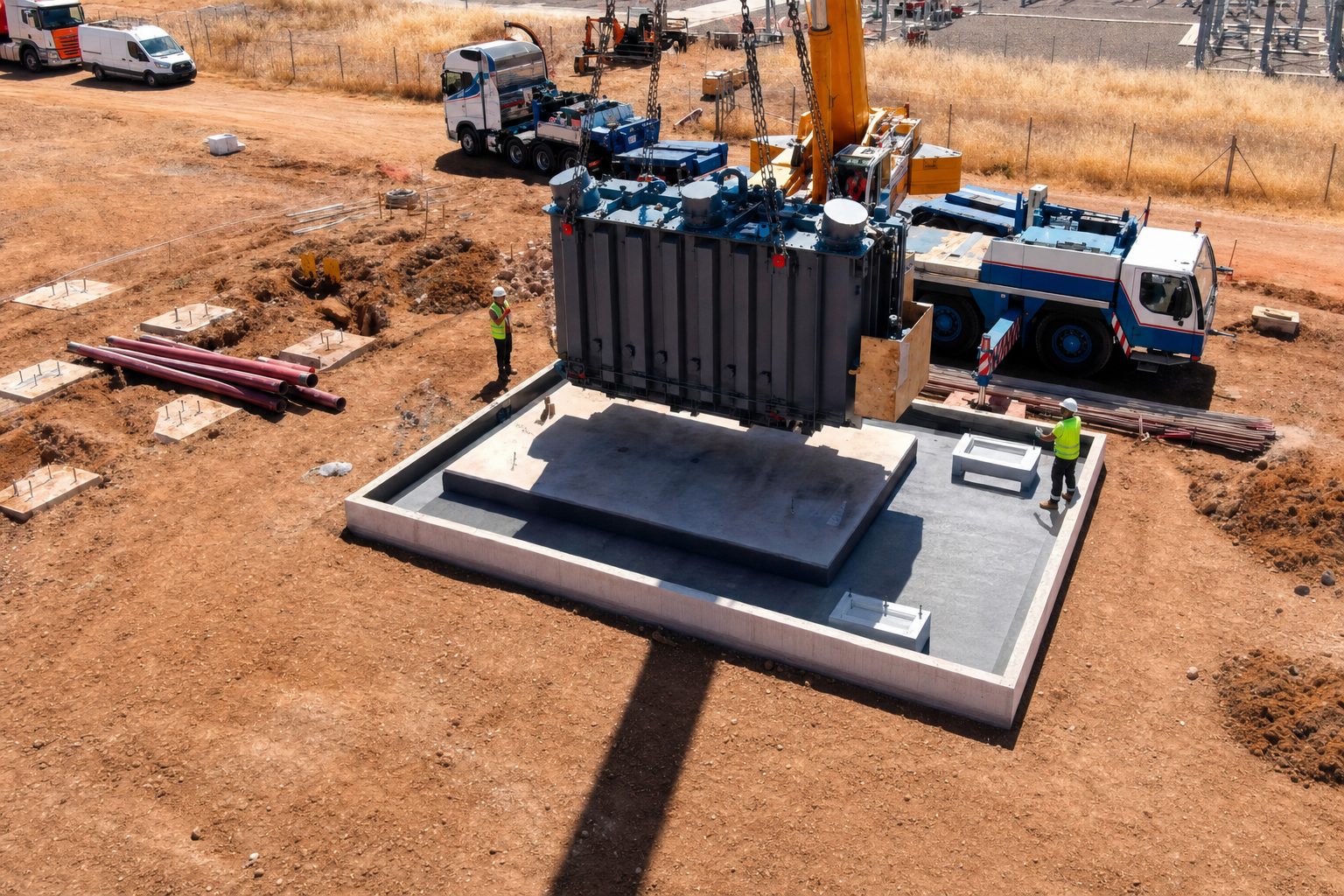
A ground crane is usually the better machine when the site already has crane-rated access, when the erection schedule calls for weeks of continuous lifting on one structure, or when a single pick exceeds what the aircraft can carry. For scale, Vertical reports 28,000 pounds on the hook for Columbia's Model 234 UT/LR Chinook. A monopole going up beside a paved frontage road does not need an aircraft. On a remote site the check runs the other way: a low crane day rate can leave out an access road, a police detail and weeks of schedule. Run both methods as total lifted cost.
The site package
What a Fly-In Tower Site Actually Needs
Site preparation for aerial erection centers on the landing zone and the flight route rather than a road to the structure:
- A landing zone within practical cycle distance: a cleared, debris-policed area for staging, rigging and refueling. Cycle distance drives the cycle rate, so choose the LZ early in lift planning as a cost decision.
- Certified section weights and pick points from the fabricator. This is the contractor's deliverable, and a wrong figure can stop a lift day.
- A tower crew briefed to 1926.551: hard hats with chinstraps, eye protection, the static discharge procedure, tag line assignments and hand signals agreed with the flight crew in the pre-lift briefing.
- Fall-zone control under the flight path, secured per the lift plan and, for work over a congested area, the operation-specific plan the FAA approves under 14 CFR 133.33(d).
The flight operator carries the aviation side: Part 133 compliance, FAA coordination, the lift plan, and aircraft and fuel logistics. When a coordinator arranges the work, those documents still come from the company flying the load. Check the insurance documentation against the project's actual requirements, including aviation liability, any cargo coverage while the load is on the hook, and the additional-insured and waiver-of-subrogation provisions the contract calls for. A contractor evaluating aerial erection should expect those documents in the operator's prequalification package.
The pre-check
Reading the Numbers Like an Estimator
The estimator's version of this page comes down to four inputs: section weights, forecast density altitude, the cycle distance from LZ to structure and the operator's cycle estimate for the airframe. Together they produce a flight-day count, and that count sets how much of the outage window the erection work needs. Any tower program can be pre-checked on paper against those variables before an operator is engaged.
For related work, continue with remote site freight for how camps and materials move over roadless country, and mining operation support for lift work at altitude. The regulatory background behind every page in this section is the External Load Operations reference. New articles in this series are announced through the mailing list.
Frequently asked questions
FAQ
From the technical library