Mission profile 01
HVAC & Rooftop Units
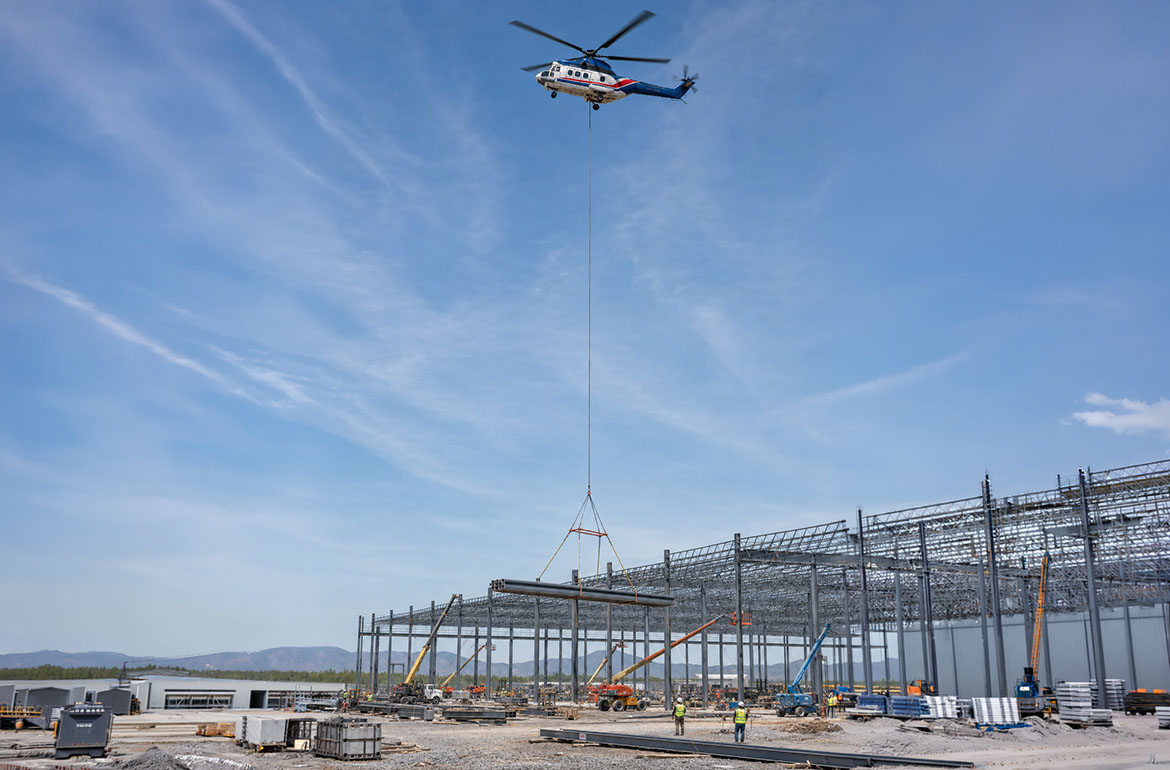
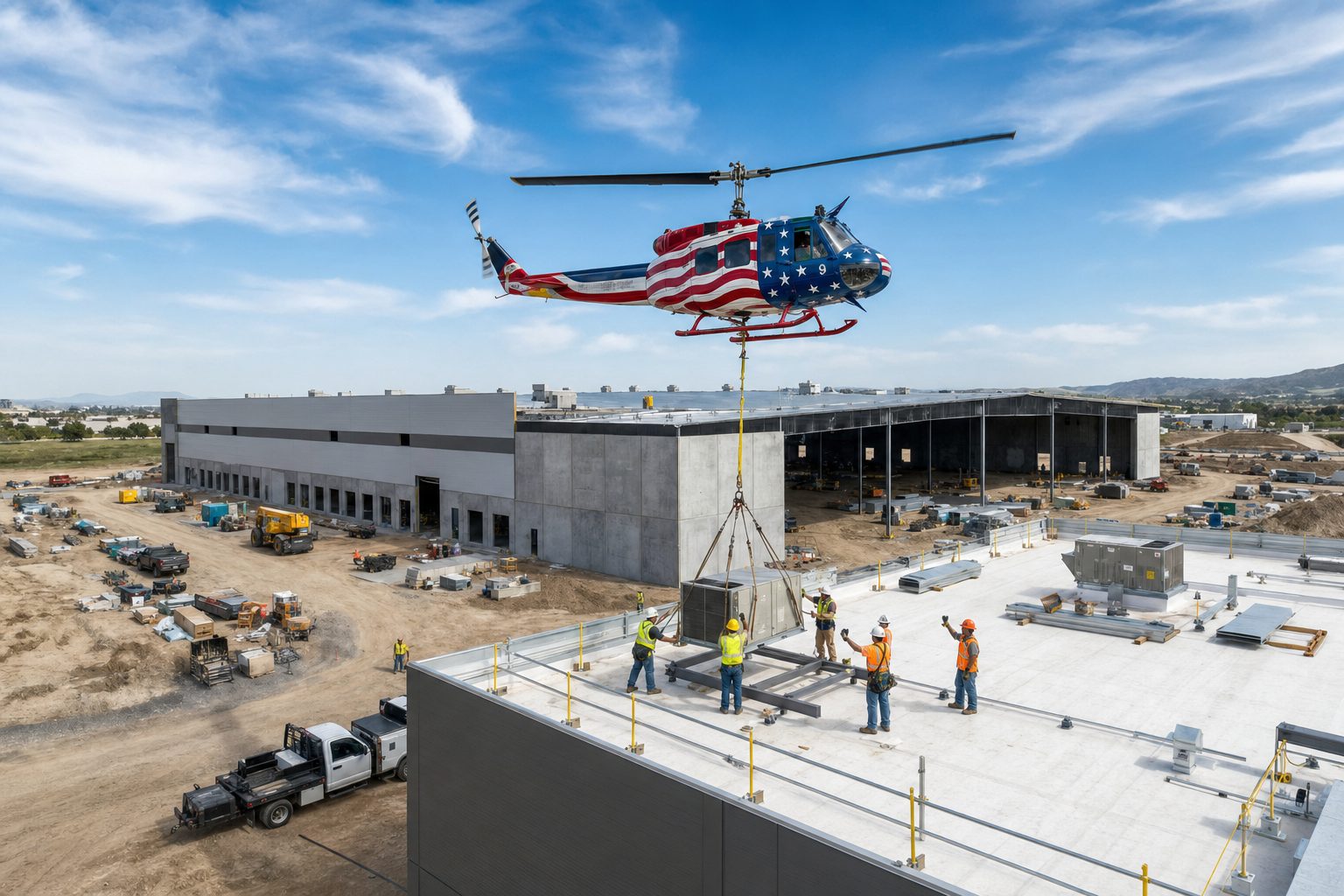
Rooftop unit change-outs, where the planning turns on the actual lift weight of the selected equipment and the curb it has to fit.
Field study 01
Reading path 01: Aerial construction
Construction helicopter services move building loads as Part 133 external loads, from a staging area to a set point a crane cannot reach from a workable position. This page covers how a pick gets engineered, what an operation over a congested area requires under 14 CFR 133.33(d), and what an estimator needs before carrying an aerial lift program into a master bid.
The four missions
A crane helicopter for construction is a Part 133 external load aircraft flying Class B loads: freight carried clear of the ground on a belly hook or longline, releasable in flight, moved from a staging area to a set point without a crane standing on the ground below. That capability divides into four mission profiles, each with its own planning problems:
Mission profile 01
Rooftop unit change-outs, where the planning turns on the actual lift weight of the selected equipment and the curb it has to fit.
Mission profile 02
Steel placement where crane geometry runs out: penthouse members, spires, bridge sections, long-reach picks over occupied structures.
Mission profile 03
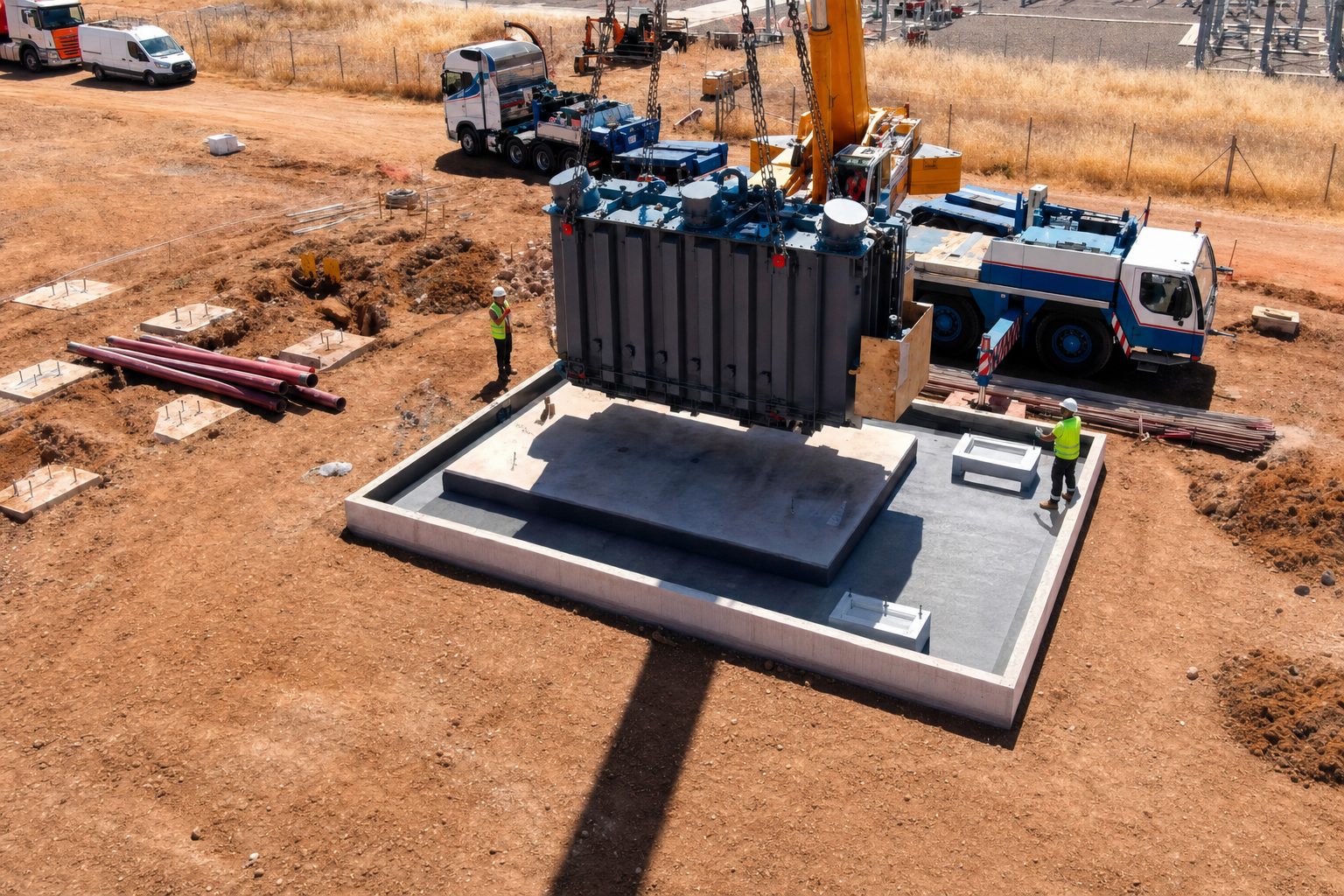
Complete modules, equipment shelters and prefab sections, flown against certified module weights rather than catalog figures.
Mission profile 04
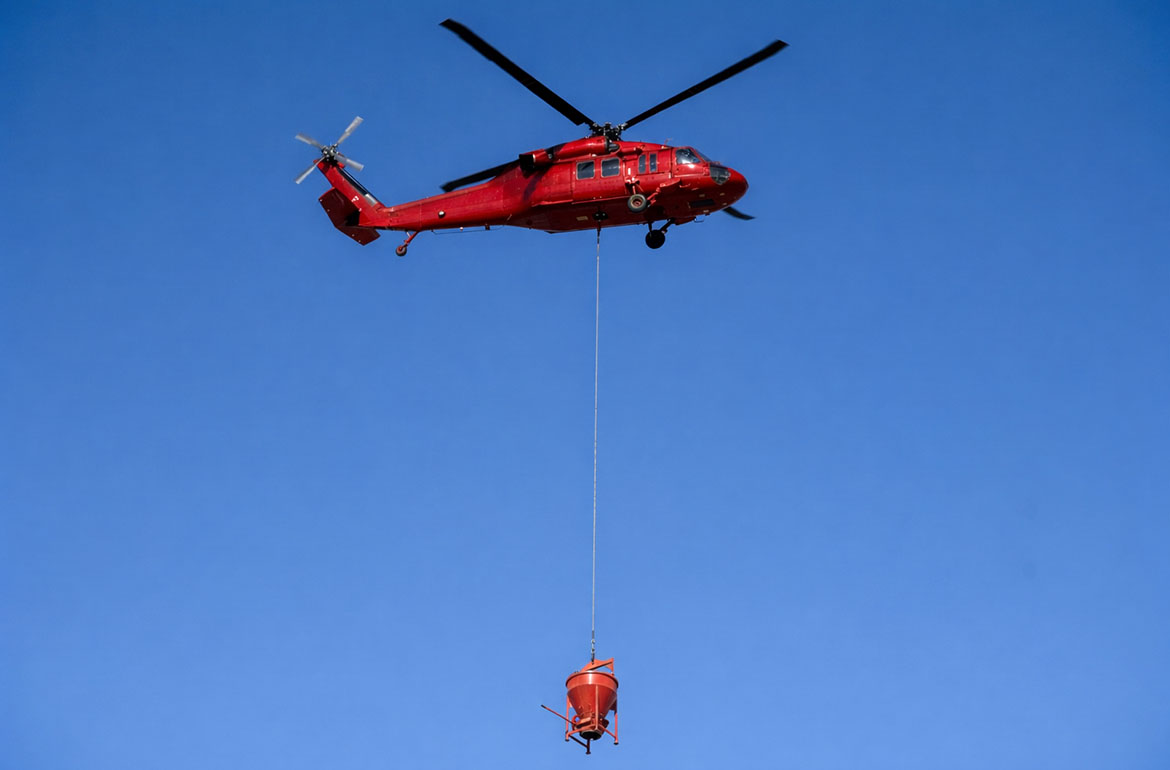
Aerial concrete delivery to pours a pump or truck cannot reach, with the pour sequence planned around cold-joint risk.
Every profile works under the same rules, set out in the Part 133 External Load Operations reference: an established load weight, rigging designed for that load, and a pilot in command holding final authority over each pick.
The bid math
A crane line item rarely shows its full weight in a quantity takeoff. The daily rental rate is visible. The mobilization and site work around it often is not, and that is the gap worth closing before either method looks cheaper.
| Hidden crane cost | Typical exposure | Helicopter equivalent |
|---|---|---|
| Tower crane assembly and teardown | Not published; take the assembly, teardown and transport charges from the crane proposal | The aircraft arrives and departs under its own power, so ferry time and support arrangements go in its estimate instead |
| Street closures, lane-use fees, police details | Not published; lane-use fees and police detail rates are set locally | The operation still needs ground protection under its congested-area plan, so price the access restrictions that plan requires |
| Outrigger ground-bearing analysis, mats, cribbing | Engineering fees plus the schedule time the selected crane needs | No outrigger loads reach the site, but the pickup area and flight route need protection of their own |
| Multi-week rental exposed to weather standby | The rental clock runs whether the crane picks or not | Flight time is shorter, though weather, approval timing and the operator's standby terms carry their own delay exposure |
| Tenant and operations disruption | Lost-revenue claims and after-hours premiums where the contract creates them | Whether a facility keeps operating is a site-specific planning question, not a property of the lifting method |
The exposure column carries no published figures. Those numbers come from the crane proposal and the municipality, and they belong in the comparison at their actual project values.
A compressed flight program can take days out of a schedule, and that is worth pricing. It is not a fixed rate. Cycle time follows the aircraft, the load, the distance between staging and set point, and how fast the receiving crew can take a load and release the gear. Ask the operator for a cycle estimate against the actual pick list, along with the assumptions behind it.
The same comparison runs the other way, and a useful plan runs it that way. The full model, including the cases where the crane wins, is published in the total cost analysis.
The cycle rates
No published rate applies to every job. The figures below show what the named sources publish for hook capacity, and what they do not publish at all:
| Aircraft | Category | External load capacity | Cycle rate | Construction profile |
|---|---|---|---|---|
| Columbia BV-234 Chinook | Not published here | 28,000 lb (Vertical: Model 234 UT/LR, on the hook) | Not published here | Tandem rotor heavy lift |
| Erickson S-64E/F Air Crane | Not published here | 20,000 lb (E) and 25,000 lb (F) (Erickson: maximum external cargo) | Not published here | Aft-facing pilot station for placement work |
| Sikorsky S-61N Mk II | Not published here | 10,000 lb (Helimax: external capacity at standard day, sea level) | Not published here | Mid-size RTUs, shelters, light steel |
| Bell 214B | Not published here | About 8,000 lb (McDermott Aviation: 3,636 kg maximum hook load) | Not published here | Single-engine medium for lighter members |
| Kaman K-MAX K-1200 | Not published here | 6,000 lb (Kaman: published lifting capacity) | Not published here | Intermeshing rotors, built around repetitive external load work |
| Bell 412EP / 212 | Not published here | 412EP 4,500 lb (Avincis specifications, page 4: maximum hook load); 212 not published here | Not published here | Light packages; twin-engine redundancy on the 412EP |
The capacity sources state different measurement bases, so the figures are not interchangeable lift-day allowances. Certification category belongs to the specific aircraft's certification record and is not published here. Cycle rate belongs to the operator's estimate for the actual pick list and is not published here either.
Capacity depends on the specific aircraft and on lift-day conditions, among them density altitude, the air density at the site expressed as an altitude. No single percentage describes that effect across airframes. The FAA Helicopter Flying Handbook, chapter 7 explains how conditions change performance. Have the operator check the planned load against the conditions on the day rather than carry a published figure into the estimate unchanged.
Certification decides where an aircraft may work. Section 133.45(d) prohibits rotorcraft type certificated in the restricted category under §21.25 from external load operations over densely populated areas, in congested airways, or near a busy airport with passenger transport operations. Section 91.313(f) does not remove that restriction, and an approved congested-area plan does not remove it either. Check the specific aircraft's certification and operating limitations before assessing it for an urban set point, and do not assume every variant of a named model carries the same category.
The rulebook
The flight operator holds the certificate and carries its own aviation approvals. The contractor and property owner still have assigned work on the ground, and a bid survives review when it says which is which. Where a coordinator arranges the lift, identify the company that will fly it and keep the certificate review attached to that operator.
14 CFR Part 133 governs civil rotorcraft external load operations. The certificate, the Rotorcraft-Load Combination Flight Manual and the load class determinations are the operator's burden, not the contractor's. Match the operator's authorized load classes to the proposed work.
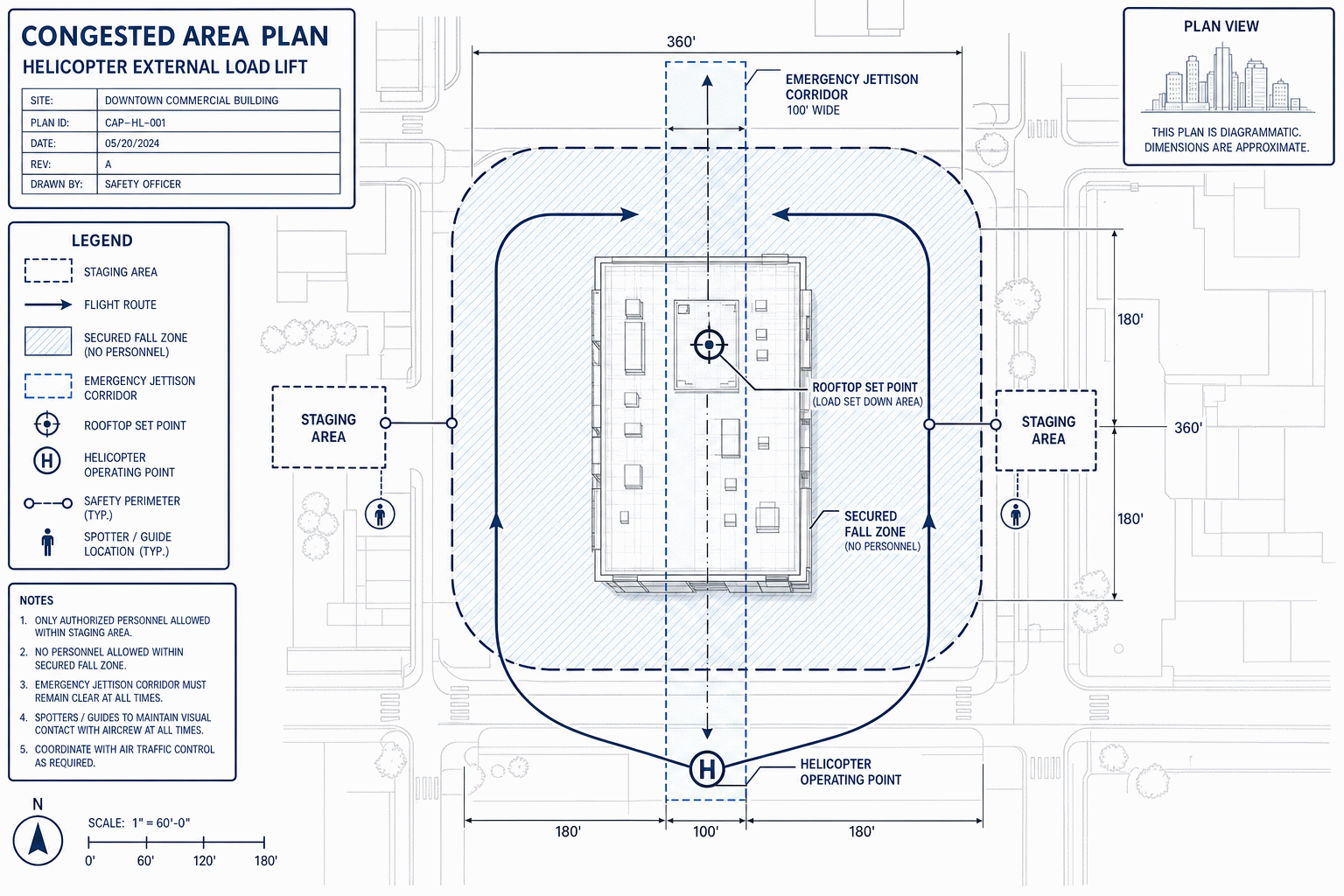
Congested Area Plans under 14 CFR 133.33(d)(1) and AC 133-1B apply to operations over a congested area. The operator develops the operation-specific plan and coordinates approval with the responsible FAA Flight Standards office. The plan covers flight routes and altitudes, an agreement with local officials to exclude unauthorized people from the area, any necessary air traffic control coordination, and routes that permit an emergency load release and a landing without hazard on the surface. No fixed review period applies to every office and operation. Establish the timing with the responsible office and place approval in the schedule as a milestone against equipment delivery. Approval covers the operation the plan describes; it does not certify the aircraft, crew, rigging and airspace as a validated package.
OSHA 1926.551 sets the ground crew standard for helicopter construction work. It requires a briefing before each day's operation and addresses loose objects and static electricity. Put the planned static-discharge procedure into that briefing, and have personnel understand it before anyone touches the hook or the load.
ASME B30.20 and B30.26 cover below-the-hook lifting devices and rigging hardware. The rigging design should name the standard that applies to each component, along with the inspection criteria that follow from it, because those criteria differ between components. The pilot in command holds final authority over the aircraft operation and can refuse a pick. The contractor's side of the ledger is exact: established load weights and engineered pick points.
ANSI S12.9 is the community noise measurement standard behind many municipal noise ordinances. Where a municipality requires an assessment, assign responsibility for it and agree the proposed work window early. FAA approval of the flight operation does not settle local noise rules or site permits.
The ground crew
Named roles are a schedule tool. Before lift day, the operator delivers a ground operations brief that assigns every position: riggers at staging, receivers at the set point, tag line handlers, and a signal person in contact with the flight crew. The contractor's crew hooks, steadies and lands the loads. The flight crew flies the aircraft, manages the hook and holds the go or no-go call on every pick. Downwash at the set point is strong enough to move loose material, so site securing (loose material, temporary fencing, dunnage staging) is finished and verified before the aircraft launches.
The honest comparison
A lift plan should test the engineering outcome rather than defend the aircraft. The ground crane is the better choice in recurring cases: a single heavy pick with workable street access and no closure costs, steady lifting measured in weeks rather than hours, and loads above the published hook capacity of the aircraft actually available. A written recommendation that names one of those cases is worth more to an estimator than one that does not, because it can be carried into the comparison and defended in owner and CM review.
The bid package
A short flight program only wins the contract if the estimator can price it. An appendix built to drop into the master bid should set out the price basis, including flight time, ferry charges, support costs, exclusions, and the terms for standby or cancellation. It should tie any duration estimate to a named aircraft and the actual pick list, and state the assumptions behind that estimate. It should include the insurance policies and endorsements relevant to this lift, checked against the project's requirements rather than assumed, including the scope of any cargo coverage while the load is on the hook and the actual additional-insured and waiver-of-subrogation provisions. It should place the operator's FAA coordination and any site permits as milestones against the notice to proceed, and assign the ground crew interface. Done that way, the quantity takeoff stays clean and the number holds up in review.
The wider library
Heavy grid, tower, and energized-line work is analyzed under Utility & Infrastructure. Emergency response, drop testing, and the missions beyond standard construction live under Specialized Heavy Lift. New analyses in this series are announced through the mailing list.
Frequently asked questions
From the technical library