Utility and infrastructure field study
Heli-Logging and Timber Harvesting: Turn Cycles, Aircraft, and When Aerial Yarding Wins
Helicopter logging usually costs more per unit of timber removed than a ground or cable yarding system. It is chosen on ground where the alternative is a road that has to be engineered, built, maintained and reclaimed, not a cheaper yarding method. This page covers the turn cycle that governs production, the aircraft flown on US timber work, and the conditions under which aerial extraction is the economic choice rather than the expensive one.
Start here
Aerial Yarding Is Not the Cheap Option
The case for helicopters on a timber sale rests on access and ground impact. Cost per unit volume is where the ground system usually wins.
On ground that a skidder or a cable system can work, the ground system usually wins on cost. Aerial yarding carries a high hourly cost, burns fuel on every cycle and needs a support organization on the ground that a conventional operation does not. Compared method against method on accessible terrain, the helicopter is the expensive choice.
The comparison changes on a unit with no road to it. There, the alternative to flying timber out is building road in: survey and engineering, clearing, cut and fill, stream crossings and culverts, surfacing, seasonal maintenance for the life of the sale, and reclamation and revegetation afterward. Put that full cost beside the aerial bid. When the volume being recovered is finite, the road can cost more than the timber justifies. On that unit, the aerial bid is compared with the road, because another yarding method cannot reach the wood without it.
Four conditions push a sale toward aerial systems. They can appear together, and each one strengthens the case made by the others:
- No practical road access. The unit sits far from the existing network, or the terrain makes road construction disproportionate to the volume being recovered.
- Terrain beyond ground-based equipment. Sustained steep slopes and unstable soils keep machines from working safely, and cable systems cannot find anchors or corridors.
- Ground-disturbance constraints. Riparian buffers, sensitive watersheds and soils where compaction or displacement, rather than cost, is the controlling limit.
- Value or urgency that carries the cost. High-value stems, or salvage after fire, blowdown or insect mortality, where the recovery window is short and a road would not be built in time.
The production unit
Everything Reduces to the Turn
Production equals turn weight multiplied by turns per hour. Every planning decision on an aerial sale moves one of those two numbers.
A turn is one complete cycle. The aircraft flies from the landing to the unit on a longline, and the hook is attached to chokers already set around a bundle of stems. The turn lifts vertically clear of the residual stand, flies to the landing and is released, and the aircraft returns empty. The longline keeps the rotor system above the canopy while the hook works at ground level, so line length follows the height of the stand.
Turn weight is limited by the aircraft's external-load capability at the day's density altitude, less the weight of the longline and rigging. Density altitude describes air density as an altitude. Capacity depends on the specific aircraft and the lift-day conditions, and the FAA Helicopter Flying Handbook, chapter 7 explains how conditions affect performance. In practice, turn weight also depends on how consistently the ground crew builds turns close to that limit. A light turn costs the same flight time as a full one, so choker setting affects production as directly as the aircraft does.
Turns per hour depends most on yarding distance, the leg between the unit and the landing, because it is flown twice in every cycle: loaded to the landing and empty back to the unit. Doubling that distance does not halve production, but it changes the number on every turn for the length of the sale. Settle landing placement early, before the aircraft choice, because it shapes every cycle the aircraft will fly.
The same cycle logic governs remote mine resupply and aerial concrete placement. The load changes; the arithmetic does not.
The equipment
Turn Weight Against Cycle Rate
The aircraft with the largest hook is not automatically the most productive on a sale. Match the aircraft to the typical turn weight and the yarding distance.
| Aircraft | External load rating | Category | Timber role |
|---|---|---|---|
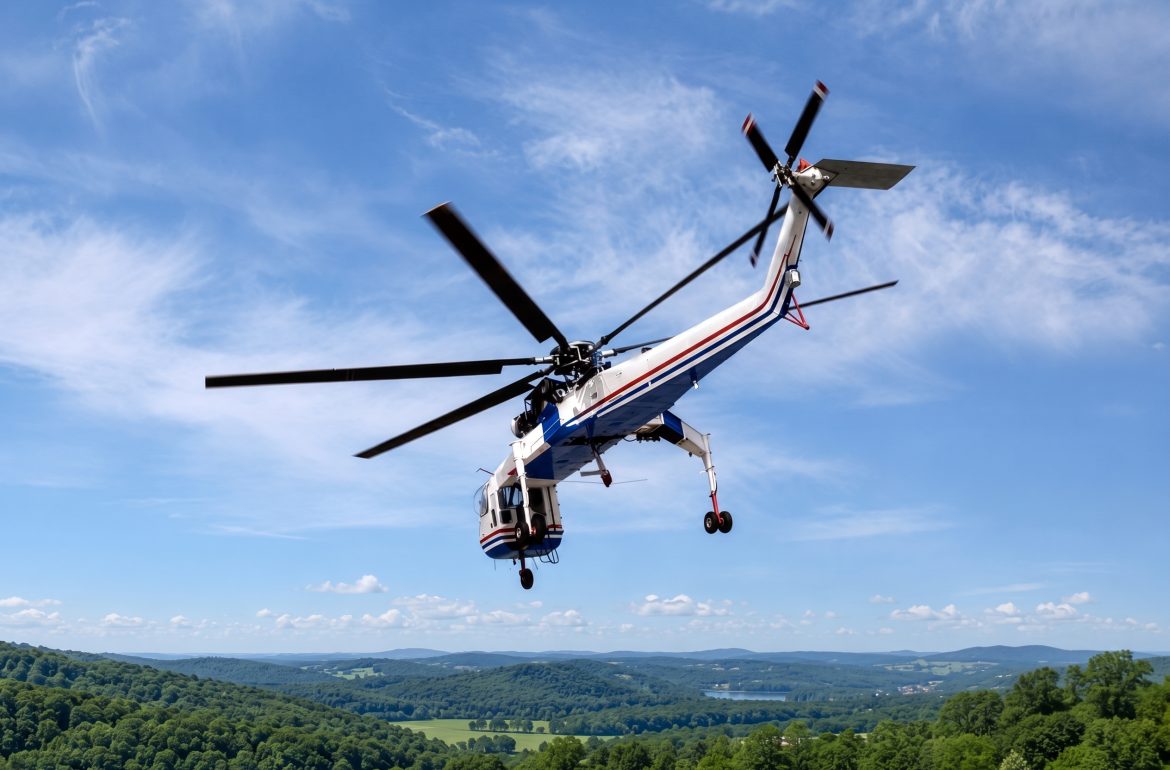
| Erickson S-64F Air Crane | 25,000 lb (Erickson: maximum external cargo) | Not published here | Heavy turns, large stems, the high end of aerial capacity |
| Columbia BV-234 Chinook | 28,000 lb (Vertical: Columbia's Model 234 UT/LR) | Not published here | Heaviest turns on the published figures |
| Boeing Vertol 107-II | Not published here | Not published here | Mid-weight tandem turns |
| Sikorsky S-61 (composite blades) | 10,000 lb (Helimax: S-61N external capacity at standard day, sea level) | Not published here | Mid-weight turns at moderate yarding distance |
| Bell 214B Big Lifter | About 8,000 lb (McDermott Aviation: 3,636 kg maximum hook load) | Not published here | Mid-weight turns and mountain work; performance at the site comes from the operator's charts |
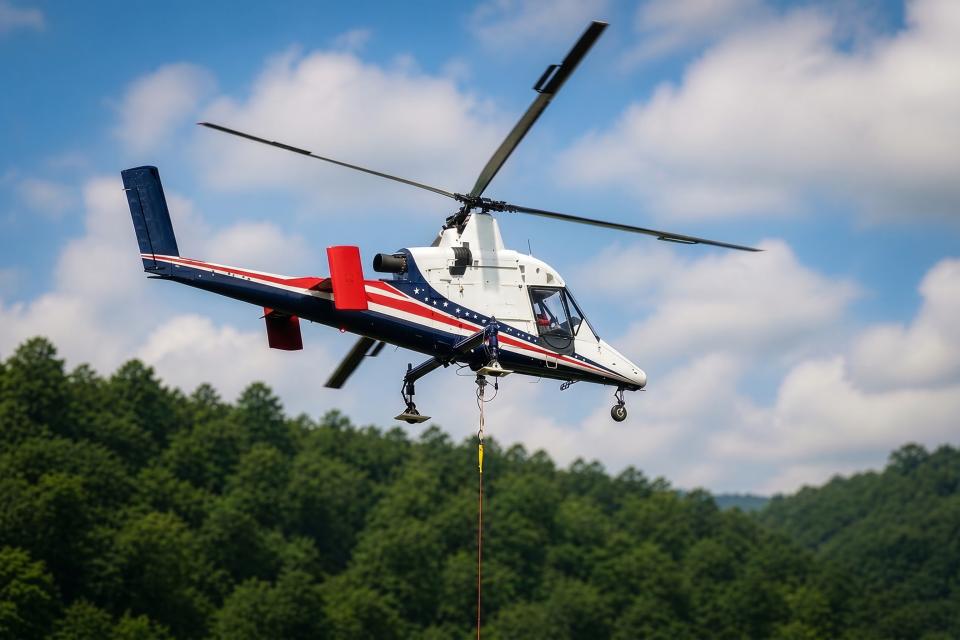
| Kaman K-MAX | 6,000 lb (Kaman: published lifting capacity) | Not published here | Designed for repetitive external lift; cycle rate comes from the operator's plan for the unit |
Ratings are published maximums from the linked sources, not working turn weights. Working turn weight is lower once density altitude, fuel state, the longline and rigging are accounted for, and the operator's load chart for the assigned aircraft sets the number for the day. The Helimax figure is for the S-61N and does not state a blade configuration. Certification category is not published here because it belongs to the individual aircraft. §133.45(d) prohibits restricted-category rotorcraft from external-load operations over densely populated areas, so check the specific aircraft against the route from the unit to the landing.
The K-MAX shows why the heaviest hook is not always the answer. Kaman designed it around repetitive external lift rather than adapting a transport airframe. Its intermeshing rotors remove the tail rotor, so no engine power goes to anti-torque, and its narrow fuselage gives the pilot a view down to the load. Its published 6,000 pound capacity is modest beside an Air Crane. Whether it moves more volume per flight hour on a short yarding distance depends on the turn weights the stand produces and on the operator's cycle estimate for the unit.
At the other end, the S-64 and the Columbia tandems fit sales where the stems are heavy enough that a light aircraft would build uneconomically small turns. The selection question is which aircraft converts this sale's stem size and yarding distance into the most volume per hour. That is answered unit by unit, and the recommendation should change when the unit changes.
See the US Heavy Lift Fleet RankedThe other half
The Aircraft Is Only as Productive as the Ground
Because the aircraft is the expensive asset, the entire ground organization exists to keep it cycling.
In the unit
Choker setters work ahead of the aircraft, rigging bundles so a turn is ready when the hook arrives. An aircraft hovering while a turn is assembled is spending flight time and fuel without moving wood. The crews work under the downwash of an aircraft operating directly overhead. 29 CFR 1926.551 sets helicopter practices for construction work; on a timber sale, the lift plan should name which ground-crew requirements apply, including the logging standard linked below.
At the landing
A crew unhooks each turn, moves it clear and decks it before the next one arrives. A backed-up landing stops the cycle as surely as a unit that runs out of set chokers. Plan the landing's size and layout around the interval between arriving turns, not total daily volume, because the landing has to clear each turn before the next one comes in.
Service and fuel
A service landing close to the work handles fuel and maintenance, so the aircraft is not ferrying to a distant airport between cycles. The aircraft burns fuel on every cycle, and every minute spent flying to reach it is a minute not spent moving wood.
Communications
The plan designates one person to direct the aircraft at any moment. That prevents conflicting direction from several people on the ground, and it matters on a timber sale because the canopy can block the pilot's view of the hook.
The other reason
The Timber Never Touches the Ground
Aerial yarding's environmental case is mechanical. Conventional systems move stems across the soil, which produces skid trails, compaction and displacement, and they need a road network to reach the unit. Aerial extraction lifts each turn vertically out of the stand and sets it on a landing, so no stem is dragged between the stump and the landing. The landings and the service landing still disturb ground, and they belong in the comparison.
That difference is what makes aerial systems viable on riparian ground, in sensitive watersheds and on slopes where soil stability, rather than equipment capability, is the governing constraint. It also avoids the longest-lived impact of a conventional sale. A road can outlast the harvest and carries ongoing sediment, drainage and maintenance consequences; an aerial unit leaves no new road or skid trails behind.
The same difference affects procurement. Where permitting conditions, watershed protections or reclamation bonding attach real cost to ground disturbance, compare the total cost of getting the volume out and leaving the site in an acceptable condition. The aerial option is not competing on hourly rate there, and that total comparison can decide the sale.
Related reading
The rules beneath the hook
Timber work is flown under the same Part 133 external-load rules as the other lifts covered on this site.
The reading path
Where This Analysis Goes Next
The cycle arithmetic of a timber sale reappears across external-load work. The regulation behind every turn is covered in the Part 133 external load operations reference, the same roadless-access economics drive mining operation support and remote site freight, and the full vertical sits at utility and infrastructure. New articles in this series are announced through the mailing list.
Frequently asked questions
What Timber Planners Ask First
From the technical library