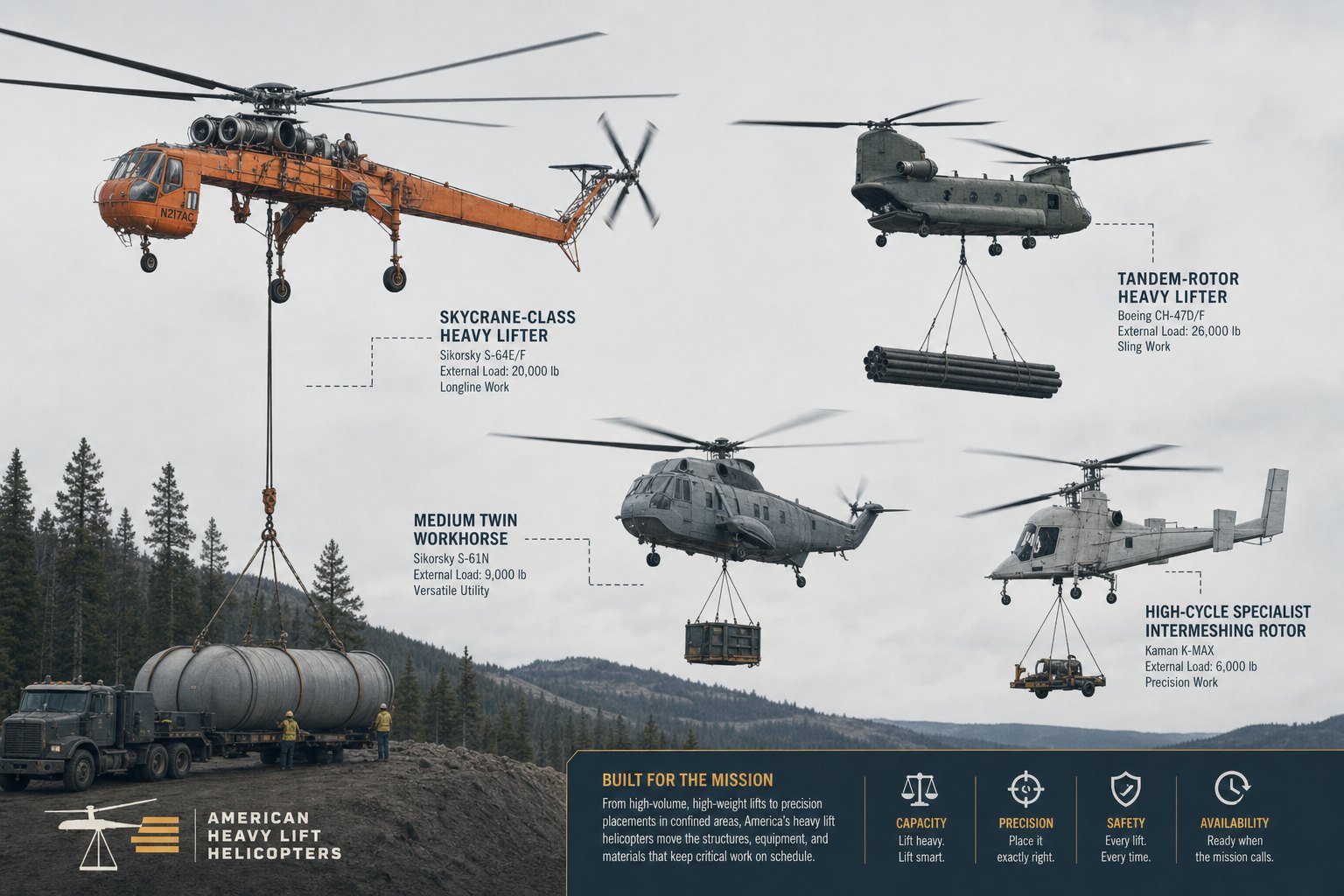
The strongest commercially available heavy lift helicopters in the United States in 2026 span roughly 3,500 to 28,000 pounds on the hook at sea level standard day. The civil ceiling sits with the Columbia BV-234 Chinook near 28,000 pounds; the purpose-built Erickson S-64F Air Crane carries 25,000. This ranking covers ten airframes that United States operators actually fly under 14 CFR Part 133, ordered by practical industrial value rather than raw brochure capacity alone.
A global capacity chart is interesting. A United States job site is not. Planners who estimate rooftop HVAC, tower steel, transmission work, mining freight, and fire support need the fleet that holds real certificates, real insurance, and real availability inside the country. Machines without an FAA path (the Mil Mi-26 is the usual example) stay off this list even when their hook numbers look larger on paper.
Ranking criteria, stated up front: usable external-load capacity at sea level standard day; airworthiness category and congested-area eligibility; mission fit for construction, utility, fire, logging, and remote freight; and commercial availability with United States operators. Capacity dominates the top of the list. Cycle rate, hot-and-high margin, and twin-engine redundancy move the middle and lower ranks. Every hook figure below is a sea level standard day number. Heat and altitude tax payload by roughly 3 percent per 1,000 feet of density altitude.
The United States commercial heavy lift field at a glance
| Rank | Aircraft | Max external load (SL, std day) | Category | Primary industrial role |
|---|---|---|---|---|
| 1 | Erickson S-64F Air Crane | 25,000 lbs | Standard (external-load transport basis) | Purpose-built heavy construction, modules, fire |
| 2 | Columbia BV-234 Chinook | 28,000 lbs (20,000 precision) | Standard | US civil ceiling; heavy congested-area work |
| 3 | CH-47D Chinook conversions | 26,000 lbs (center hook) | Restricted | Fire, powerline, remote heavy freight |
| 4 | Erickson S-64E Air Crane | 20,000 lbs | Standard (external-load transport basis) | Heavy chillers, steel, tower sections |
| 5 | Sikorsky S-61N | 10,000 lbs (composite blades) | Standard | Medium-heavy twin workhorse |
| 6 | Bell 214B Big Lifter | ~7,000 to 8,000 lbs | Standard | Hot-and-high single; fire and construction |
| 7 | UH-60 / S-70 conversions | 8,000 to 9,000 lbs | Restricted | Fire, logging, remote utility |
| 8 | Kaman K-MAX K-1200 | 6,000 lbs | Normal (purpose-built civil, Part 27) | High-cycle precision external load |
| 9 | Bell 412EP | ~4,500 lbs | Standard | Light twin; line hardware, compact rooftop work |
| 10 | Bell 212 | ~3,500 to 4,500 lbs | Standard | Light twin utility; twin redundancy near lines |
Capacities are published manufacturer and operator sea level standard day figures used across the AHLH library. Precision placement ratings, where published, are lower than maximum carry figures. Category and Part 133 planning decide where each airframe may legally work.
The full aircraft-by-aircraft helicopter lift capacity table expands the same numbers with precision columns and global context. This page answers a narrower question: which ten commercially available United States machines matter most when a contractor is matching a pick list to a rotorcraft class in 2026.
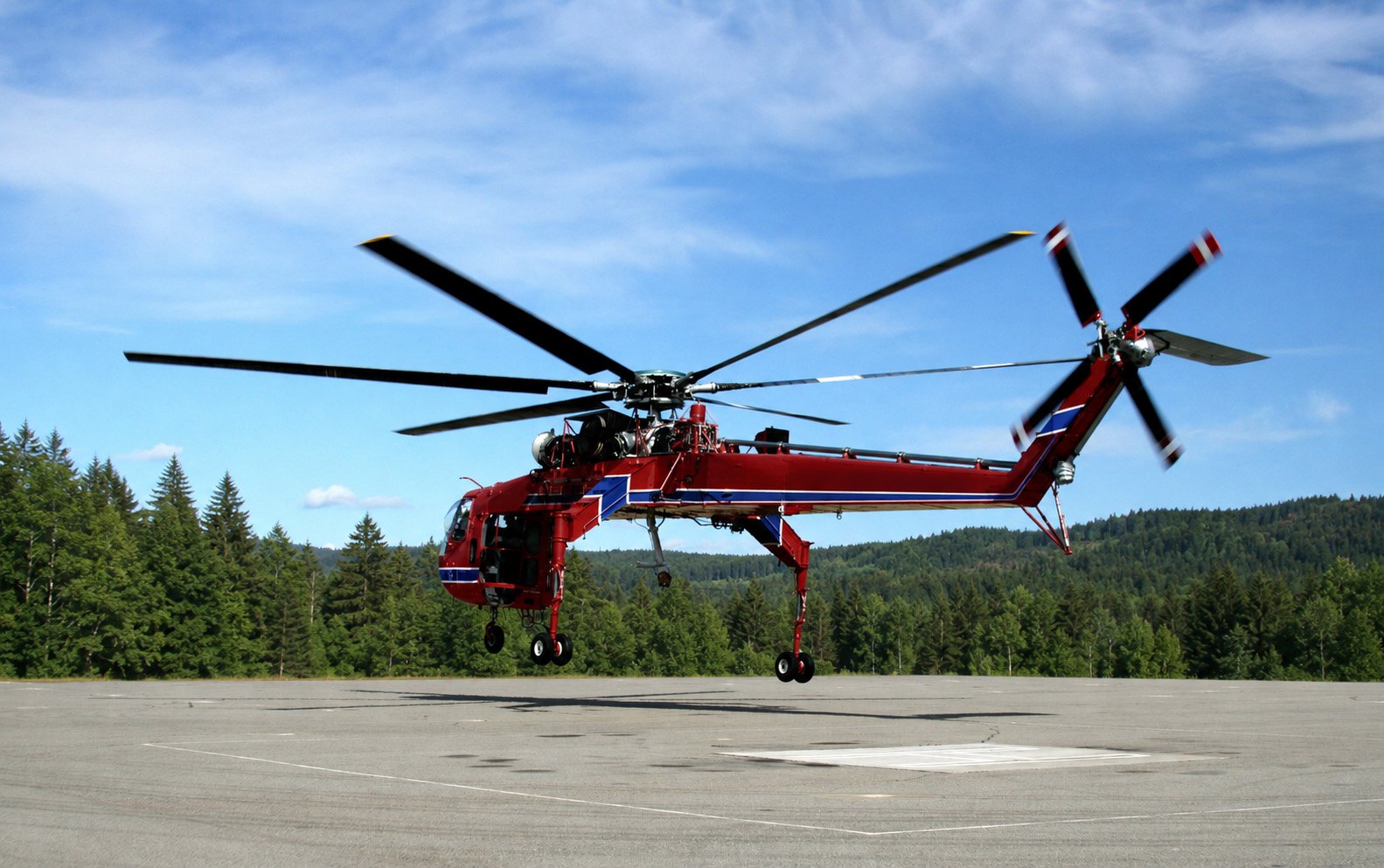
1. Erickson S-64F Air Crane
The S-64F is the purpose-built answer to heavy industrial external load. Derived from the Sikorsky Skycrane and operated and supported in civil service by Erickson Inc., the F-model is rated at 25,000 pounds on the hook at sea level standard day. An aft-facing pilot station puts a crewmember’s eyes on the load during precision sets, which is why the type anchors chiller, module, steel, and large tower work that ordinary utility twins cannot touch.
It ranks first on practical industrial value, not on the absolute civil ceiling. The BV-234 can show a higher maximum carry number, but the Air Crane’s entire design brief is external load: no cabin full of seats fighting the mission, a crane-like sight picture, and a civil operating culture built around hook work and fire. When the pick list lives in the 15,000 to 25,000 pound band, this is the airframe United States planners reach for first.
2. Columbia BV-234 Chinook
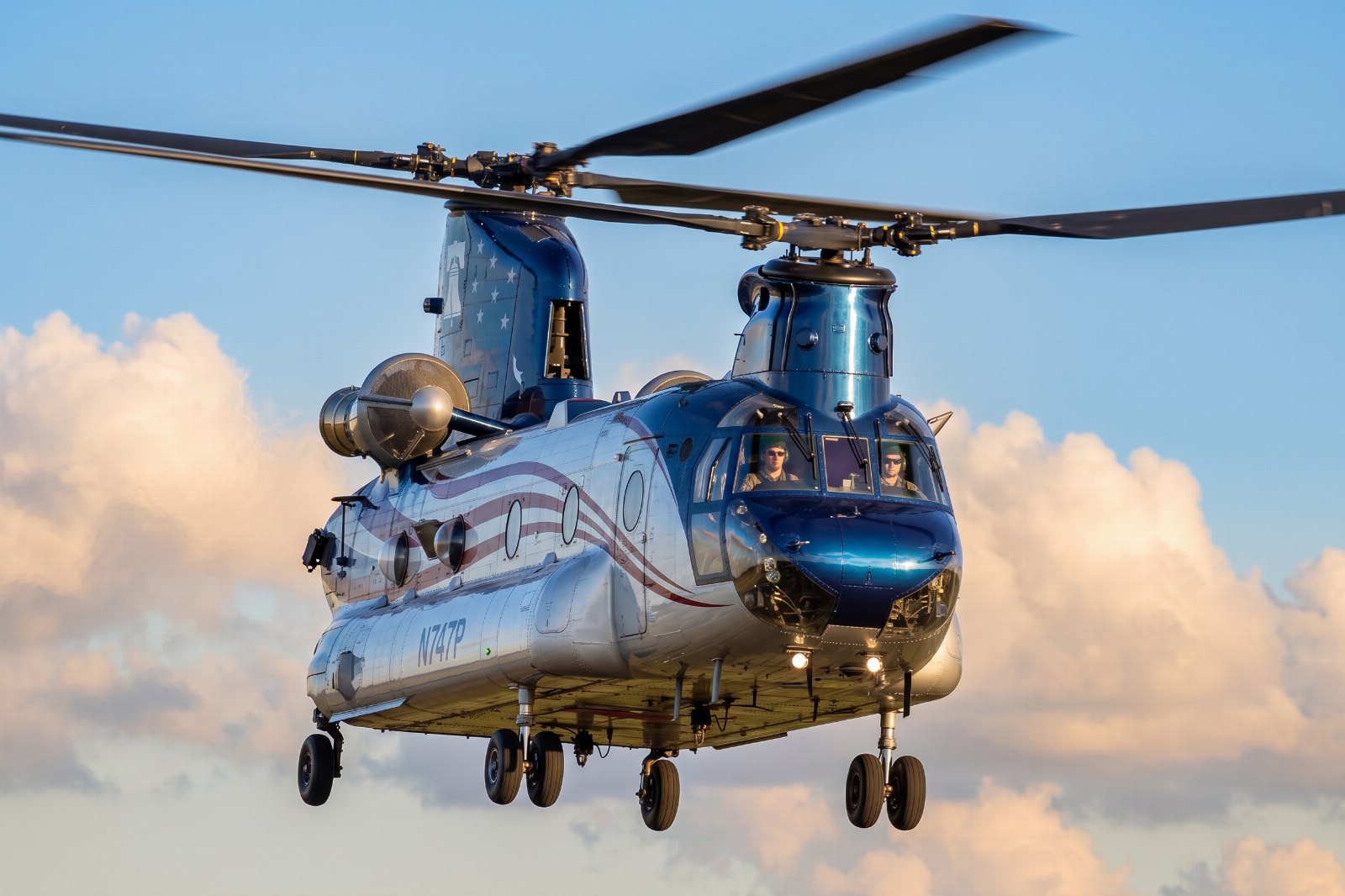
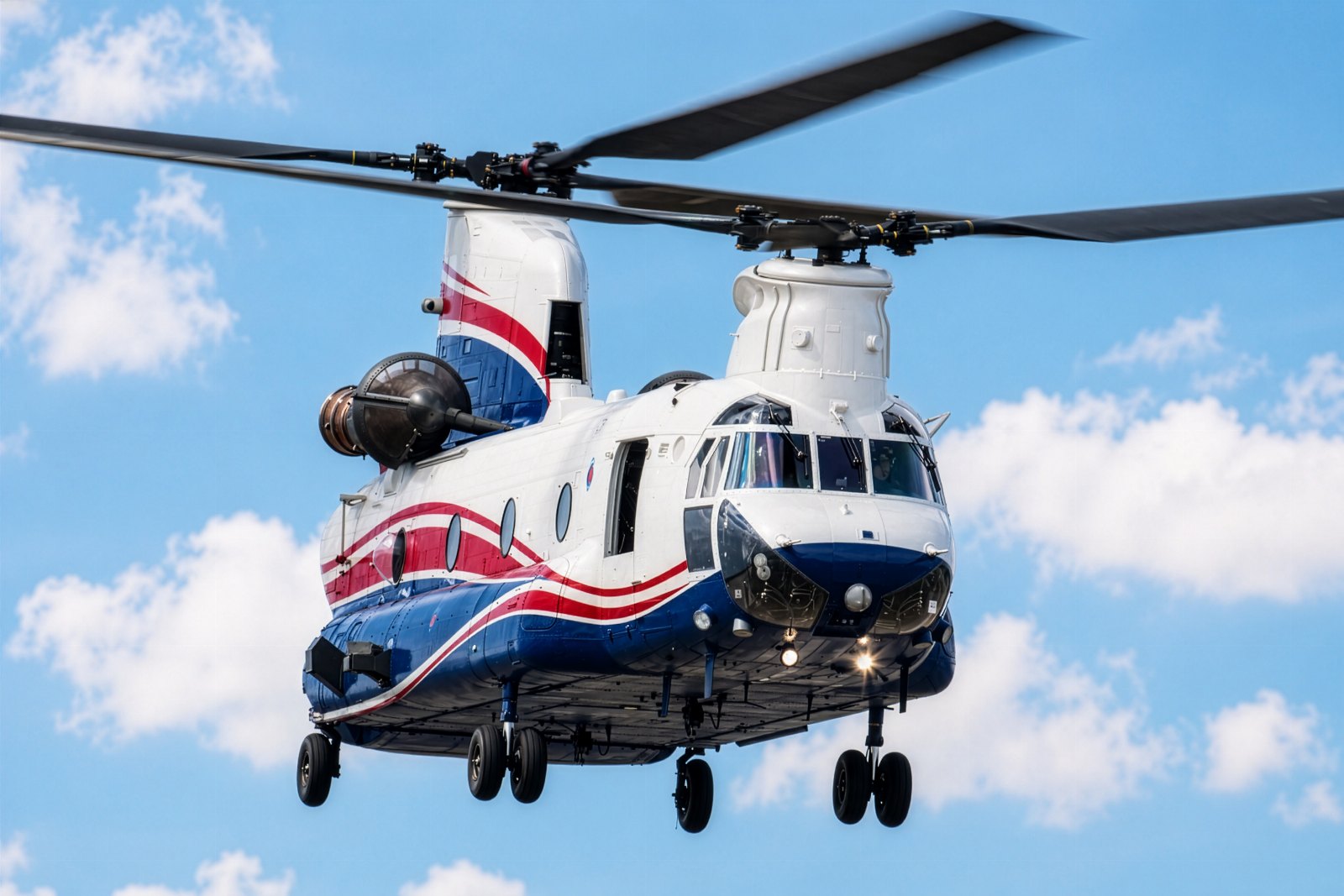
The Columbia Helicopters BV-234 is the civil Chinook that defines the United States commercial ceiling: roughly 28,000 pounds on the hook, with a published 20,000 pound precision placement figure. Standard category certification is the other half of the story. Where a restricted-category surplus Chinook needs a carefully built Part 133 path for congested-area work, the BV-234 was built as a civil transport and remains the legally cleanest way to put tandem-rotor heavy lift over occupied ground under an approved plan.
Precision placement is what construction actually buys. A 28,000 pound maximum carry that becomes 20,000 pounds when the load must sit on a bolt pattern is still the top of the domestic civil market. For urban and industrial programs that need Chinook-class capability without surplus paperwork friction, the BV-234 is the benchmark.
3. CH-47D Chinook conversions
Surplus CH-47D airframes in commercial service sit just under the BV-234 on raw hook capacity, commonly cited near 26,000 pounds on the center cargo hook at sea level standard day. They dominate fire, powerline, and remote heavy freight where restricted-category rules are manageable and the terrain is not a dense city grid. Under 14 CFR 91.313, restricted-category aircraft face populated-area limits, but nonpassenger-carrying Part 133 external-load operations can still open congested-area work when the operator holds an approved plan.
14 CFR 91.313 Restricted category limits
The ranking places conversions third because capability is enormous and United States commercial fleets actually field them, while standard-category BV-234 airframes remain scarcer and more expensive to put on contract. Category is a planning input, not an automatic disqualification. For how urban eligibility is cleared in practice, see the library’s guide to clearing a helicopter lift over a congested area.
4. Erickson S-64E Air Crane
The S-64E is the 20,000 pound sibling of the F-model: same Skycrane architecture, same aft-facing station logic, same Erickson support backbone, one step down the hook table. It is often the right-sized heavy answer when the pick list never needs 25,000 pounds and the program should not pay for unused tier. Industrial chillers, structural steel, modular sections, and tower work in the mid-heavy band are classic E-model missions.
Keeping E and F as separate ranks is deliberate. Operators and rate cards treat them as different products. A planner who collapses “the Air Crane” into one blob loses the right-sizing decision that separates a clean bid from an overbuilt one.

5. Sikorsky S-61N
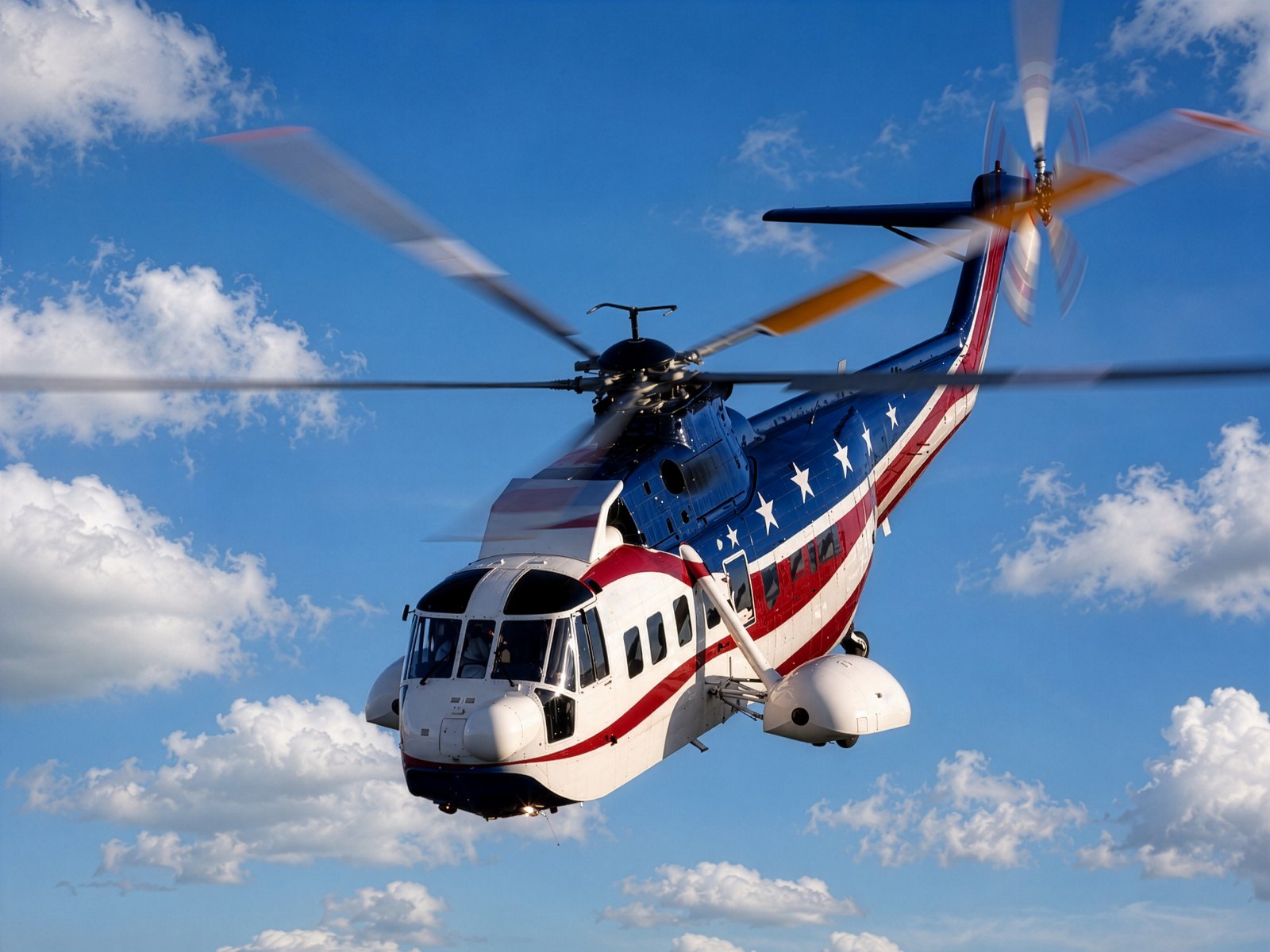
The S-61N is the medium-heavy twin that still does a huge share of United States commercial external load when the pick sits near 10,000 pounds with composite main rotor blades. Standard category certification, twin-engine redundancy, and decades of civil operating history make it the default “step below the crane tier” for multi-unit rooftop programs, mid-weight industrial sets, and utility work that does not justify an Air Crane hour.
Right-sizing starts here more often than marketing admits. Jumping from the S-61N tier to the S-64 tier can multiply the flight-hour rate for margin the pick list never uses. The inverse is also true: forcing a 12,000 pound program onto a medium twin produces cycle count and scrub risk that erase the schedule advantage rotorcraft were hired to create.
6. Bell 214B Big Lifter
The Bell 214B remains the strongest single-engine civil lifter in routine United States-relevant commercial service: roughly 7,000 to 8,000 pounds on the hook at a 16,000 pound external-load gross weight, behind a 2,930 shaft horsepower Lycoming turboshaft. Standard category certification keeps it eligible for congested-area work under an approved plan. Erickson’s ownership of the type certificate keeps parts and airworthiness support alive decades after the 70-airframe production run ended.
Hot-and-high performance is why the type still earns fire and mountain construction seasons. For the full development history, specifications, and operator picture, see the library’s Bell 214B Big Lifter profile.

7. UH-60 and S-70 Black Hawk conversions
Commercial Black Hawk conversions typically plan around 8,000 pounds (UH-60A class) to 9,000 pounds (UH-60L class) on the hook at sea level standard day. Restricted-category certification steers most of the fleet toward fire, logging, and remote freight rather than routine downtown rooftop sets. Within that mission set they are fast, available, and mechanically familiar to a large pilot and maintenance labor pool.
They rank above the K-MAX on pure hook capacity and below the 214B on congested-area flexibility. A program that never leaves controlled, unpopulated terrain will evaluate them differently than a program that must clear a city FSDO package.

8. Kaman K-MAX K-1200
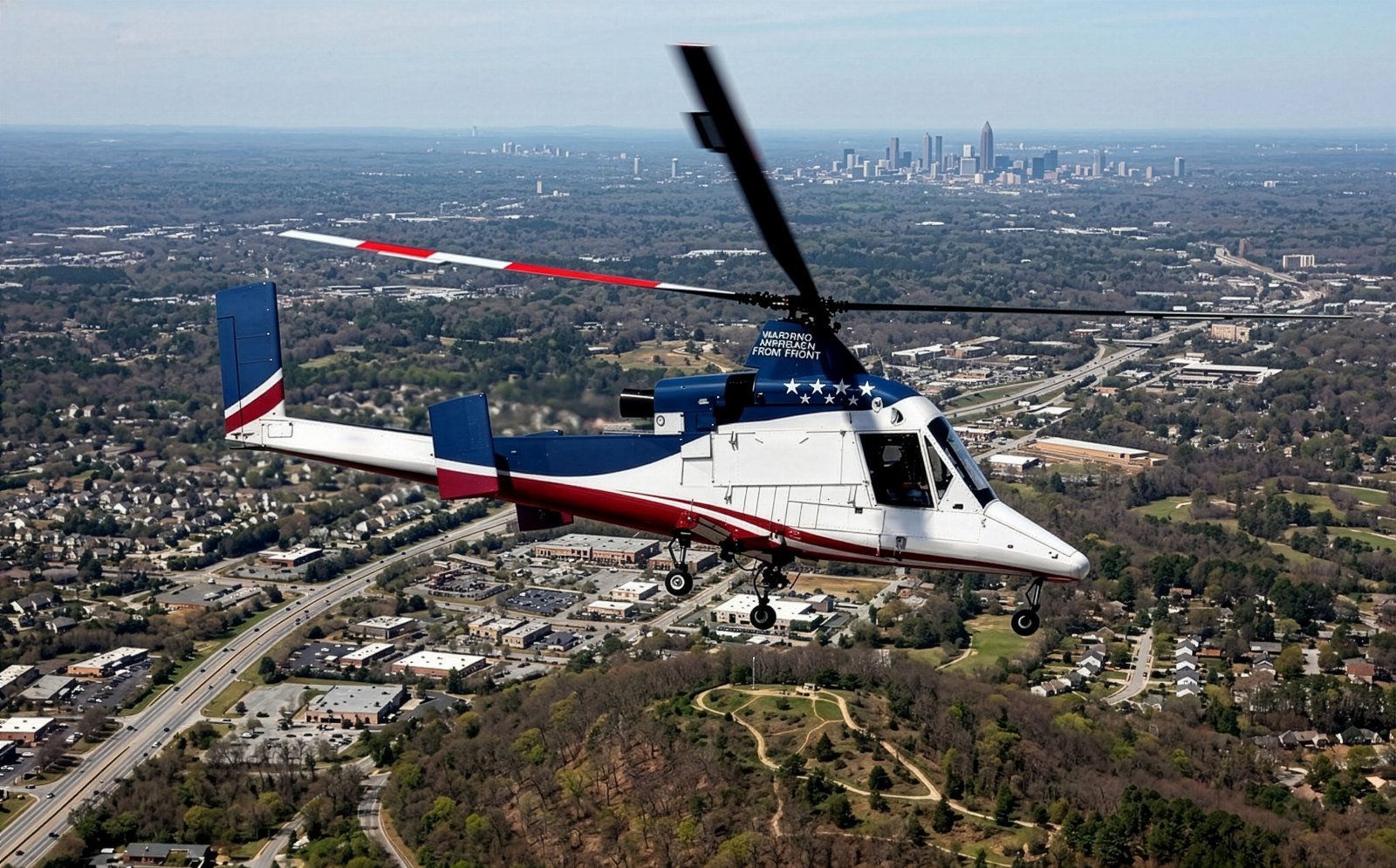
The Kaman K-MAX is the high-cycle specialist: 6,000 pounds on the hook, intermeshing rotors, no tail rotor absorbing power, and production rates of 20 to 25 picks per hour on repetitive loads. Empty weight sits near 5,145 pounds, so the aircraft lifts more than it weighs. That design purity is why it appears on concrete, tower, and production external-load programs that heavier machines would price out of viability.
It does not win a maximum-capacity contest. It wins a picks-per-hour contest. Any ranking that ignores cycle economics misunderstands how a large share of United States external-load revenue is actually earned.
9. Bell 412EP
The 412EP occupies the light twin workhorse tier at roughly 4,500 pounds external load, with twin-engine redundancy that matters near energized lines and over sensitive sites. It will not move a 20,000 pound chiller. It will move line hardware, compact rooftop equipment, and utility loads all day with civil certification and broad parts support.
Including light twins on a heavy lift list is intentional. Many “helicopter lift” bids fail because the team started at the Air Crane tier when the pick list never left the 412 band. Best available does not always mean heaviest available.
10. Bell 212
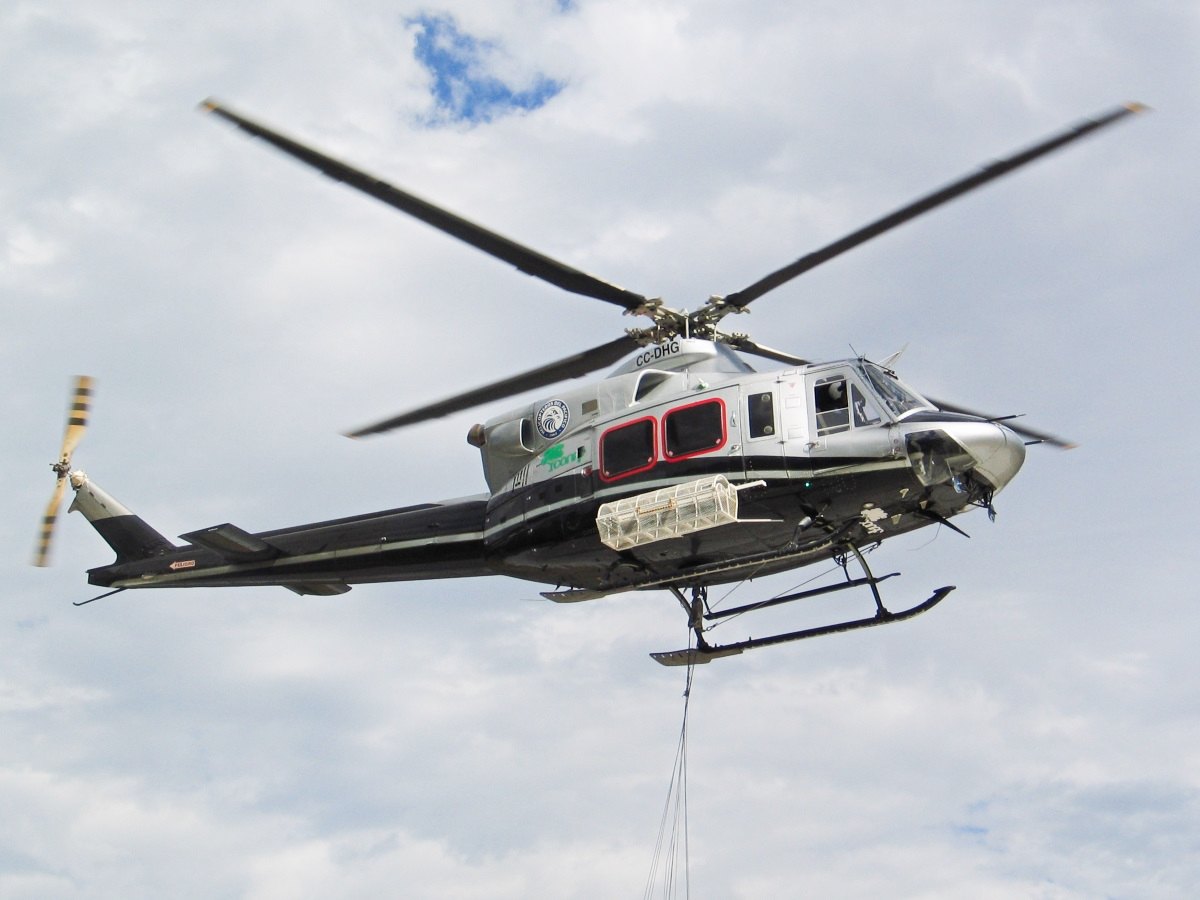
The Bell 212 closes the list at roughly 3,500 to 4,500 pounds external depending on configuration: the classic twin Huey still earning civil utility and light external-load work across the United States. Twin-engine redundancy, a deep pilot base, and standard category paperwork keep it relevant for hardware, light modules, and support lifts that do not justify a medium-heavy twin.
It ranks tenth on capacity and still belongs in a commercial availability ranking. The lower edge of the external-load market is where a large volume of real jobs lives. Ignoring it produces the same error as ignoring the K-MAX: optimizing for the wrong variable.
Rough flight-hour bands by tier
A helicopter's hourly rate is only one part of its project cost. Ferry flights and ground support can add substantial work before the first lift. Compare the quoted billing minimum and fuel terms, then account for rigging crews and any standby charges that are separate. The helicopter lift cost versus crane total-lifted-cost analysis explains those line items with attributed price examples and clearly labeled estimating scenarios.
| Tier on this list | Aircraft on this ranking | Rough flight-hour band | What the hour actually buys |
|---|---|---|---|
| Light twin / utility | Bell 412EP, Bell 212 | Lower band (from roughly $2,000/hr for light singles; twins above that) | Compact units, line hardware, twin redundancy near energized lines |
| High-cycle specialist | Kaman K-MAX | Mid band | 20 to 25 picks/hr on repetitive production loads |
| Single-engine and surplus utility | Bell 214B, UH-60 / S-70 conversions | Mid band | Hot-and-high margin (214B); fire, logging, remote utility (Black Hawk) |
| Medium-heavy twin | Sikorsky S-61N | Mid band | Multi-unit rooftop and mid-weight industrial sets without crane-tier hours |
| Heavy / maximum civil | S-64E, S-64F, CH-47D, BV-234 | Upper band toward $25,000+/hr | Precision heavy sets, modules, large steel, fire; civil ceiling capability |
Bands are planning ranges, not quotes. A cheaper hour that needs twice the cycles, a long ferry, or a scrub day is not the cheaper project. Right-sizing the airframe to the heaviest pick at site density altitude usually beats shopping the lowest published rate.
How to use this ranking on a real job
Start with the heaviest pick on the list, not the average pick. Derate that figure for the site’s forecast density altitude, subtract rigging weight, and only then choose a tier. A sea level 10,000 pound medium twin is not a 10,000 pound machine on a hot 6,000 foot bench. The library’s density altitude analysis walks the payload math that governs every helicopter lift in thin air.
Next, map geography to category. Standard category airframes simplify congested-area packages. Restricted category airframes remain fully legitimate for fire, remote construction, and many Part 133 missions when the plan is built correctly. Finally, match cycle economics: a K-MAX on fifty repetitive picks is a different product than an S-64F on four precision sets, even if both are “helicopter lifts” on a schedule line.
Step up one tier when any of the following is true:
- The heaviest pick, after density altitude and rigging, exceeds the smaller airframe’s honest hook margin.
- Precision placement needs power left over at the bolt pattern, not just enough power to carry the load in cruise.
- Congested-area or category limits block the cheaper restricted airframe and a standard-category type is the clean path.
- Cycle count, ferry, or scrub risk on the small ship erases its hourly advantage on a total-project basis.
- The schedule cannot absorb splitting one heavy pick into multiple lighter cycles.
What this list excludes is as important as what it includes. No foreign types without a United States commercial path. No prototypes. No pure military aircraft that never enter civil Part 133 service. The goal is a field guide for estimators and project managers who have to put a real airframe against a real pick list in 2026, inside the United States, under the rules that actually govern the work.