Utility and infrastructure field study
Pipeline Helicopter Services: Construction Support & Aerial Surveys
Pipeline helicopter services carry pipe strings, valve assemblies, compressor components and access mats to segments of the right-of-way where a temporary access road would otherwise have to reach the workfront. Operators fly these lifts under FAA Part 133. The staging yard, pickup area and flight route still need preparation, and the assigned aircraft's capacity on lift day sets what each pick can carry. Once the line is operating, the same corridor needs aerial patrol and integrity survey flights for its midstream owner.
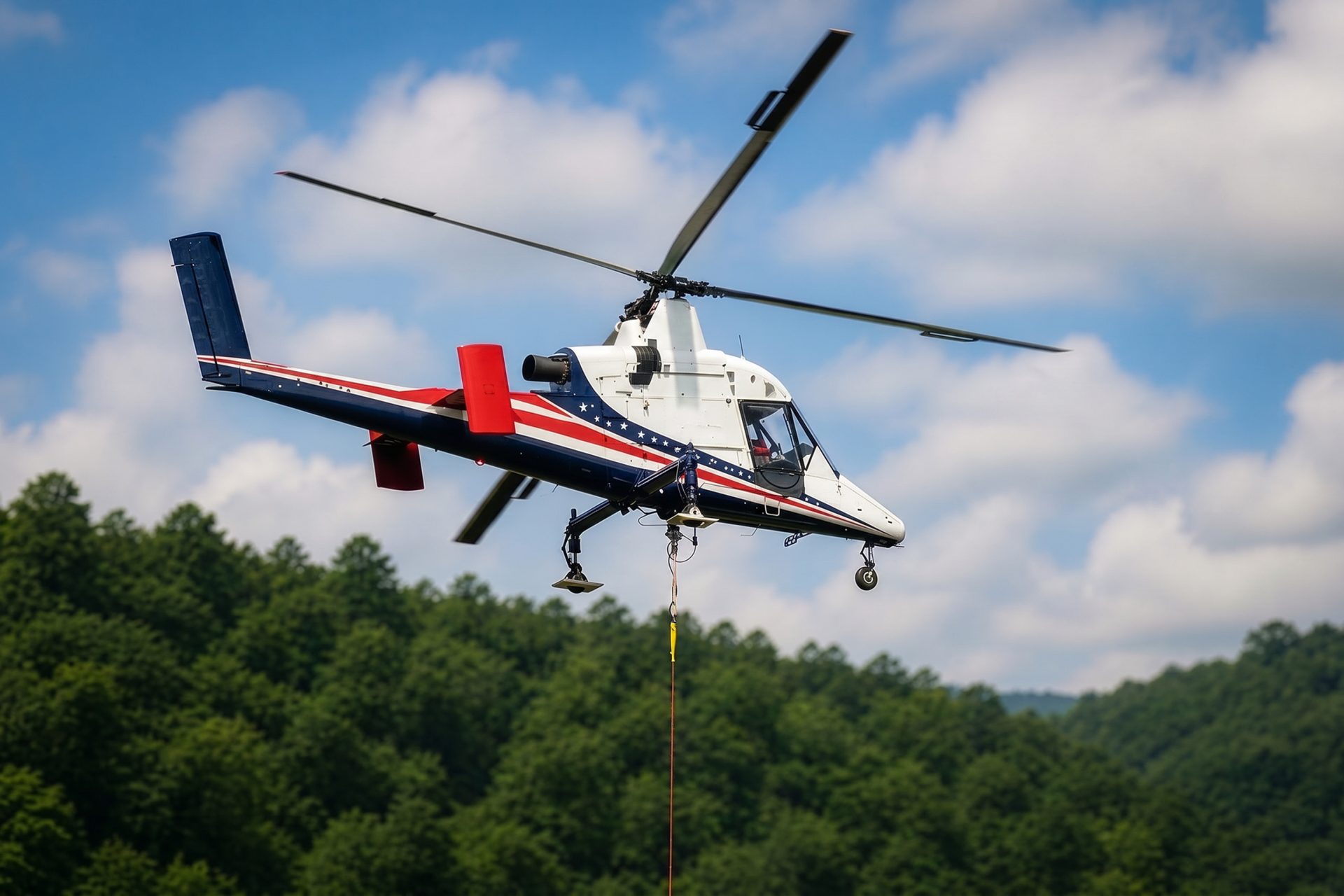
Hero photo: a Kaman K-MAX (6,000 lbs class) on longline work over roadless forest, the high-cycle airframe external-load operators assign to pipe and mat stringing.
The access problem
How Pipeline Helicopter Services Solve the Right-of-Way Problem
Pipeline estimates tend to break down per linear foot where the corridor crosses wetlands, river bottoms and steep terrain. Ground equipment needs a road to reach those segments. The road needs clearing, grading, matting, erosion controls and a restoration bond, along with the permitting that comes with them. On a remote or environmentally restricted spread, building and restoring that access can take more schedule than the pipeline work it serves.
A Part 133 external load helicopter can take the access road off those segments. Pipe joints, fittings, mats and station components fly from a staging yard to the workfront along the corridor, in the order the welding crews need them. The helicopter brings its own site requirements: the staging yard, the pickup area, protection along the flight route and ground protection where loads are set. Put those beside the cost of building, permitting and restoring the road before deciding which segments fly.
This page covers two kinds of work. Part one is construction lift support during the build: stringing, component sets and mat logistics. Part two is the recurring work after it: aerial patrol and integrity surveys over operating pipelines, flown for midstream owners. Both belong to the broader field of utility and infrastructure helicopter operations.
Part one: the build
Part One: Helicopter Pipeline Construction Support
How do helicopters string pipe along a right-of-way without a road?
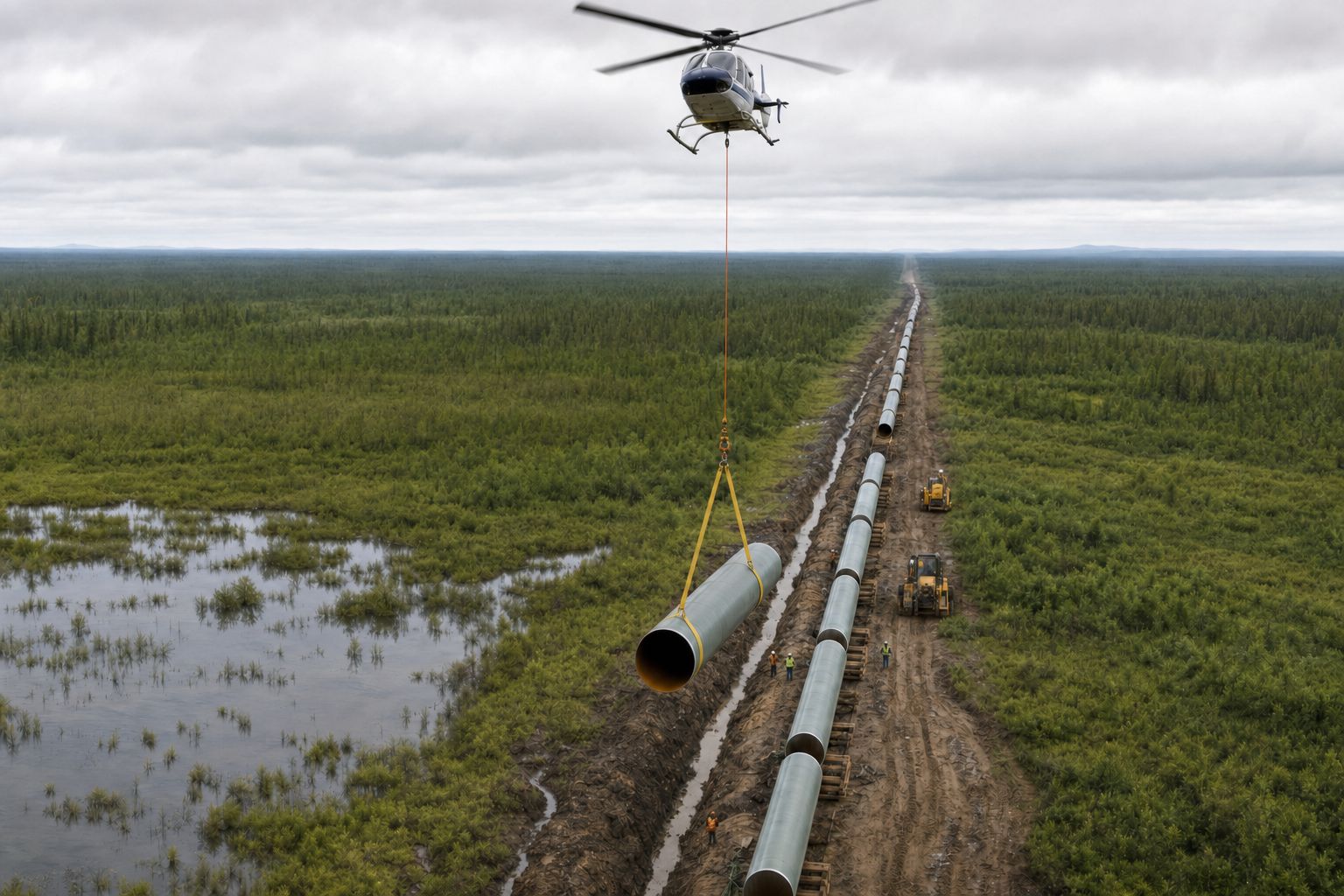
Helicopter stringing repeats one cycle for each load. Pipe joints stage at a yard with road access, riggers sling each joint or bundle before the aircraft arrives, and the aircraft carries them to the right-of-way (ROW) on a longline, the line suspending the load below the aircraft. Each joint lands on skids beside the trench line in weld sequence. These are Class B external loads under 14 CFR §1.1: jettisonable and lifted free of the surface, the usual profile for pipe, mats and equipment.
The estimate turns on weight per pick and cycle time. Kaman publishes a 6,000 pound lifting capacity for the K-MAX K-1200, which is a published maximum rather than a lift-day allowance. The number of picks per hour depends on the distance from the yard to the workfront, the rigging work at each end and the conditions on the day, so the delivery rate for a spread comes from the operator's plan for that corridor. Heavier-wall pipe and larger diameters need medium and heavy aircraft; the table below lists published capacities by aircraft.
The same cycle moves the spread's own equipment. Welding shacks, generators, fuel bladders, tool containers and trench-side consumables can fly on the same rotation, which keeps the workfront supplied on segments with no ground transport route.
What pipeline components are within helicopter lift limits?
Many of them, up to the capacity of the assigned aircraft. Mainline valves, launcher and receiver barrels, meter skids, smaller compressor and pump components and prefabricated station modules fly as Class B external loads once the fabricator certifies the lift weight and pick points.
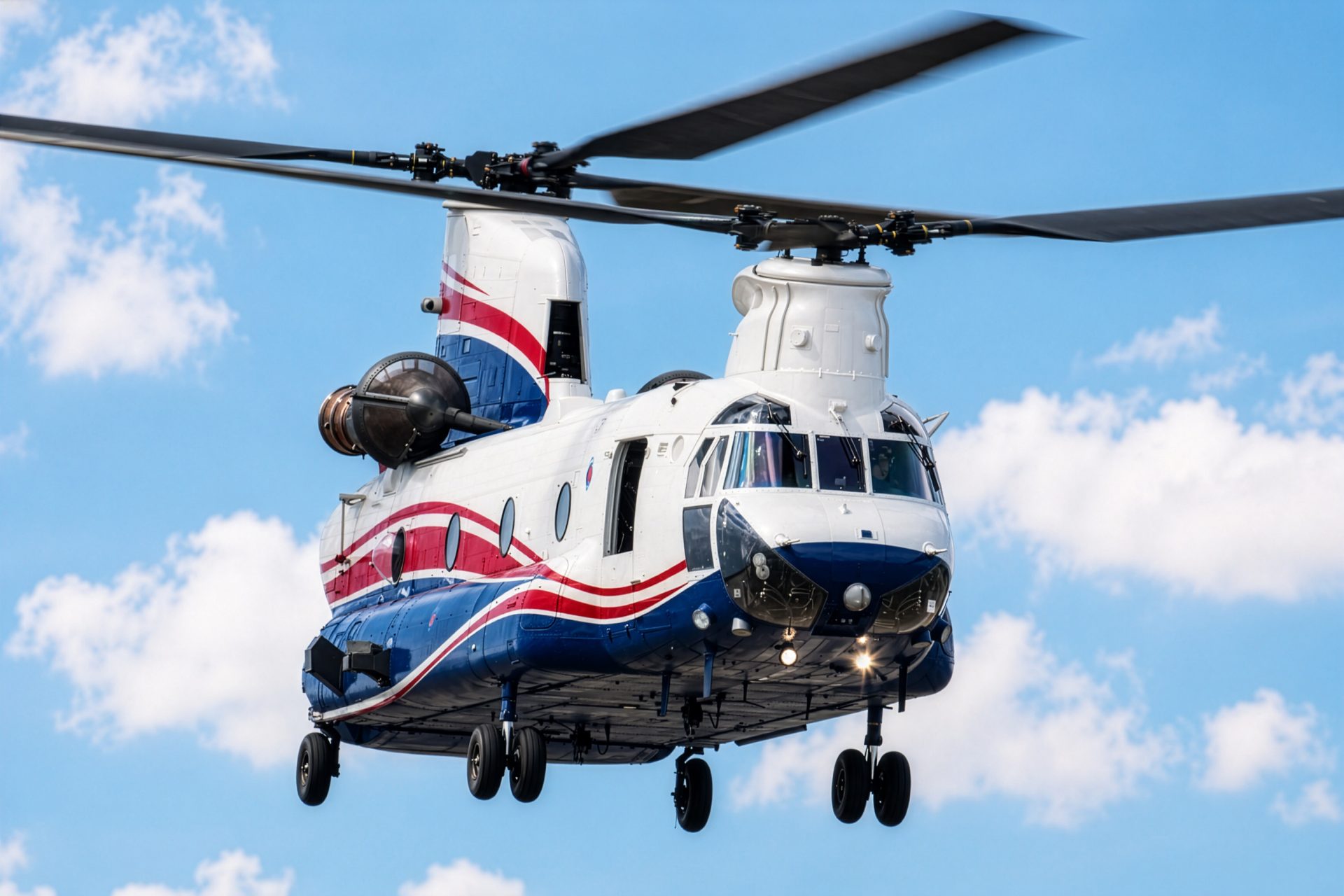
At the top of the published range, Vertical reports 28,000 pounds on the hook for Columbia's Model 234 UT/LR Chinook. The CH-47D and the S-70M Black Hawk also work corridor components; their civil capacity comes from the operator's figures and is not published here. A published hook figure is not a lift-day allowance. Density altitude, air density expressed as an altitude, rises with elevation, temperature and humidity and reduces the load an aircraft can carry; the FAA Helicopter Flying Handbook, chapter 7 explains how. Hot, humid air over a river valley in August is one case to plan for. The bid should state the conditions behind its capacity figures, and the operator should check each pick against the forecast conditions on lift day.
A load heavier than any aircraft available to the project, a fully dressed compressor package for example, moves by ground transport and crane. Identify those loads in the first planning conversation so the ground scope is priced from the start.
Class B and Class C: two load classes on one corridor
Most pipeline lift work is Class B. Corridor work can also include Class C external loads, where the load stays in contact with the ground or water during the operation: towing, pull assistance and line work. Wire and rope pulls across a river crossing or up a canyon wall are typical Class C work, the same load class line crews use in transmission line stringing. An operator's Part 133 certificate lists the load classes it is authorized to fly. When a coordinator arranges the work, the certificate check follows the named flight operator; if the corridor needs both classes, confirm that operator holds both B and C authorization. The full class system is explained in the Part 133 external load operations reference.
When ground equipment wins
On a spread with an existing parallel road and firm ground, conventional stringing trucks and pipelayers cost less per joint than the aircraft, and side booms do the lowering-in. Station construction inside a fenced site with clear crane access is crane work. The helicopter becomes worth pricing where access does not exist, where the environmental permit prohibits building it, or where the schedule cannot absorb it. Decide the split between air and ground scopes first, before any flight hours go into the estimate.
The aircraft
Aircraft for Pipeline Corridor Work
| Aircraft | Max longline / hook | Certification category | Picks/hr | Corridor role |
|---|---|---|---|---|
| Columbia BV-234 Chinook | 28,000 lb (Vertical: Columbia's Model 234 UT/LR) | Not published here | Not published here | Compressor and valve assemblies, station modules |
| Boeing CH-47D Chinook | Not published here | Not published here | Not published here | Heavy components; capacity comes from the civil operator's figures |
| Sikorsky S-70M Black Hawk | Not published here | Not published here | Not published here | Mid-weight spreads; hover performance at the corridor elevation comes from the operator's data |
| Kaman K-MAX K-1200 | 6,000 lb (Kaman: published lifting capacity) | Not published here | Not published here | Repetitive pipe and mat stringing |
| Bell 412EP / 212 | 4,500 lb (Avincis: Bell 412EP maximum hook load) / Bell 212 not published here | Not published here | Not published here | Light support, crew logistics, survey platform |
Capacity figures are published maximums from the linked sources, not lift-day allowances; capacity depends on the specific aircraft and the lift-day conditions, as the FAA Helicopter Flying Handbook, chapter 7 explains. Certification and cycle rate are not published here: certification belongs to the individual aircraft, and cycle rate comes from the operator's plan for the corridor. Where a corridor crosses a densely populated area, §133.45(d) prohibits external-load operations with rotorcraft type certificated in the restricted category under §21.25, and an approved congested-area plan under §133.33(d) does not remove that restriction. Check the specific aircraft's certification before assigning it to that segment.
The permit math
How Does Aerial Delivery Change Wetland and Erosion Permitting?
A temporary access road through jurisdictional wetland brings matting plans, hydrologic review, restoration commitments and negotiation with the permitting agencies. Aerial delivery keeps the road out of those segments. The disturbance that remains sits at the staging yard, the pickup area and the skids at the trench line, and rotor wash at the set point needs planning too. The permit application then covers the disturbance the project actually makes, not a road it no longer needs.
On Corps-administered projects, USACE EM 385-1-1 is the governing safety manual; check the contract to see whether it applies to a given crossing. Ask for a lift plan in a form the EPC's compliance team can file in the project safety file. Ground crews at the staging yard and workfront work to the OSHA 1926.551 helicopter crane provisions, which cover static discharge before anyone touches a suspended load, tag lines and protective equipment. The lift plan should also set when the rigging is inspected and by whom, and name the standard that applies to each rigging component.
Segments that price as outliers on a conventional spread because of their access roads can price as flight hours on an aerial one. Compare those flight hours, together with staging, ferry and ground protection, against the road's construction, permitting and restoration costs. The result belongs in the environmental risk register as well as the estimate.
Part two: the recurring work
Part Two: Aerial Pipeline Patrol & Integrity Surveys
Construction ends, but the corridor still has to be watched. Operating pipelines carry recurring federal inspection requirements, and aircraft are one way to meet them.
What does a helicopter integrity patrol cover?
A patrol flight is a low-level visual and instrumented inspection of the ROW surface and anything that threatens the pipe. A typical patrol scope covers:
- Leak indicators: vegetation kill, discolored soil or water sheen, dead marine life at crossings
- Encroachment: unauthorized excavation, construction activity, new structures inside the ROW
- Exposure: washouts, erosion, scour at river crossings, exposed pipe, slope movement
- ROW condition: marker integrity, vegetation status, access point condition
- Class location change indicators: new development density along gas transmission corridors
Deliverables are geo-referenced: GPS-tagged photo and video logs, anomaly reports keyed to stationing and observation summaries formatted for the owner's integrity management program. Federal pipeline safety regulations set the frequency. Hazardous liquid operators inspect ROW surface conditions at intervals not exceeding three weeks and at least 26 times each calendar year (49 CFR 195.412). Gas transmission operators patrol at frequencies set by class location and crossing type (49 CFR 192.705). An aerial patrol contract puts those inspections on a fixed schedule the owner can plan and budget around.
Patrol and survey flights are not Part 133 operations, because nothing hangs from the aircraft. That changes the aircraft and the rate. The survey platform is a smaller aircraft such as the Bell 412EP or 212, flying at patrol speed with observers or sensors aboard, and it is priced at its own rate rather than a heavy lifter's. When the same operator flies a project's construction lifts and its patrol program, check its certificate and insurance for each kind of operation; the two are different work under different rules.

Helicopter pipeline survey support during construction
The same aircraft can support the build: route reconnaissance before the spread mobilizes, progress documentation for owner and lender reporting, restoration monitoring for permit closeout, and as-built photo baselines for the integrity team that takes over the line. Flying the corridor before bid day also gives the estimator a direct look at every bench, crossing and bog on the alignment, which LiDAR alone does not provide.
The cost anatomy
How Is Ferry Time Billed on a Remote Corridor Project?
Ferry time is the flight time moving the aircraft from its base to the project staging area and back. On remote corridors it can exceed the lift time on the job. It bills at an hourly ferry rate, so the proposal should state it before mobilization rather than leave it for the invoice. Three things drive it: distance from the nearest qualified base, where fuel trucks can be positioned along the corridor, and whether the project justifies basing the aircraft on site for the duration.
Staging decisions set much of the ferry cost. A yard near the corridor midpoint can shorten the cycle distance for every pick, and on multi-week spreads, on-site basing with a fuel support plan turns daily ferry into a one-time mobilization. The full cost structure (hourly rate, ferry, fuel, standby, permits) follows the same pattern as remote site freight operations, where it is laid out in full, and this site's Total Lifted Cost analysis of helicopter versus crane economics breaks down the line items an estimator should expect an operator to itemize. High-elevation corridors need the same density altitude planning described in mining operation support.
The division of labor
Roles on the Corridor: Who Does What
Each deliverable needs a named owner so the lift program can be checked against its plan. On a pipeline lift operation, the division of labor typically looks like this:
| Deliverable | Responsible party |
|---|---|
| Certified load weights and engineered pick points | Client / fabricator |
| Rigging design, hardware certification, inspection | Aviation operator, to ASME B30 design factors |
| Part 133 compliance, load class authorization, flight planning | Aviation operator |
| Final rigging integrity and go/no-go authority on every pick | Pilot in command |
| Ground crew briefing, static discharge and tag line protocol | Aviation operator, executed to OSHA 1926.551 |
| Staging yard, laydown sequence, weld-front coordination | Client, engineered jointly with the operator |
The pilot in command has final authority over the operation of the aircraft under 14 CFR §91.3 and can refuse any lift. A construction schedule cannot override that authority, so the plan should settle load weights, rigging and site readiness before lift day rather than leave them to be resolved at the hook.
Pipeline work is one part of a larger field. The rest of the utility and infrastructure vertical shows how the same load-class and density-altitude rules apply to grid and mining work, and the Part 133 external load operations reference covers the regulations in more detail. New corridor and cost analyses are announced through the mailing list.
Frequently asked questions
What Pipeline Contractors Ask First
From the technical library