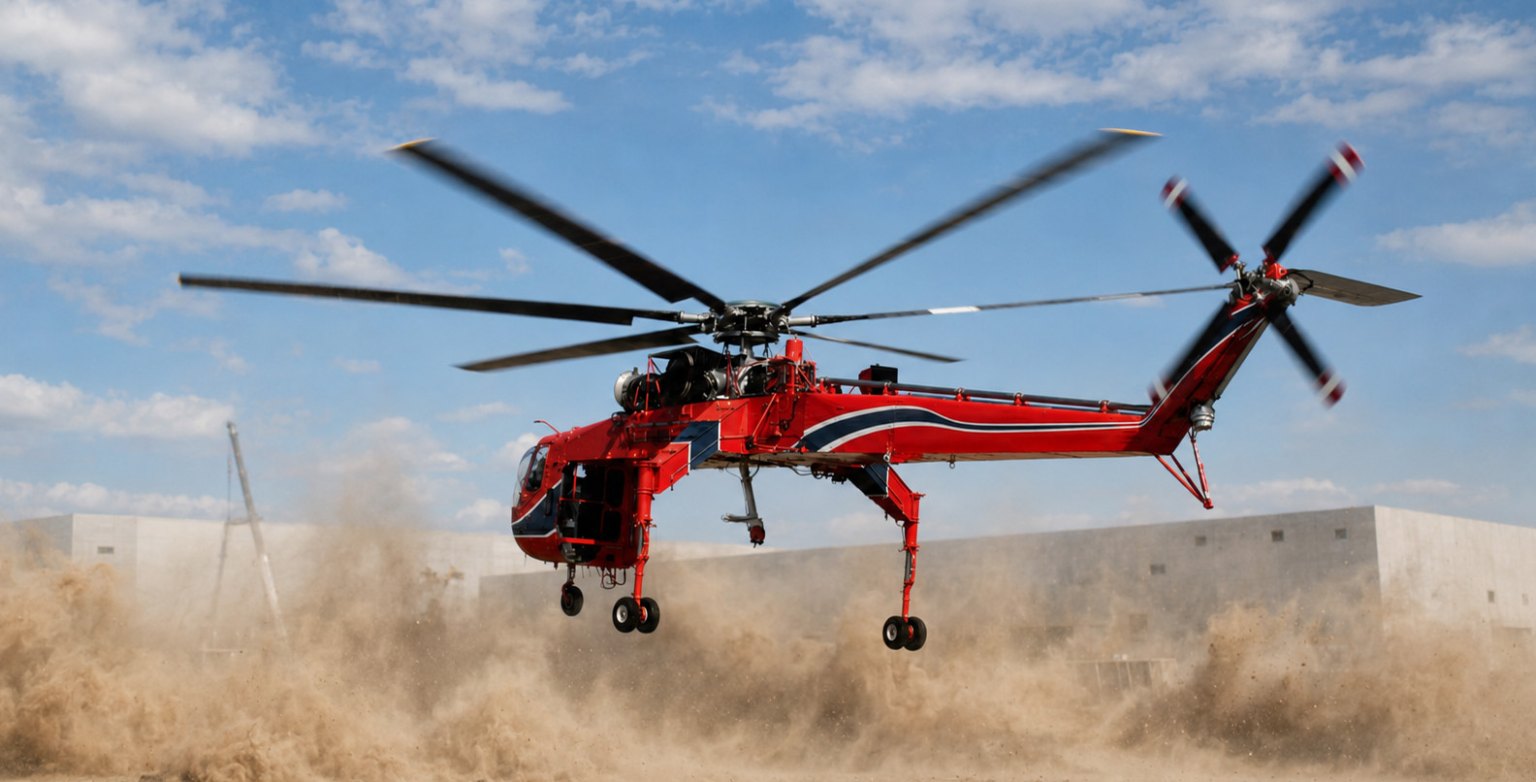
A helicopter lift is not covered by the contractor's general liability policy, which excludes aircraft operations entirely. The coverage that responds is the operator's aviation insurance: hull, aircraft liability commonly written in the tens of millions, and on-hook coverage for the slung load, with the buyer named as additional insured. No FAA dollar minimum applies to the lift, so the requirement is contractual, and the certificate of insurance is where a buyer confirms the protection is real.
Most construction risk transfer runs on a familiar reflex: collect a certificate of insurance, check that the general liability limit clears the owner's threshold, file it, and move on. That reflex fails on a helicopter lift, because the single most consequential fact about aerial lifting insurance is that the coverage a contractor already carries does not apply to it. The aircraft, the flight, and the load hanging beneath it sit inside a specialized aviation market with its own policy forms, its own exclusions, and its own certificate. A buyer who treats an aerial lift like any other subcontract can end up with a slung industrial unit over an occupied building and no policy that pays if it comes off the hook.
This analysis sets out what actually protects a project during an external load operation: why the ground contractor's policy is silent, which aviation coverages respond and which are commonly missing, the endorsements that move the buyer from adjacent to protected, how to size the liability limit against real exposure, and how to read the aviation certificate so a signature is not the first time anyone checks. It is the insurance companion to the broader diligence of prequalifying a Part 133 lift operator before award, and it assumes the regulatory framework those operations run under, the rules governing rotorcraft external-load operations in the United States.
The general liability trap: why a ground policy is silent on the lift
The reason an aerial lift needs its own insurance conversation is written into the standard commercial general liability policy that nearly every contractor and property owner carries. The industry-standard CGL form contains an aircraft, auto, or watercraft exclusion that removes coverage for bodily injury or property damage arising out of the ownership, maintenance, use, or entrustment to others of any aircraft. Use expressly includes loading and unloading. The exclusion is not an oversight or a gap to be negotiated: it is deliberate, because aircraft exposure is priced and underwritten in a different market entirely.
The practical consequence is severe and counterintuitive. When a helicopter lifts a rooftop unit over a job site, the general contractor's CGL does not respond to damage arising from that operation, the property owner's CGL does not respond, and the mechanical subcontractor's CGL does not respond. A stack of certificates showing millions in general liability describes coverage that is switched off the moment the load leaves the ground. The only policy that answers is the aviation policy carried by the certificated operator flying the aircraft. That is why verifying the operator's aviation insurance is not one item on a checklist among equals. It is the item, because it is the only coverage in the entire contractual chain that is actually in force during the lift.
The aviation coverages that respond, and the one most often missing
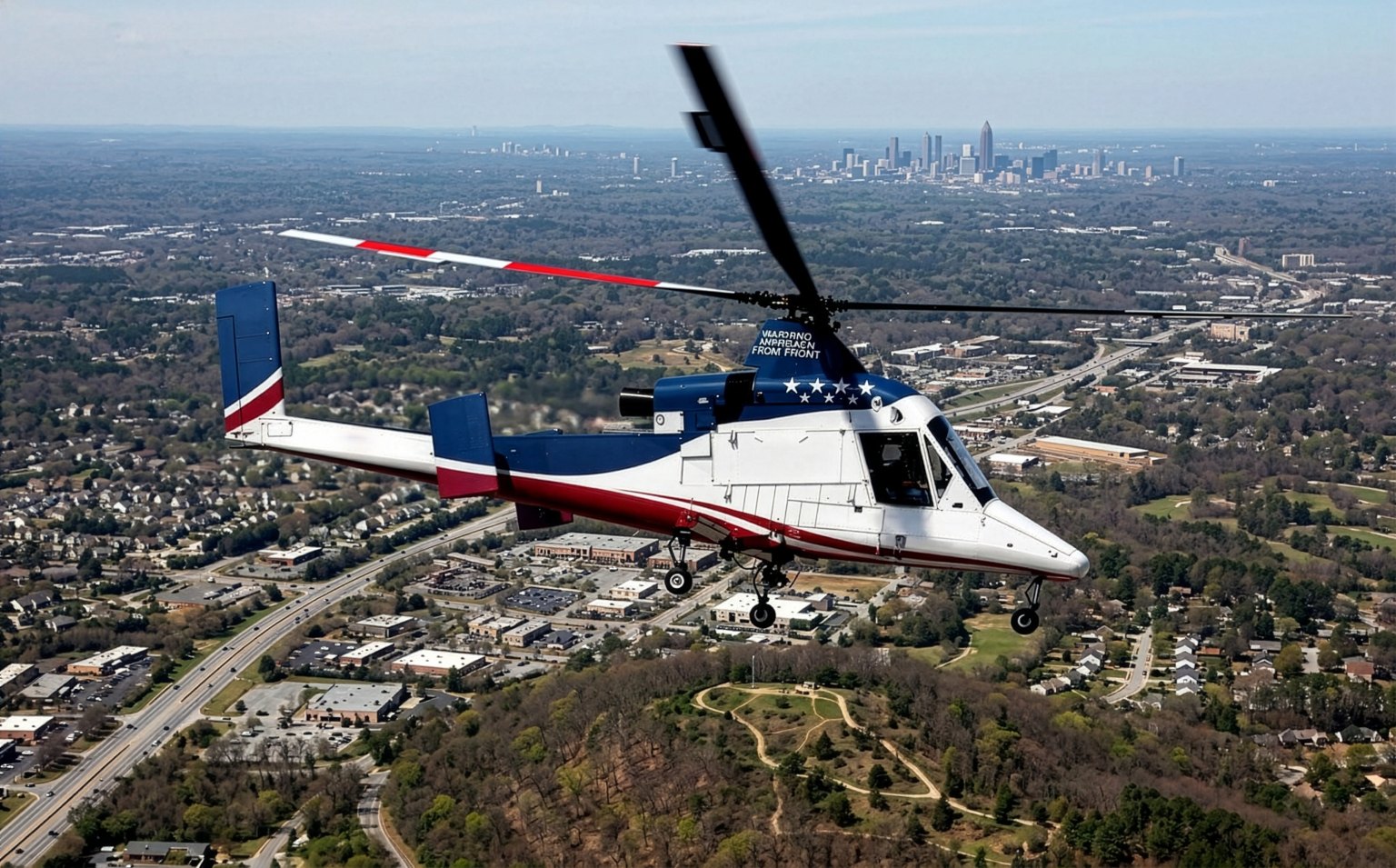
Aviation insurance is built from distinct coverage parts, and a buyer reading an aviation certificate should look for named coverages rather than a single limit figure. Three parts carry the risk that matters to a lift buyer, and the absence of any one is a finding.
| Coverage part | What it protects against | Why the buyer confirms it directly |
|---|---|---|
| Aviation hull | Physical loss or damage to the aircraft itself | Insures the operator's own asset. Its absence signals an undercapitalized machine and an operator that may not survive its own loss, which becomes the project's schedule problem. |
| Aircraft liability | Third-party bodily injury and property damage caused by the aircraft's operation | The core coverage for damage to the site, adjacent structures, and persons on the ground beneath the flight path. This is the limit the buyer sizes against exposure. |
| On-hook / cargo legal liability | Damage to the slung load itself while it is on the hook or longline | Standard aviation liability excludes property in the operator's care, custody, or control, and the load is in exactly that state during the pick. Without this endorsement, a dropped unit is an uninsured loss. |
Coverage names follow standard aviation market practice; exact policy wording and sublimits vary by insurer and must be read on the actual certificate and policy.
The on-hook line deserves the most attention because it is the coverage buyers most often assume is present and most often is not. Aviation liability policies, like most liability forms, exclude damage to property in the insured's care, custody, or control. A load suspended on the hook is the textbook case of care, custody, and control: the operator has taken physical charge of it for the flight. On-hook or cargo legal liability is the specific endorsement that buys that coverage back, so the value of the load itself is protected during the one moment it is most at risk. A rooftop chiller that separates from the rigging in flight is an on-hook loss, and a certificate that shows generous aircraft liability but no on-hook coverage leaves the most valuable single object in the operation uninsured. On-hook limits are also frequently written well below the aircraft liability limit, so the figure has to be read against the actual value of the load being flown, not assumed adequate because a large liability number appears elsewhere on the page.
The endorsements that move the buyer from adjacent to protected
Confirming that the operator carries aviation coverage is only half the exercise. The other half is confirming that the coverage extends to the buyer, because a policy that protects only the operator leaves the general contractor and property owner exposed to being sued directly and then having to pursue the operator separately. Four endorsements determine whether the buyer is inside the policy or merely standing next to it.
| Endorsement | What it does | What its absence means |
|---|---|---|
| Additional insured | Extends the operator's aviation policy to name the buyer, and where relevant the general contractor and property owner, as insured parties | The named parties have no standing under the policy and must sue the operator to reach its coverage |
| Waiver of subrogation | Bars the operator's insurer from later recovering paid claims from the named parties | The operator's carrier can pay a claim and then turn around and pursue the buyer to recoup it |
| Primary and non-contributory | Establishes that the operator's aviation policy pays first, before any coverage the buyer carries is called on | The buyer's own insurers may be drawn in and share the loss, raising the buyer's future premiums |
| Notice of cancellation | Requires written notice, commonly 30 days, before the policy lapses or is materially changed mid-project | Coverage can quietly disappear between the certificate date and the lift date with no warning |
Additional insured status and the waiver of subrogation are the pair that most directly convert a certificate from a formality into protection. Together they give the buyer standing to claim under the operator's policy and stop that same policy from being turned against the buyer after a loss. These endorsements are routine for a professional aviation operator to arrange, and a capable lift coordinator obtains them from the operator and delivers a certificate with the flying entity named. An arrangement that cannot produce them, most often because the party holding the contract is not the party holding the policy, is an arrangement in which the buyer's protection is theoretical.
How much liability is enough, and why no rule sets it
Buyers frequently ask for the required limit as if a regulation published one. For external load work, none does. The FAA's aircraft accident liability insurance rule reaches direct air carriers and commercial operators holding economic authority, not a contractor conducting rotorcraft external-load operations under a Part 133 certificate, so no federal dollar minimum attaches to a construction lift. The requirement is contractual, set by the owner, the general contractor, or the lender, which means the burden of sizing it correctly falls on the buyer rather than on a rulebook.
14 CFR 205 Air-carrier insurance rule
Sizing the limit is an exposure question, not a habit. The right figure is a function of the value at risk beneath the flight path, and the analysis runs through four inputs:
- The structures under the route. The building being worked, adjacent occupied structures, and anything of value the aircraft transits, valued at replacement cost rather than a token amount.
- The people exposed. Occupants, the public, and ground crew beneath the operation, which drives the bodily injury component and is the reason congested-area lifts carry the highest limits.
- The load value. The cost of the object on the hook, which the on-hook limit specifically must cover, sized to the unit rather than to the aircraft liability figure.
- Downstream loss. Business interruption and consequential damage if a drop or a strike takes a facility offline, which can exceed the physical damage many times over.
Aviation liability for heavy external load operations over occupied or high-value sites is commonly written with combined single limits well into eight figures, a combined single limit meaning bodily injury and property damage share one pooled limit rather than separate sublimits. The correct number for a given lift is whatever covers the exposure that specific pick creates, and a limit that looks generous in isolation can be inadequate over a hospital, a data center, or a downtown block. The insurance line belongs in the bid the same way the flight hours do, itemized rather than assumed, in the same discipline that governs professional coordination of a heavy helicopter lift from specification through schedule.
Reading the certificate of insurance

The certificate of insurance is the document a buyer actually receives, typically on the standard ACORD certificate of liability insurance form, and it is a summary of coverage rather than the policy itself. It confirms that coverage existed on the date it was issued, which is not the same as confirming coverage on the lift date or confirming the policy terms. Reading it well means checking specific fields and then verifying beyond the paper.
| On the certificate | What a pass looks like |
|---|---|
| Type of coverage | Aviation hull and liability, not commercial general liability. A CGL certificate for a lift is the wrong document. |
| Named insured | The certificated operator that will actually fly the aircraft, matching the entity named on the Part 133 certificate and in the contract. |
| Description of operations | References rotorcraft external-load or sling-load operations, so the policy is written for the work being performed. |
| On-hook / cargo legal liability | Shown as a distinct coverage with its own limit, sized to the load value, not folded silently into liability. |
| Additional insured and waiver | The buyer, general contractor, and owner named as additional insureds, with a waiver of subrogation noted. |
| Policy dates | In force through the entire planned lift window, including weather-standby days that can push the pick later. |
| Limits | Combined single limit sized to the exposure beneath the flight path, with the on-hook sublimit read separately. |
Two verification habits separate diligence from paperwork. First, the certificate should be issued directly by the aviation insurer or its broker and confirmed by contacting that broker, because a forwarded image naming a carrier the buyer cannot reach is not verification. Second, the description of operations and the named insured together should establish that the policy covers external load work performed by the specific company flying the job. A certificate is a snapshot, and the questions it cannot answer, whether the policy is still in force on lift day and whether it was ever written for sling-load work, are exactly the ones that decide whether coverage responds.
When the flying is subcontracted
The insurance analysis gets its sharpest test when the company holding the contract is not the company flying the aircraft. Lift work is frequently arranged through coordinators who place the flying with a certificated operator, and large projects often run under an owner-controlled or contractor-controlled insurance program, a wrap-up, meant to cover all enrolled parties on the site. Neither structure changes the fundamental rule, and both introduce a gap if handled carelessly. Wrap-up policies are general liability programs, so they carry the same aircraft exclusion as any CGL and do not insure the flight regardless of how many parties they enroll. The aviation coverage still has to come from the operator's aviation policy, and the operator still has to name the buyer on it.
The controlling requirement in a subcontracted arrangement is to identify the certificated operator that will actually fly and obtain that operator's aviation certificate with the buyer named as additional insured. A certificate from a coordinator that does not hold an aviation policy, or an aviation certificate naming a flying company the buyer was never told about, both signal the same exposure: the party the buyer has a contract with is not the party whose insurance is in force during the lift. The insurance verification and the operator vetting are the same act performed on the same entity. When the flying entity is named, insured, and certificated, the coverage chain closes. When it is opaque until lift day, the certificates on file describe protection that may belong to no one the buyer can reach.
14 CFR 133 External load certificate
The through-line of the whole subject is that a helicopter lift transfers risk through one policy that most of the parties on site do not carry and cannot see on their own certificates. The contractor's general liability is silent by design, the wrap-up inherits that silence, and the only coverage in force over the load is the operator's aviation insurance. A buyer who confirms that policy exists, that it includes on-hook coverage for the load, that the buyer is named as additional insured with a waiver of subrogation, that the limit is sized to what lies beneath the flight path, and that the named insured is the entity actually flying, has done the one piece of diligence that no stack of ground certificates can substitute for. That verification, completed before award, is the difference between a lift that is insured and a lift that only appears to be.