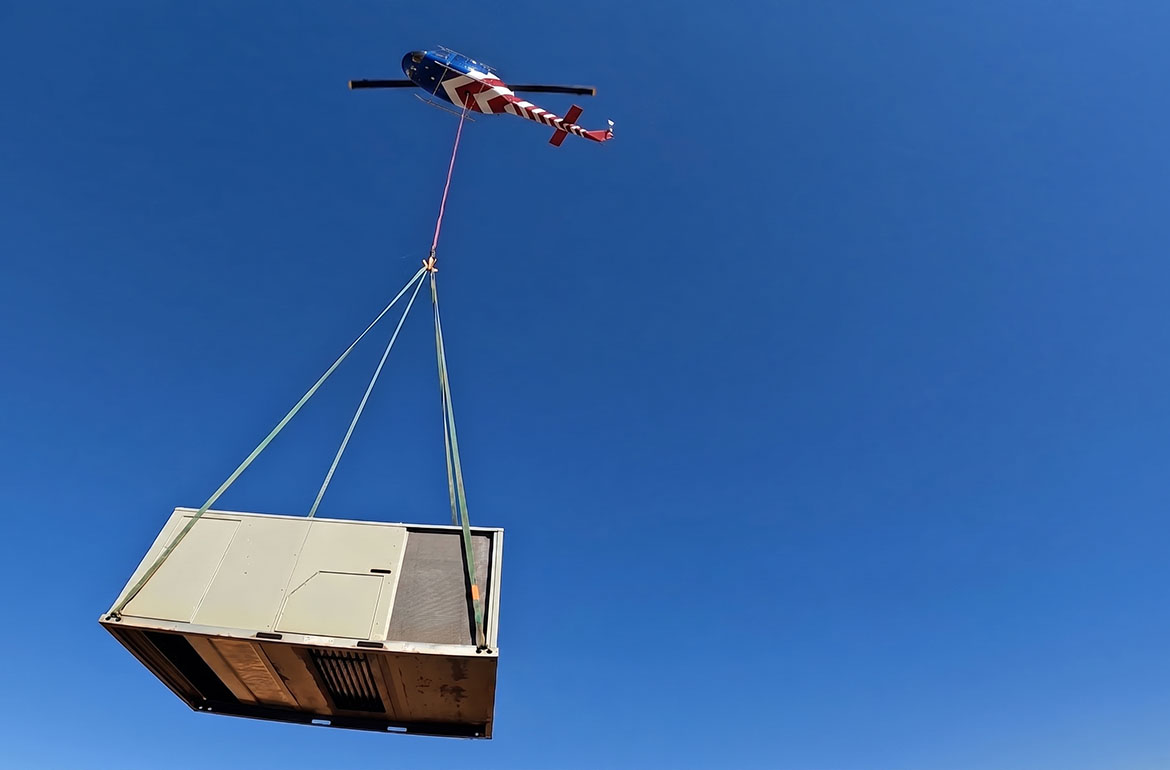
HVAC & Rooftop Units
Waterfront plants, downtown buildings, and aerospace facilities can have constrained crane positions. Coastal wind and loose-material control are central to rooftop planning.
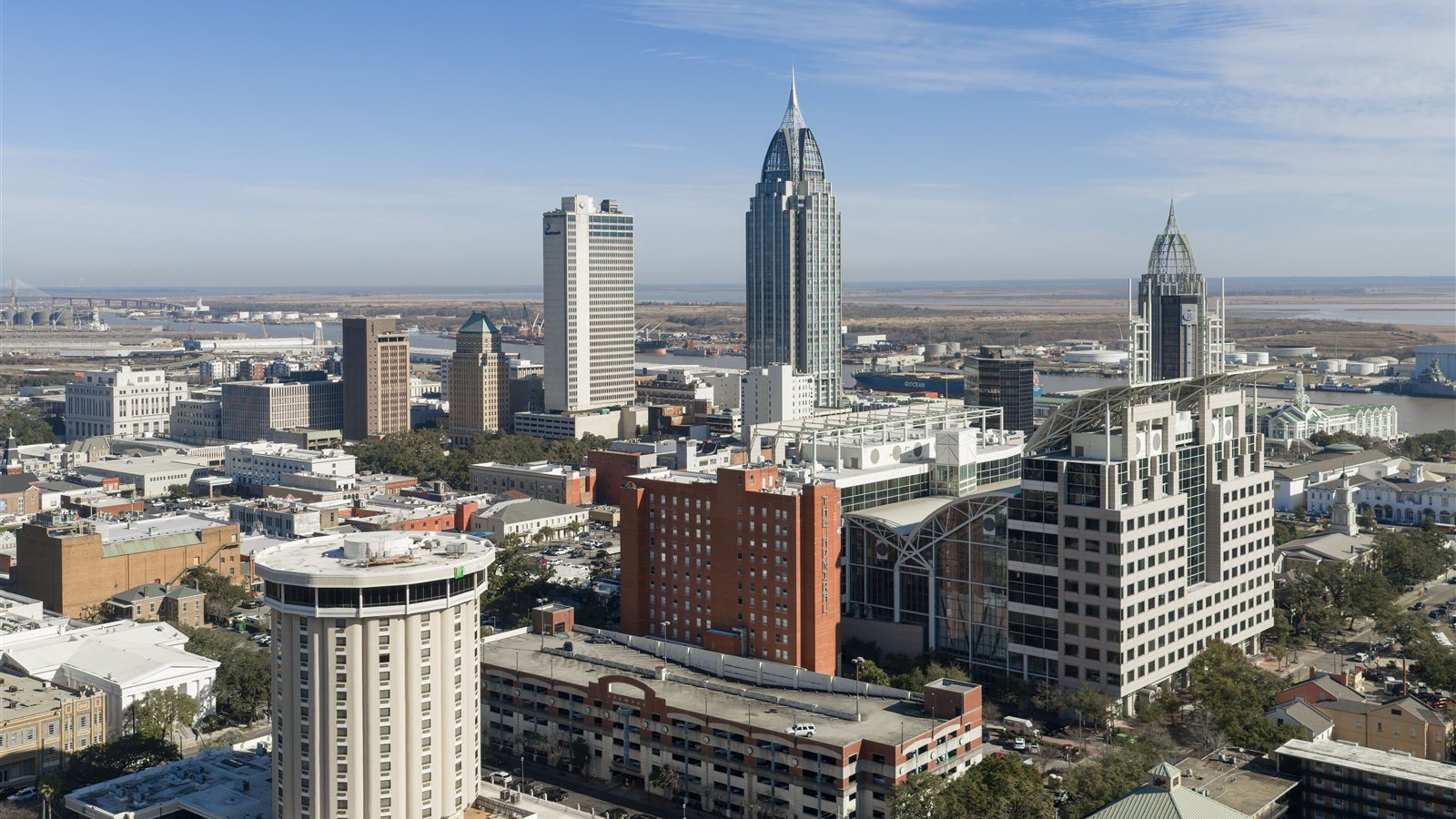
Local lift planning
Port traffic, coastal weather, and two major airport areas compress a complicated lift environment into a narrow industrial corridor.
Photo: Quintin Soloviev, CC BY 4.0 via Wikimedia Commons. Cropped and compressed.
Mobile’s industrial core is tied directly to the river and port. The Alabama Port Authority operates deep-water berths, heavy-lift cranes, roll-on/roll-off facilities, rail connections, and bulk terminals. Ship channels, cranes, vessels, bridges, and waterfront plants create obstacles that do not appear on a simple street map. Any proposed flight path near the river has to be studied in three dimensions and coordinated with the people controlling the property below.
Airspace is busy from more than one direction. Mobile Regional is listed by the FAA as a Class C airport. The Brookley Aeroplex and Mobile International Airport area sit close to downtown, the port, and Airbus manufacturing. A lift concept must use current aeronautical information rather than treating the waterfront as open coastal airspace.
The access case can still be strong. Dense industrial parcels, active shipyards, storage yards, wetlands, and water can make a conventional crane route long or disruptive. A helicopter may cross the last difficult gap without building temporary access, but salt exposure, loose waterfront material, vessel movement, and public areas below must be controlled.
Coastal humidity and heat reduce performance margin, while sea-breeze boundaries can trigger thunderstorms with abrupt wind changes. Fog and low ceilings also occur. The go or no-go point should be tied to current observations and the operator’s limits, not merely a forecast issued the previous day.
Tropical weather creates a separate scheduling risk. Hurricane season does not make every summer project impractical, but it requires realistic mobilization and demobilization decisions. Rigging, temporary barriers, and staged material need a secure plan if the weather window collapses.
Port and industrial sites contain moving hazards. Crane booms, container stacks, ships, rail movements, and process operations can change between survey and lift day. The final briefing must use the current site configuration and preserve emergency access.
Mobile is part of the Gulf offshore aviation network. A Bureau of Ocean Energy Management report identifies Mobile among the helicopter hubs supporting Outer Continental Shelf oil and gas activity. Brookley adds a long-runway airport close to the port, with helicopter parking, fueling, flight planning, and flight-watch support. That combination makes the city relevant to offshore crew changes, specialist transport, urgent parts movement, and cargo staging.
Offshore passenger transport and external-load cargo are different missions. Personnel flights depend on passenger manifests, survival equipment, baggage limits, helideck status, and an aircraft suited to the route. Sling work adds load certification, rigging, hook limitations, and a controlled deck or vessel work area. The FAA’s offshore guidance also calls for disciplined flight following and careful separation of arriving passengers and cargo from departing movements.
Distance offshore, fuel reserves, changing Gulf weather, and the availability of a suitable alternate can control the aircraft choice before payload is considered. A plan also has to account for vessel motion or platform obstacles, salt exposure, communications coverage, and the receiving crew. The useful question is not whether a helicopter can leave Mobile. It is whether the complete offshore system supports that specific flight.
Waterfront plants, downtown buildings, and aerospace facilities can have constrained crane positions. Coastal wind and loose-material control are central to rooftop planning.
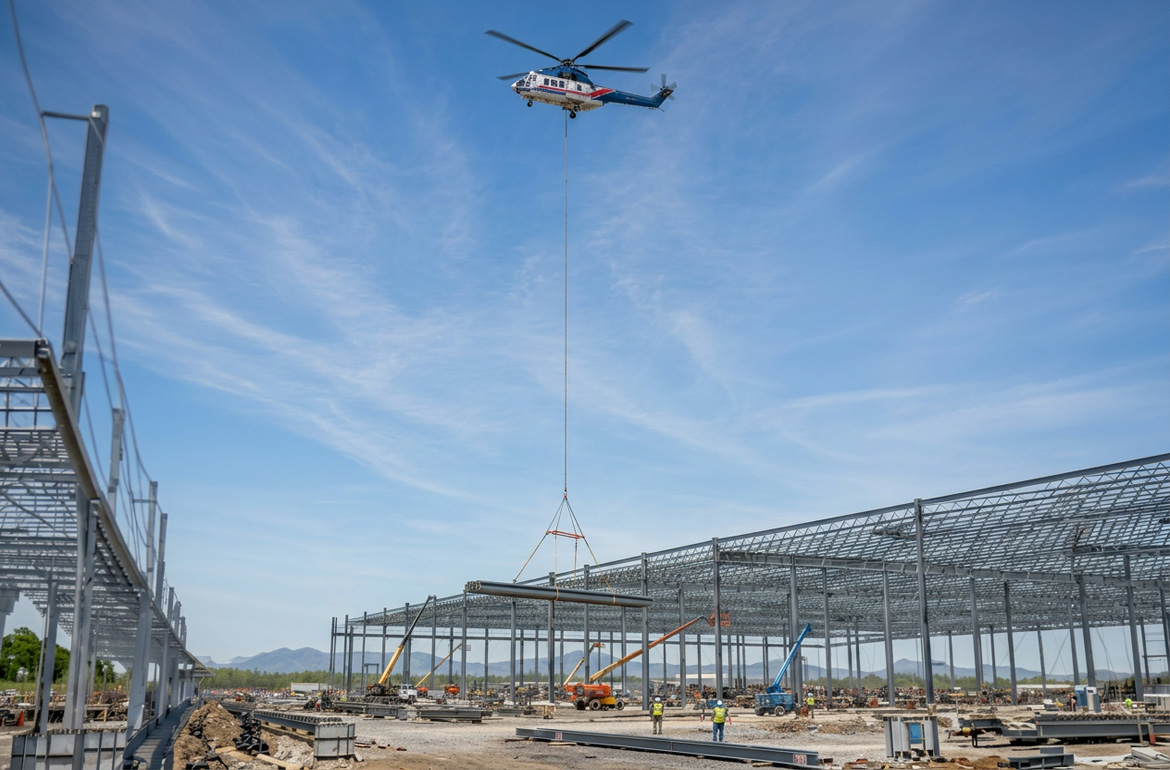
Shipyards and industrial terminals handle large components every day, yet some final placements sit beyond practical crane reach or across active operations.
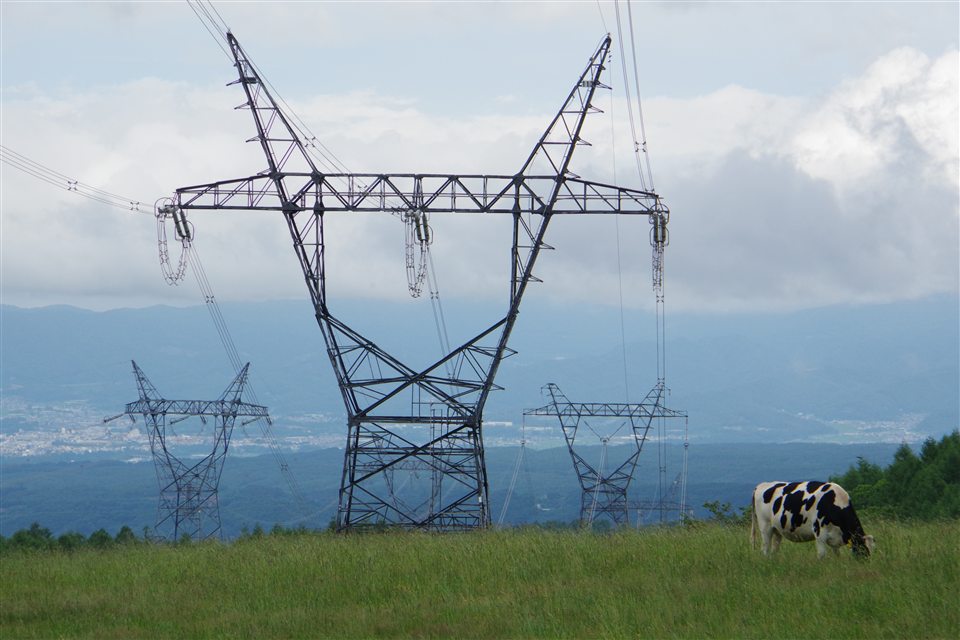
Communication structures across coastal wetlands or industrial parcels may have limited road access. Obstacle surveys must account for port cranes and airport traffic.
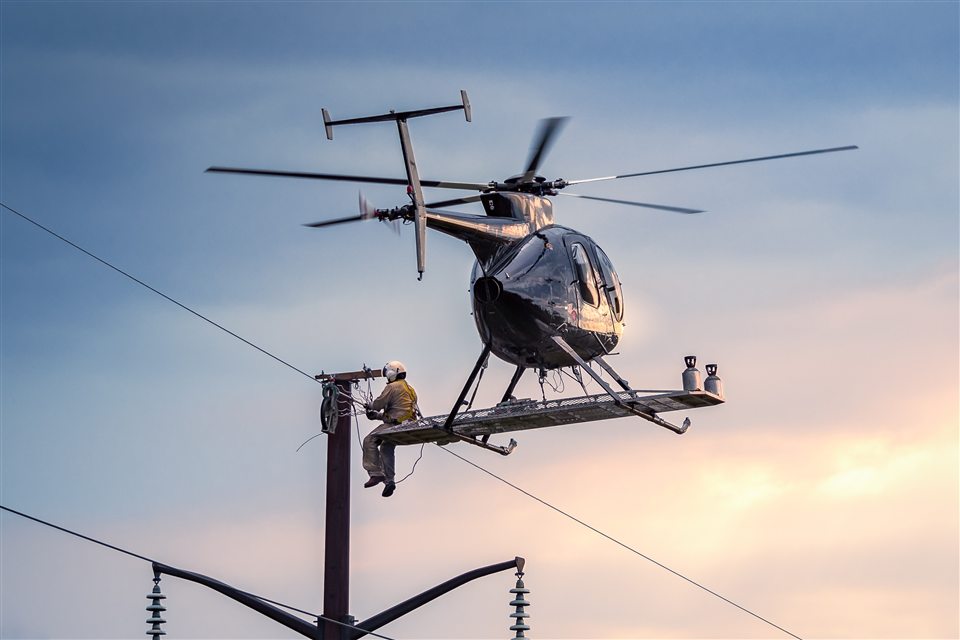
River crossings, marshes, and soft coastal ground can favor aerial support for selected utility work while reducing temporary access construction.
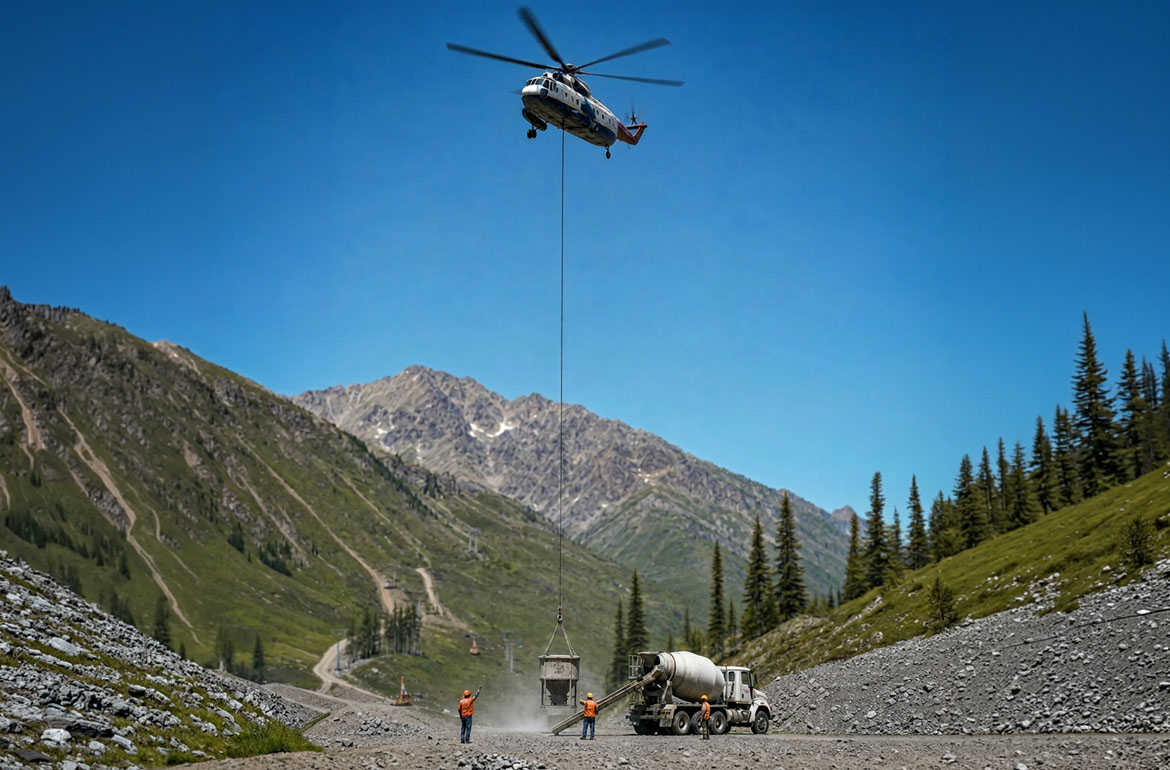
Bulk-material terminals and aggregate operations can create elevated conveyors, remote components, and work areas constrained by active stockpiles.
Maritime terminals, shipbuilding, steel, chemical processing, and logistics define much of Mobile’s heavy industrial work. Airbus adds a large aerospace manufacturing presence at Brookley. These sites may present rooftop equipment, structural pieces, or maintenance components where the cost of shutting down ground operations deserves comparison with an aerial method.
Utility corridors serving the port and coastal communities cross wetlands, rivers, and soft ground. Aerial work can reduce temporary-road construction in selected locations. Environmental restrictions, corrosion control, and conductor handling remain part of the job.