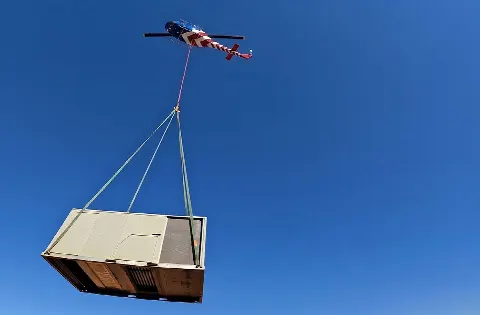
HVAC & Rooftop Units
Hospital and university roofs can put emergency access, street occupancy, and verified equipment weight ahead of crane reach.
Local lift planning
A working deep-water port, controlled airport traffic, and dense institutional districts leave little room for casual staging assumptions.
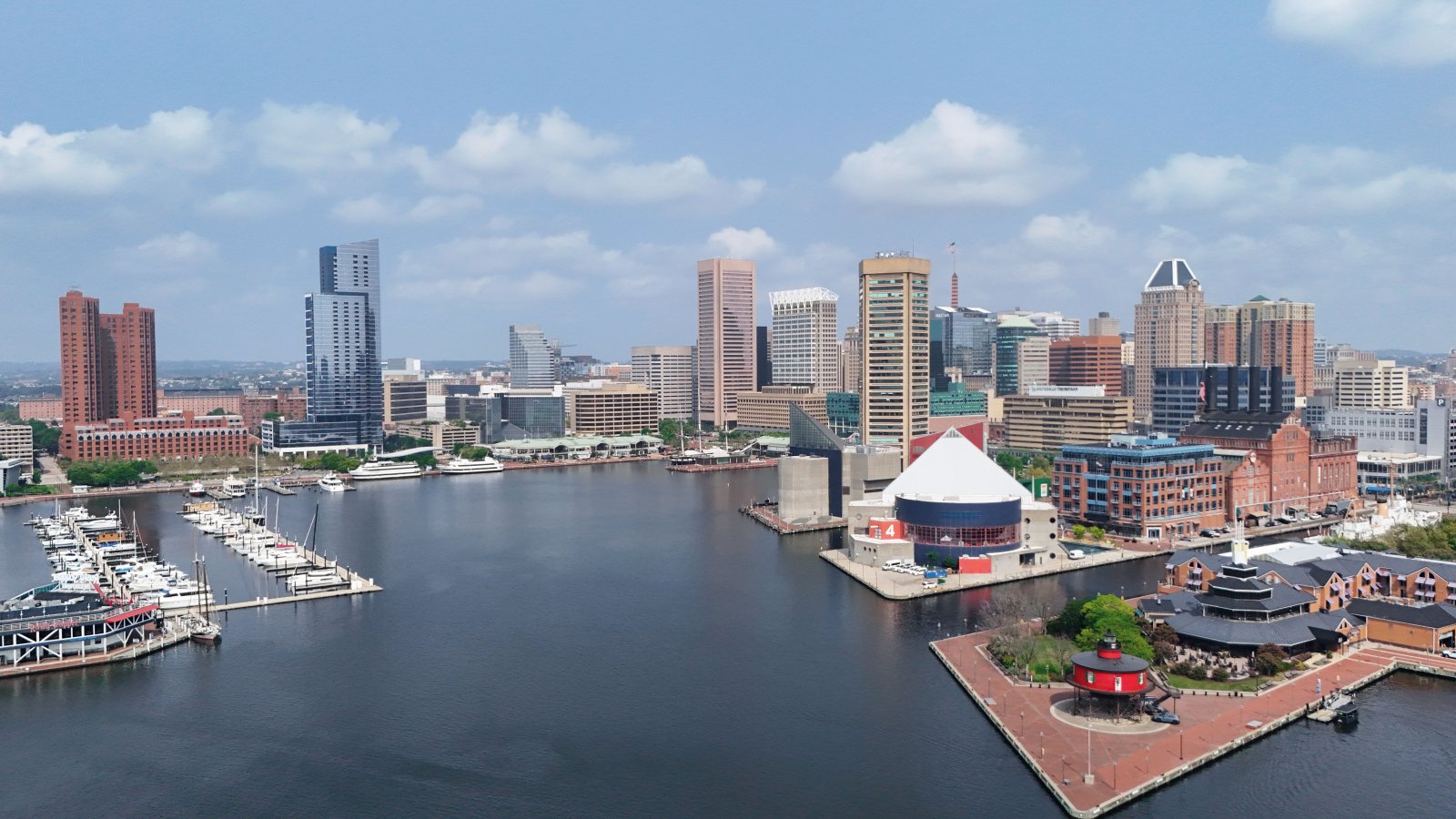
Photo: Quintin Soloviev, CC BY 4.0, via Wikimedia Commons. Cropped, resized, and compressed.
Census Vintage 2025 estimates the Baltimore-Columbia-Towson metropolitan area at 2,857,781 residents. That whole-metro figure sets guide order and is not Baltimore city population or evidence of project demand.
The current FAA Chart Supplement places Martin State Airport nine miles east of Baltimore. It lists a 6,999-by-150-foot runway, a 60-by-60-foot helipad, weather reporting, and part-time Class D airspace. Current NOTAMs, permission, airport activity, aircraft fit, and the intended route still control.
The Maryland Port Administration reports that Baltimore public and private terminals handled 50 million tons of cargo in 2025. Machinery, containers, autos, vessels, rail movements, and terminal roads make the current ground layout part of any waterfront plan.
FAA remarks for Martin State flag seagulls, sailboat masts, motorboats, tower-hour limits, and seasonal bird-strike caution. Those conditions need current review with the waterway, runway environment, and any proposed external-load route.
NWS warning definitions set public thresholds for severe thunderstorms and high wind. Aircraft and operator limits govern the mission, but observed storms, lightning, gusts, and an explicit stand-down point belong in the schedule.
Baltimore’s codified right-of-way rules require a traffic-control plan for roadway closures and detours. The permit application is processed through the city DOT Right-of-Way Permits Section. The congested-area planning guide explains why the protected ground area and flight path must be considered together.
Hospital and university roofs can put emergency access, street occupancy, and verified equipment weight ahead of crane reach.
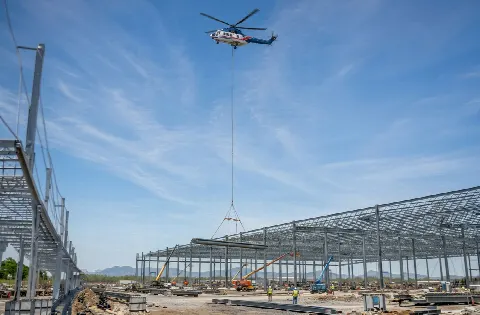
Port terminals handle heavy machinery and breakbulk cargo, but final placement still needs a site-specific load and exclusion plan.

Work east of the city must be checked against Martin State tower hours, airport traffic, birds, and waterway obstacles.

Any operation affecting city streets needs early maintenance-of-traffic review rather than assuming a short closure will be automatic.

Waterfront routes require current control of terminals, vessels, rail movements, public areas, and the protected ground below.
The port’s 2025 cargo report records high volumes of roll-on/roll-off machinery, containers, and autos. Aerial access near a terminal has to coexist with current cargo, vessel, rail, and road operations.
Maryland Commerce reports large Baltimore employment concentrations in education and health services plus trade, transportation, and utilities. Hospitals, campuses, logistics buildings, and industrial roofs carry different shutdown and emergency-access requirements.