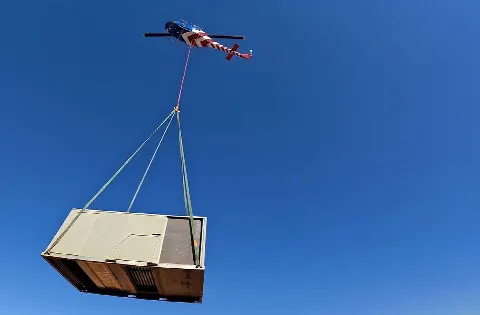
HVAC & Rooftop Units
Healthcare and research campuses can put verified equipment weight, shutdown limits, and pedestrian controls ahead of simple roof reach.

Local lift planning
Airport cargo infrastructure and mobility plants sit in a region where snow, freezing nights, and public-space permits can control the schedule.
Photo: WMrapids, CC0, via Wikimedia Commons. Cropped, resized, and compressed.
Census Vintage 2025 estimates the Lansing-East Lansing metropolitan area at 479,722 residents. That whole-metro figure places Lansing third in the Michigan set and is not a city-only population count.
The Capital Region Airport Authority identifies Port Lansing as a U.S. Port of Entry with access to I-69, I-96, and US-127. It also reports an air-cargo hub, a roughly one-million-square-foot cargo ramp, and a 48,000-square-foot logistics center. Current use and site permission remain separate.
Lansing Economic Development identifies mobility production, research, healthcare, and technical industries in the region. A planning comparison should begin with the actual plant or campus, then work backward through component dimensions, delivery access, and public-space controls.
The current FAA Chart Supplement places Capital Region International Airport three miles northwest of Lansing at 861 feet elevation. It lists an 8,506-by-150-foot primary runway, two additional runways, and birds on or near the airport. Airport information does not establish staging permission or aircraft fit.
Lansing’s 1991-2020 normals include 50.2 inches of annual snowfall and 142.5 freezing nights. The 2024 station record also logged thunderstorms, strong gusts, and restricted-visibility fog. The lift planning intake checklist separates those weather checks from fixed site facts.
City records classify right-of-way work, utility construction, pavement removal, and oversize loads as permit-file categories. The schedule establishes the categories, not current forms, fees, or lead times. Those details need direct confirmation before a closure date is fixed.
Healthcare and research campuses can put verified equipment weight, shutdown limits, and pedestrian controls ahead of simple roof reach.
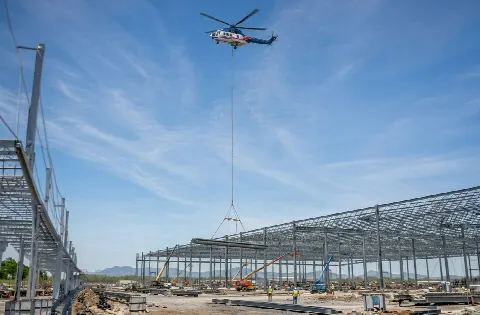
Mobility plants and redevelopment parcels need exact component geometry plus a receiving zone that works with ongoing operations.
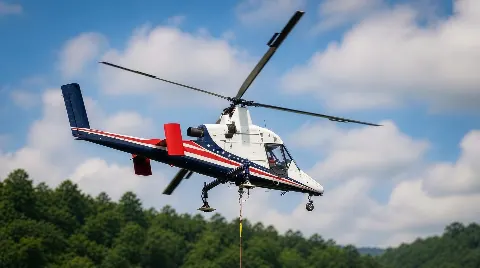
Capital Region airport traffic, Port Lansing permission, current NOTAMs, and site control remain separate gates.

Winter conditions, airport traffic, and the actual obstacle environment require a fresh route and weather review.
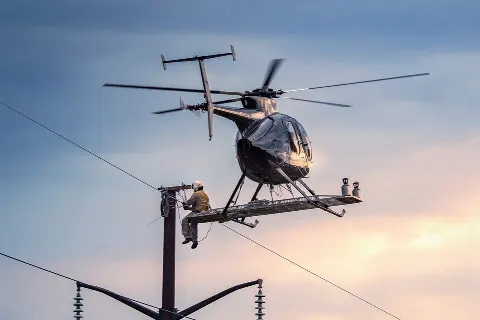
Lansing records utility construction as permit-controlled right-of-way work. Public-space authority and aviation review remain separate.
Lansing Economic Development describes mobility production and research as a leading local industry. Vehicle, battery, and advanced-manufacturing sites can produce unusual equipment paths, but each plant controls its own shutdown and safety requirements.
The same source identifies healthcare, MedTech, and biotechnology tied to health systems and Michigan State University. Dense campuses and specialized mechanical equipment make facility continuity and occupied-site control part of the comparison.