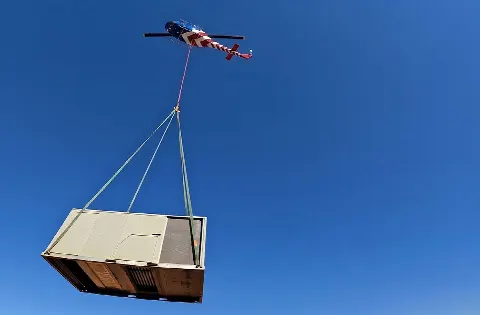
HVAC & Rooftop Units
Large hangars and utility facilities can present wide-roof mechanical work. Confirm full rigged weight, roof capacity, occupied areas, and the receiving path before comparing access methods.
Local lift planning
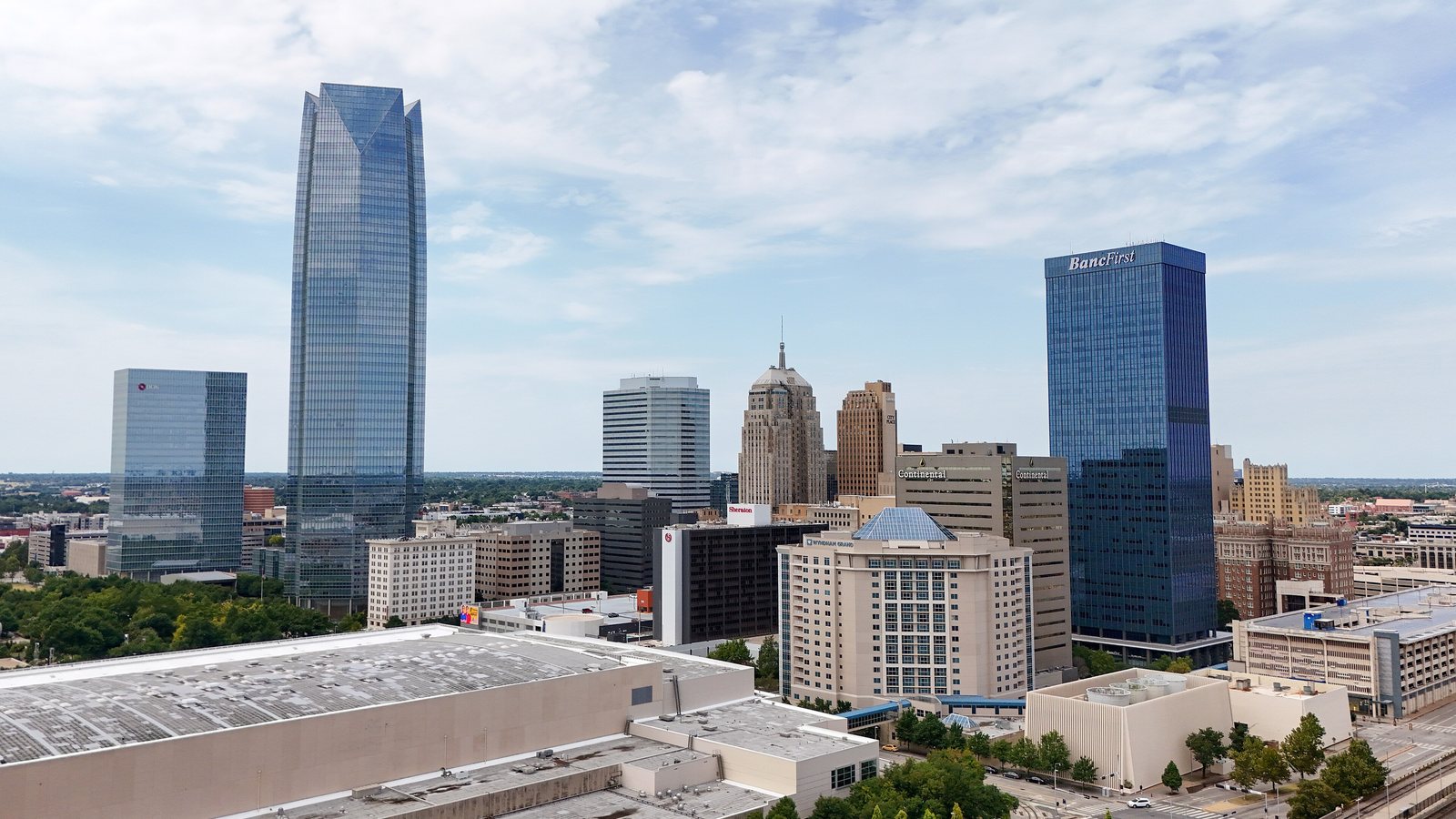
Class C airspace, tornado exposure, and a far-reaching water system put aviation, weather, and ground control on the same planning path.
Photo: Quintin Soloviev, CC BY 4.0 via Wikimedia Commons. Cropped, resized, and compressed. License terms.
The Census Bureau’s Vintage 2025 estimates place the Oklahoma City metropolitan area first among the five MSAs containing Oklahoma territory, at 1,512,813 residents on July 1, 2025. The figure covers the whole metro. It is not Oklahoma City population or evidence of project demand.
The current FAA South Central Chart Supplement entry for OKC Will Rogers International lists three principal paved runways measuring 9,802 by 150 feet, 9,801 by 150 feet, and 7,800 by 150 feet. The airport is continuously attended and operates within Class C airspace. Those facts support an early aviation screen. They do not approve an off-airport route, staging area, or external-load operation. The external-load operations guide explains the wider review.
The Oklahoma City Utilities Department reports more than 7,000 miles of water and wastewater pipe, two water treatment facilities, four wastewater plants, and seven surface reservoirs across a 250-mile service area. At a comparable utility property, current utility markings, property authority, shutdown boundaries, and receiving geometry belong ahead of the method comparison. The site survey checklist organizes those inputs.
The National Weather Service Oklahoma City tornado climatology identifies May as the peak tornado month, closely followed by April and June. About two-thirds of recorded Oklahoma City tornadoes occurred during those months, most often from mid-afternoon into early evening. That history supports a seasonal weather screen. A work window still requires a current forecast, observed conditions, and an explicit stop-work threshold.
Oklahoma City’s Public Works contractor guidance states that work obstructing a street or sidewalk remains unauthorized until the required permits are secured. It also says work-zone permit applications should be submitted at least two full workdays before the requested date. Property permission, municipal permits, traffic control, and aviation authority remain separate.
The FAA airport entry identifies numerous birds on or near OKC, uncontrolled ramps, and Class C service. Airport conditions and airspace can change. Current charts, NOTAMs, temporary restrictions, actual coordinates, and the proposed route must replace any assumption based on the regional airport alone.
Large hangars and utility facilities can present wide-roof mechanical work. Confirm full rigged weight, roof capacity, occupied areas, and the receiving path before comparing access methods.
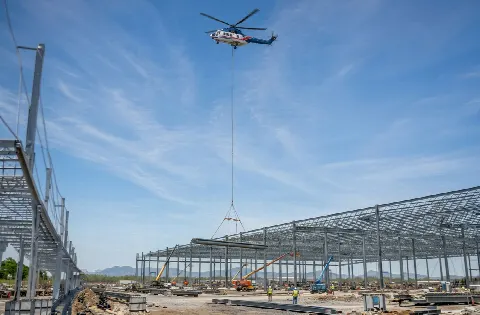
Aviation and water-system construction can involve substantial structural components. Published project size does not establish lift need or aircraft fit.
Class C airspace and an active commercial airport make exact coordinates, obstacles, route geometry, and current restrictions central to any tower study.
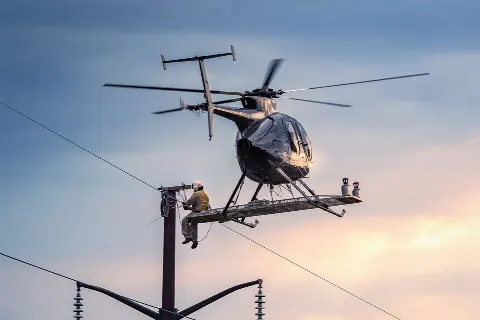
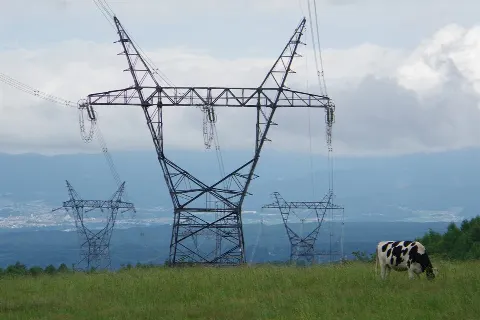
Long municipal utility corridors show why road access, public-space controls, energized clearances, and conductor handling need separate review.
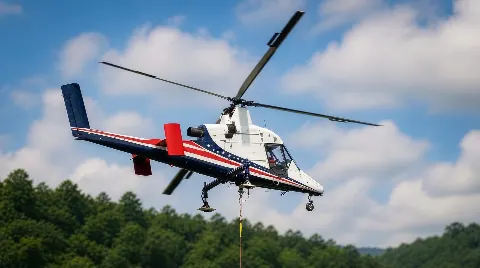
The airport, city streets, and facility property each carry a separate control track. None can be inferred from the others.
An Oklahoma Department of Commerce announcement documented a planned three-bay aviation-maintenance expansion beside Will Rogers with more than 80,000 square feet of hangar and warehouse space. The announcement expected operation in January 2026, but it does not verify current completion or any need for helicopter work. At a comparable facility, load data, ramp control, occupied work areas, and the receiving position belong ahead of an HVAC access study.
The municipal water system spans treatment plants, reservoirs, neighborhood pipe, and long-distance transmission infrastructure. Work near those assets can place public access, buried systems, and operating continuity in the same ground plan. The utility-infrastructure guide provides the comparison framework without presuming aircraft suitability.