HVAC & Rooftop Units
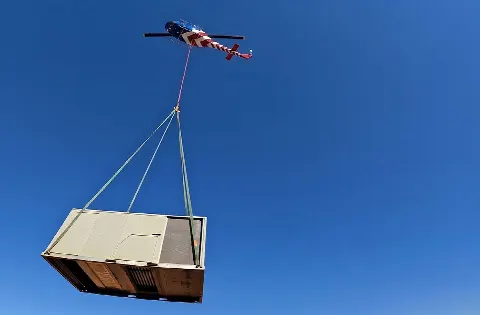
A rooftop placement near city streets or mapped utilities needs verified unit data, receiving geometry, and a controlled support footprint before access methods are compared.
Local lift planning
A city-maintained airport and a 310-square-mile federal industrial complex make access authority as important as distance around Aiken.
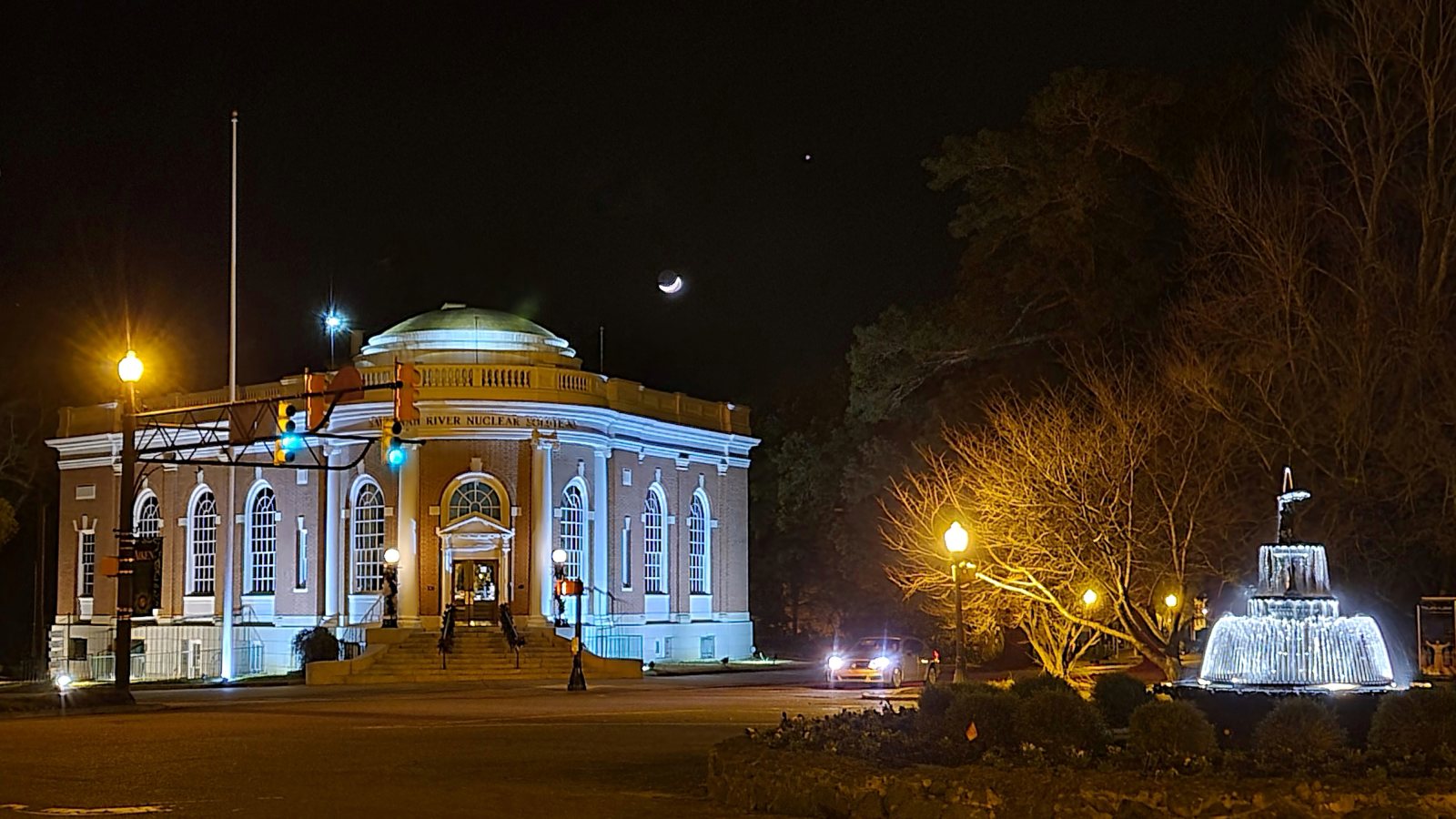
Photo: JamFred21701, CC BY-SA 4.0 via Wikimedia Commons. Cropped, resized, and compressed; derivative distributed under CC BY-SA 4.0. License terms.
The Census Bureau’s Vintage 2025 metropolitan-area table estimates 641,231 residents in the Augusta-Richmond County, GA-SC metropolitan area on July 1, 2025. Aiken serves as the South Carolina editorial anchor for this cross-state metro. The whole-area estimate selects the guide. It is not Aiken’s city population or evidence of lifting demand.
The city’s Engineering and Utilities Department maintains water, wastewater, stormwater, streets, the regional airport, and industrial parks. It also provides GIS mapping, technical review, and construction inspection. A site screen should identify mapped public infrastructure and the agency responsible for each part of the support footprint before access is treated as available.
The current FAA entry for Aiken Regional Airport places AIK five miles north of Aiken at 529 feet elevation. It lists a 5,500-by-100-foot runway, a second 3,800-by-75-foot runway, and on-field AWOS-3PT weather reporting. Approach and departure control changes between Augusta and Columbia during published hours. This is regional aviation context, not an off-airport route approval or staging recommendation. The external-load guide explains the wider review.
The FAA airport entry assigns Augusta Approach during one published period and Columbia Approach during the other. AIK also uses a common traffic advisory frequency rather than a continuously staffed tower. Current charts, NOTAMs, control status, exact coordinates, obstacles, and the proposed suspended-load path belong in one aviation review.
The NOAA 1991–2020 normals for AIKEN 2 E give July a 93.4°F normal daily maximum and 24.3 days with a maximum of at least 90°F. Normals describe the climate baseline, not a lift-day forecast or aircraft limit. Current observations and an operator-specific performance calculation should replace the baseline before the load and schedule are fixed.
The city’s engineering permits and forms page says an encroachment permit grants permission for work in city-maintained rights-of-way. City water and sewer specifications apply to work on public utilities, while the plan-review checklist can require related SCDOT permits or proposed easements. Map the actual street, sidewalk, and utility interfaces before assuming one approval covers the ground plan. The site survey checklist keeps those interfaces in the field record.
A rooftop placement near city streets or mapped utilities needs verified unit data, receiving geometry, and a controlled support footprint before access methods are compared.
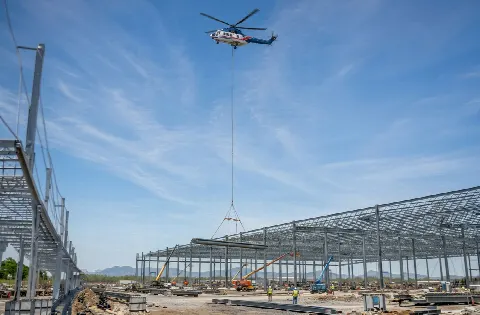
Industrial-park steel placements require certified member data, delivery dimensions, and a receiving area that stays clear of active facilities and public ground.
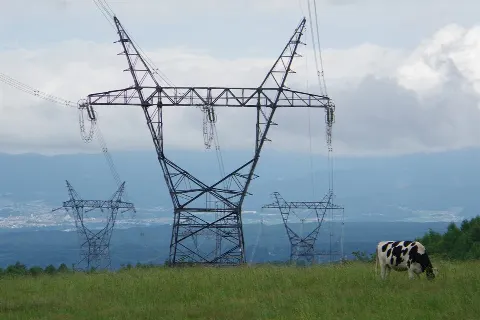
AIK’s published approach-control schedule supports an early aviation screen for tower or rooftop-structure concepts. Exact coordinates and the current traffic picture remain decisive.

Utility work that reaches city streets or public water and sewer property can involve separate encroachment and utility controls. The route below the line needs its own authority map.
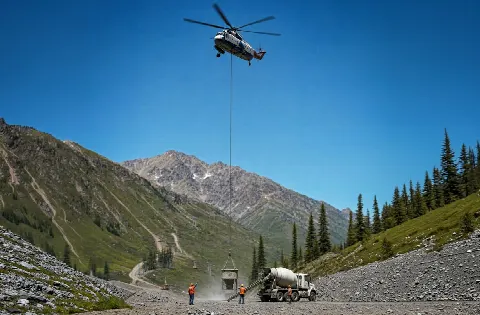
Bulk-material or environmental-cleanup sites need secure property access, exact component data, and a ground-method comparison before difficult internal access becomes an aircraft-fit question.
The Department of Energy’s Savannah River Site overview identifies SRS as a 310-square-mile industrial complex near Aiken, with property in Aiken, Barnwell, and Allendale counties. Its missions include nuclear-material disposition, waste management, and environmental cleanup. Those published facts establish a specialized industrial setting. They do not establish access, an active project, or aircraft suitability at any facility.
Aiken’s Engineering and Utilities Department reports responsibility for routine maintenance of the regional airport and industrial parks, along with the city’s street and utility systems. That network puts delivery access and mapped public infrastructure into the same site review. Certified load data and parcel-level authority remain separate checks. The load-weight guide covers the first equipment check.