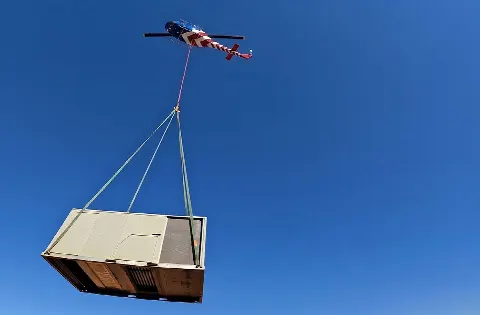
HVAC & Rooftop Units
Commercial and technical buildings can make street occupation or a large safety buffer the controlling access issue. Roof capacity, verified weight, and ground control remain site-specific.
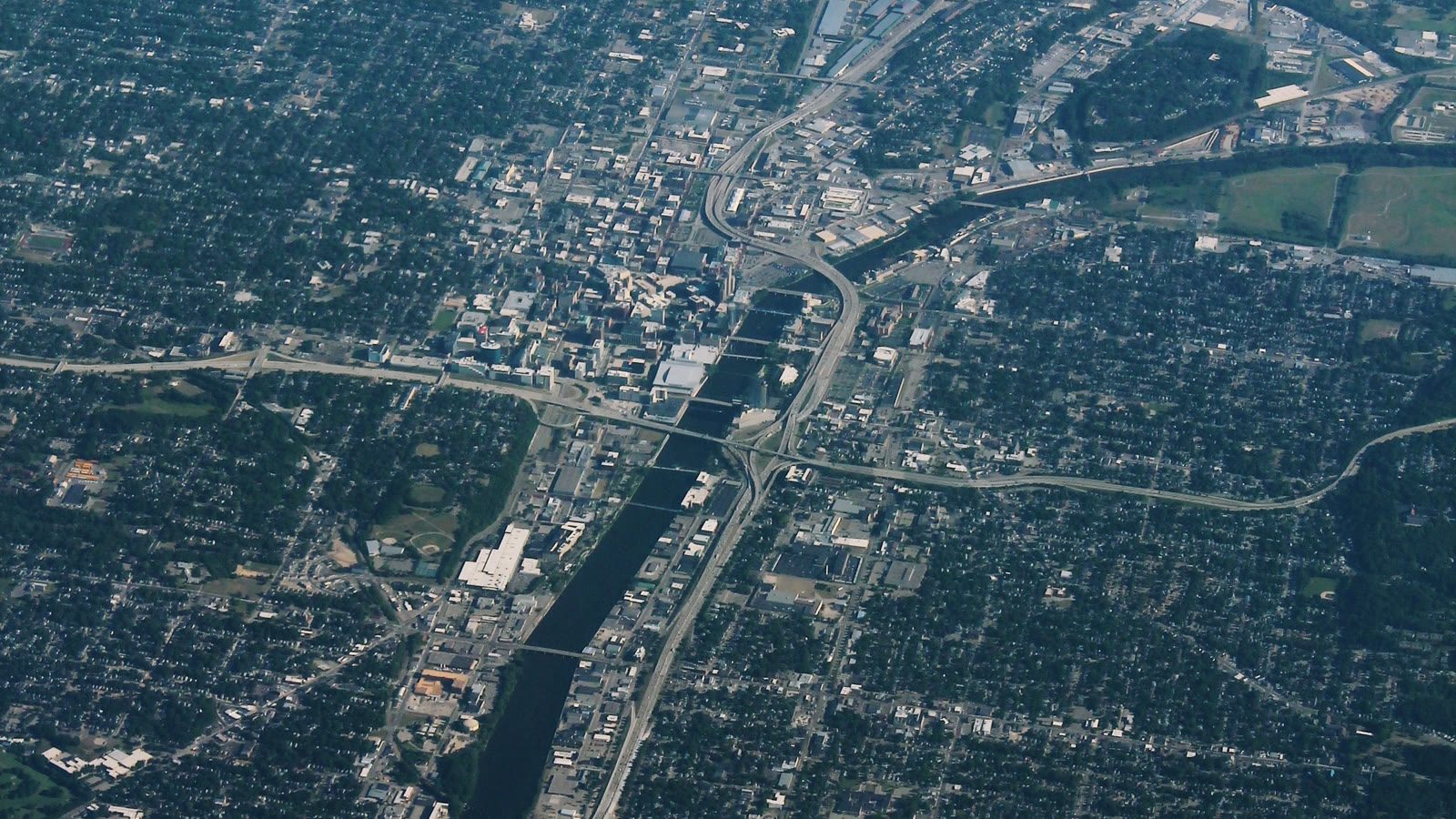
Local lift planning
Controlled airspace and a snow-heavy climate meet downtown projects where the safety buffer can consume public right-of-way.
Census Vintage 2025 estimates the Grand Rapids-Wyoming-Kentwood metropolitan area at 1,183,645 residents. That whole-metro count places it second in Michigan’s guide order and is not the population of Grand Rapids city proper.
The current FAA Chart Supplement places Gerald R. Ford International Airport six miles southeast of Grand Rapids at 794 feet elevation. It lists three paved runways, Jet A, and continuous attendance. The longest runway is 10,001 by 150 feet, but airport acceptance and staging remain separate questions.
Grand Rapids requires a Temporary Occupancy Permit when equipment, materials, or a safety buffer use public right-of-way. Current instructions call for project-specific insurance, a traffic-control plan, and meter arrangements where parking is affected.
FAA lists scheduled Class C service, birds, noise-abatement procedures, and a GRR NOTAM file. The airspace changes outside published service hours, so route and coordination decisions must use the current publication and actual lift location.
Grand Rapids 1991-2020 normals record 77.6 inches of annual snowfall and 39.40 inches of precipitation. Winter access needs real schedule allowance. The density-altitude guide explains why historical averages cannot replace current aircraft-performance calculations.
The city’s occupancy instructions require insurance, traffic control, and parking-meter coordination. Its stated one-to-two-business-day response period is an expectation, not approval assurance or a substitute for aviation and property review.
Commercial and technical buildings can make street occupation or a large safety buffer the controlling access issue. Roof capacity, verified weight, and ground control remain site-specific.
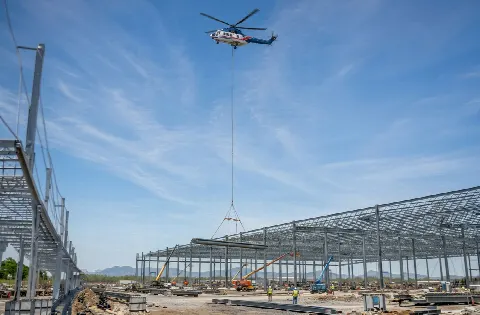
Manufacturing and redevelopment sites may warrant an aerial-versus-ground comparison. The pick plan still starts with certified weight, attachment points, and an approved receiving area.

GRR airspace, current NOTAMs, airport acceptance, and city ground occupancy must be resolved as separate planning tracks.

Nearby controlled airspace and public-space occupancy create different constraints. Both need current review for the tower location.

The metro extends beyond the city boundary, so road, utility, and property jurisdiction must be identified before applying a Grand Rapids permit process.
Grand Rapids Economic Development reports more than 130 international companies and several major headquarters, including BISSELL, Steelcase, and Herman Miller. That supports a local focus on manufacturing, office, and commercial-facility equipment without implying an active lift project.
The city also identifies a major biopharmaceutical cluster and active real-estate redevelopment. Rooftop mechanical work and controlled component placement are plausible planning contexts, but a sector label cannot establish aircraft suitability for a parcel.