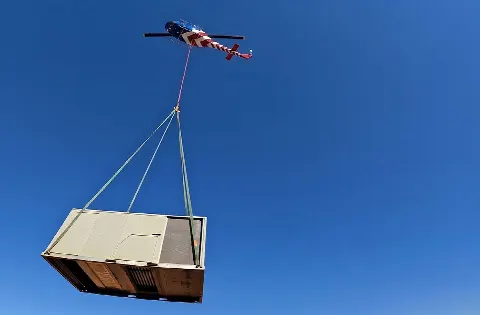
HVAC & Rooftop Units
Compare the roof opening and final unit position with the ground crane footprint. Include the old equipment’s removal path in the same study.
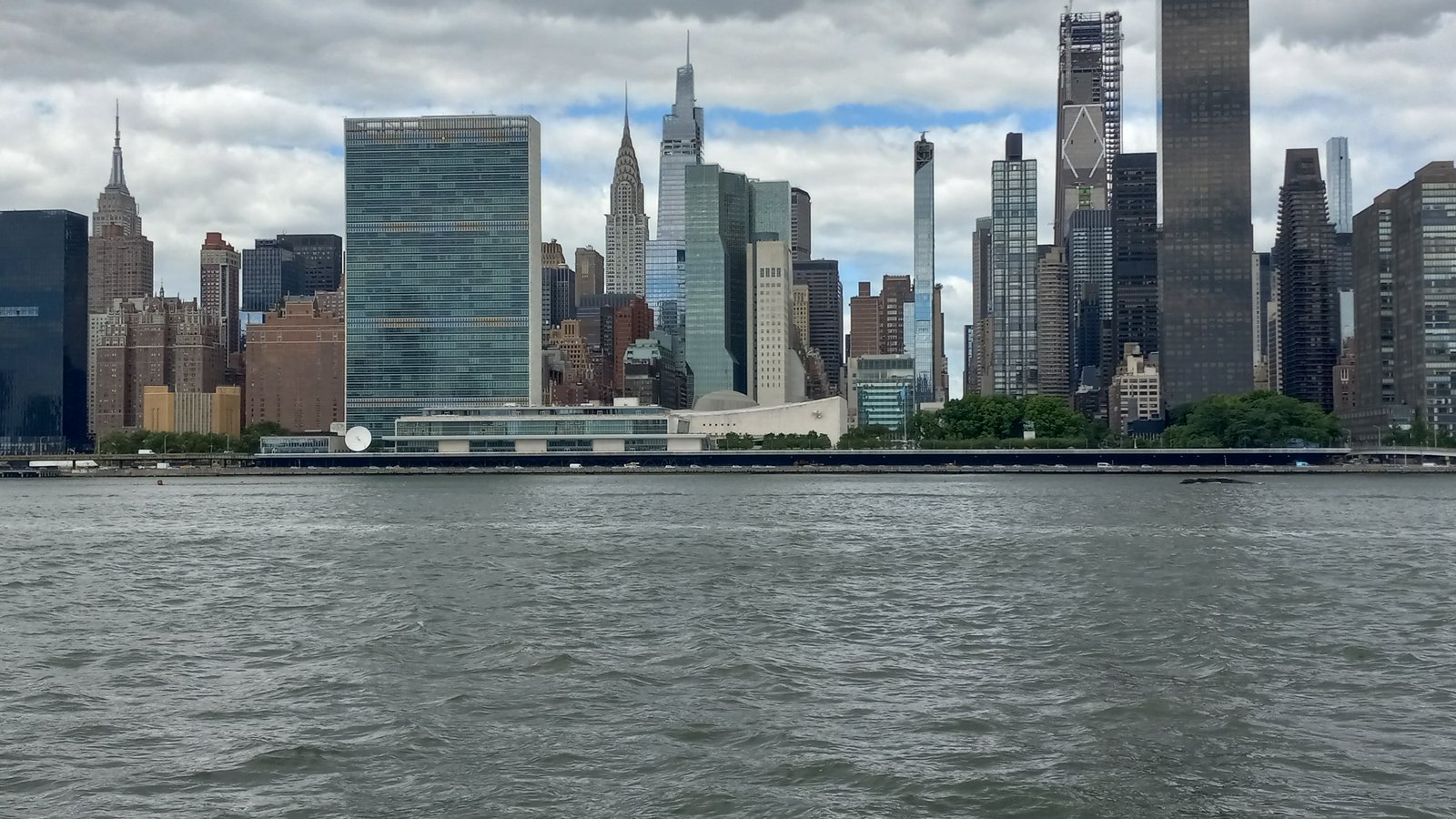
Local lift planning
The rooftop is only one part of the job. Agency review and control of the streets below can set the schedule.
Photo: Kidfly182, CC BY 4.0 via Wikimedia Commons. Cropped and compressed. License terms.
New York City anchors the New York-Newark-Jersey City, NY-NJ metropolitan area. The Census Bureau’s Vintage 2025 estimates put its July 1, 2025 population at 20,112,448, the largest MSA containing New York territory. That whole-metro count includes New Jersey. It determines this guide’s place in the New York location directory; it does not describe the population of the five boroughs or establish demand for helicopter work.
The FDNY helicopter lift permit page specifies an application at least 20 days before the proposed operation and prior Department of Buildings authorization. It also requires daylight VFR conditions. The applicant must schedule a pre-lift meeting at least two weeks before the lift with the owner and city agencies. FDNY inspects the proposed area and can restrict operating days or hours. For planning purposes, the calendar must accommodate those reviews before it can become an aircraft schedule.
Airspace review must reach beyond the building. The September 3, 2026 FAA JFK airport record reports substantial low-level VFR traffic along the shoreline south of JFK and parasail and banner-towing activity in the upper and lower New York bays, including Rockaway Inlet. Those warnings identify traffic to investigate. They do not describe an approved external-load route, and they should not be turned into a generic waterfront shortcut.
A street staging area has its own review. NYC DOT’s street works guidance places construction materials or equipment stored on streets and sidewalks within its Building Operations and Construction Activity permit category. Full roadway closure submissions are due at least 10 days ahead. Treat those published minimums as submission requirements, not a promise that a particular closure will be available. Map the unloading point and pedestrian passage separately from the roof’s receiving zone.
The NWS coastal flood display for the New York forecast area offers tide-cycle forecasts and potential flood-extent overlays. NWS cautions that the extent layers omit effects such as waves and rainfall and do not show water depth. A practical response is to review waterfront access and an alternate staging location together. A clear pickup pad is little use if the support road cannot remain open.
Public protection can change the operation after planning is complete. FDNY’s permit conditions allow the Fire or Police Department to suspend or cancel work when public safety is endangered. The site survey checklist helps keep occupancy, access, and the load path in one record. For the lift-method decision, compare the full crane setup against the complete aerial operation using the helicopter-versus-crane analysis. A helicopter should survive that comparison on the project’s actual constraints.
Compare the roof opening and final unit position with the ground crane footprint. Include the old equipment’s removal path in the same study.
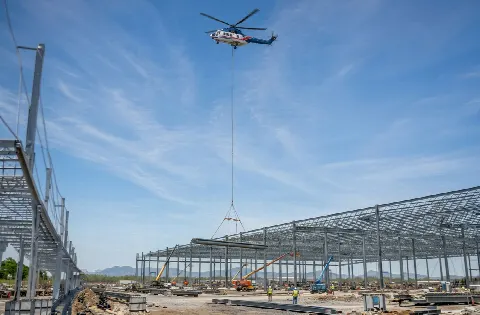
Structural placement needs more than a weight. Establish the assembly’s geometry, pick-point design, and how the receiving crew will secure it.

Keep the airspace review connected to the ground exclusion area. Permission to occupy a street does not establish permission to fly the load route.

For a rooftop mast or antenna concept, document the mounting height and the clearance needed to position the assembly without interference.

A conductor crossing requires a separate control plan. Study the full span and protection below it before judging an aerial method feasible.
Manufacturing sites belong in the discussion alongside high-rise roofs. The city’s industrial and manufacturing program page describes Brooklyn Army Terminal as a 55-acre city-owned campus with more than three million square feet of leasable space for manufacturing, including food production. That is evidence of a substantial industrial setting, not evidence that a helicopter lift is planned there. For a hypothetical equipment replacement, establish the component’s verified weight and final connection points before comparing lifting methods. The external-load operations guide explains the broader operating framework.
Street-side utility work presents a different access problem. NYC DOT’s vault guidance covers construction, alteration, or repair of building and transformer vaults; most vault work also needs DOB approval. Its guidance identifies further review near subway or tunnel entrances. These are underground facilities. Their presence is a reason to verify the support surface and equipment footprint, not to assume that an aerial placement is appropriate. Engineering review must connect the intended set point to the entire ground operation.