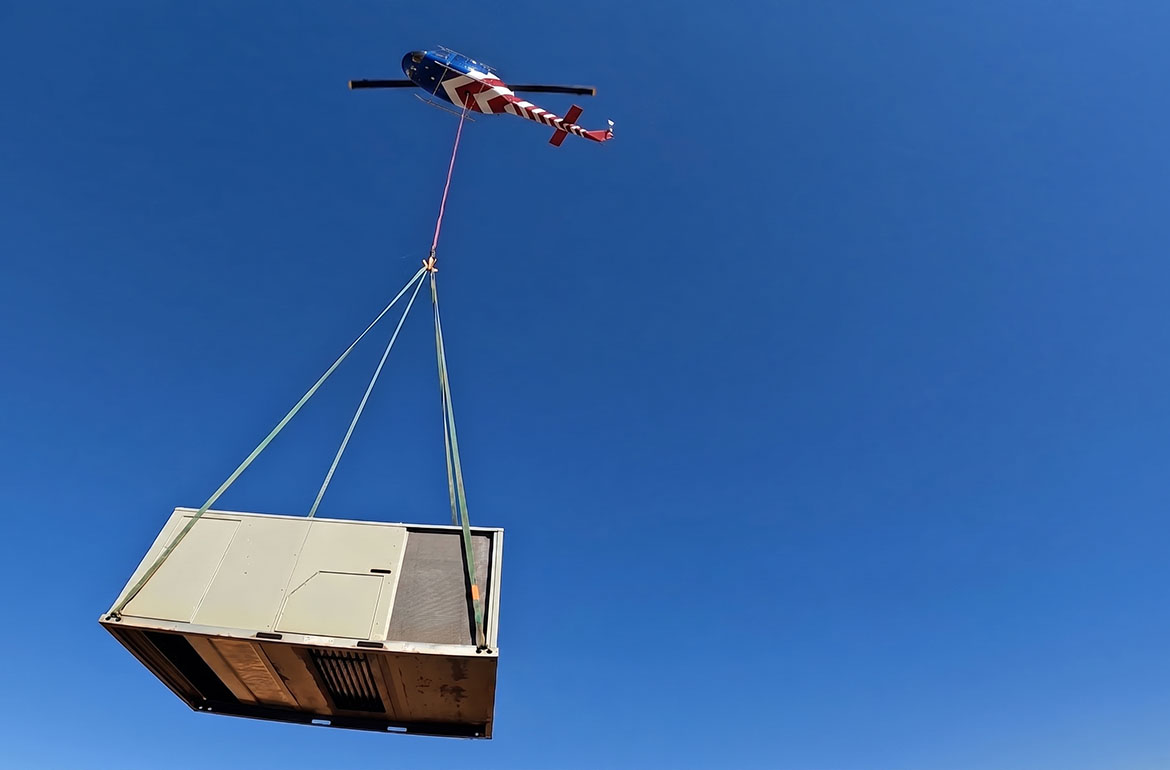
HVAC & Rooftop Units
Healthcare and life-science facilities appear in the city’s industry profile. Rooftop work still needs building authority, occupancy controls, and a separate public-way review when support equipment reaches a street or sidewalk.
Local lift planning
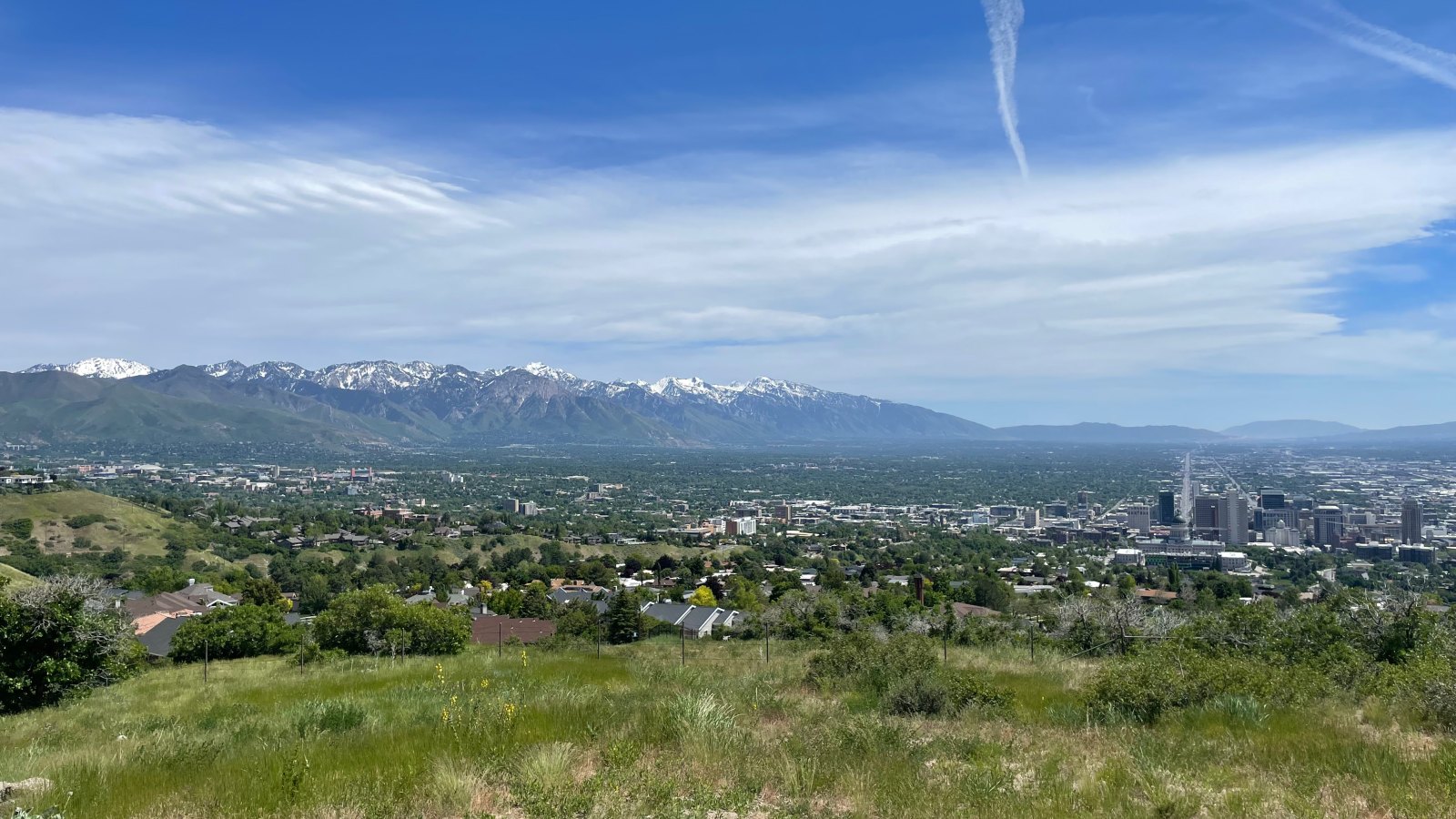
Class B airspace, a 4,231-foot airport, mountain weather, and managed public streets put the flight route and ground footprint under separate reviews.
Photo: GoingsOn-YT, CC0 1.0 via Wikimedia Commons. Cropped, resized, and compressed. License terms.
The Census Bureau Vintage 2025 metropolitan-area table estimates 1,308,377 residents in the Salt Lake City-Murray MSA on July 1, 2025. That whole-area total ranks first among Utah metros and selects this guide. It is not the city population or evidence of lifting demand.
The current FAA Chart Supplement entry for Salt Lake City International places SLC three nautical miles west of the city at 4,231 feet in Class B airspace. Two parallel runways are 12,000 feet long, and Runway 17/35 is 9,596 feet. Those facts establish the airport setting. Exact coordinates, current charts, NOTAMs, and the proposed suspended-load route still control the review. The external-load guide explains the wider operating record.
Salt Lake City public-way permit guidance covers construction that blocks a street, sidewalk, or alley. Work affecting streets, sidewalks, or bike lanes can also require a traffic-control permit and Construction Traffic Management Plan. Fix the support footprint before assigning equipment positions.
The FAA supplement describes Class B operations and peak-period delay windows. It also carries a note that Runway 14/32 was scheduled for decommissioning in June 2026 while still listing the runway. Current airport data and NOTAMs must settle that inconsistency before the runway is treated as available.
The National Weather Service Salt Lake City Climate Book publishes temperature, precipitation, and snow records for the city. Climate history supports heat, cold, and snow decision points, but it is not a work-date forecast or an aircraft limit. At this elevation, the density-altitude review belongs near the start of planning.
UDOT oversize and overweight provisions require a permit before an over-limit vehicle or load operates in Utah. The permit must be carried in the vehicle. Helicopter placement does not remove the delivery question before a component reaches staging.
Healthcare and life-science facilities appear in the city’s industry profile. Rooftop work still needs building authority, occupancy controls, and a separate public-way review when support equipment reaches a street or sidewalk.
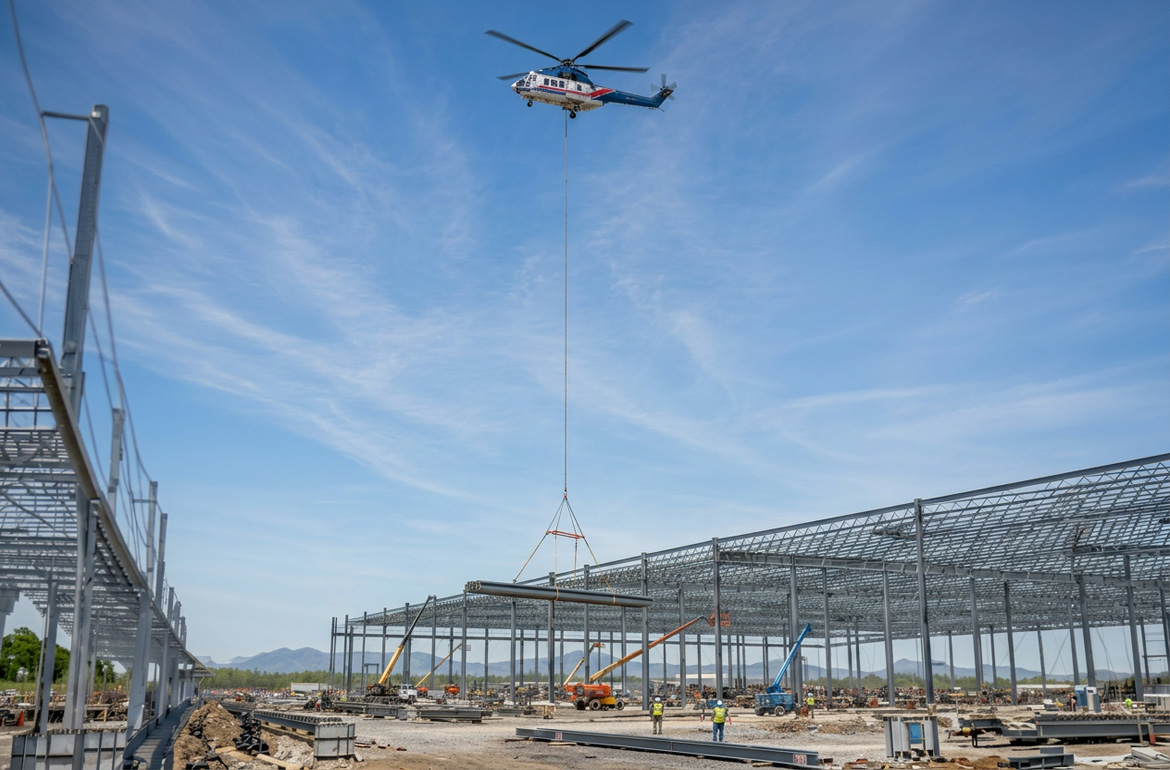
Manufacturing and distribution facilities can present equipment or structural placements. Certified weights and the full over-road delivery route belong in the comparison before the receiving area is treated as accessible.
Salt Lake City International sits in Class B airspace west of downtown. Exact coordinates, current charts, obstacles, NOTAMs, and the proposed route need one aviation review.
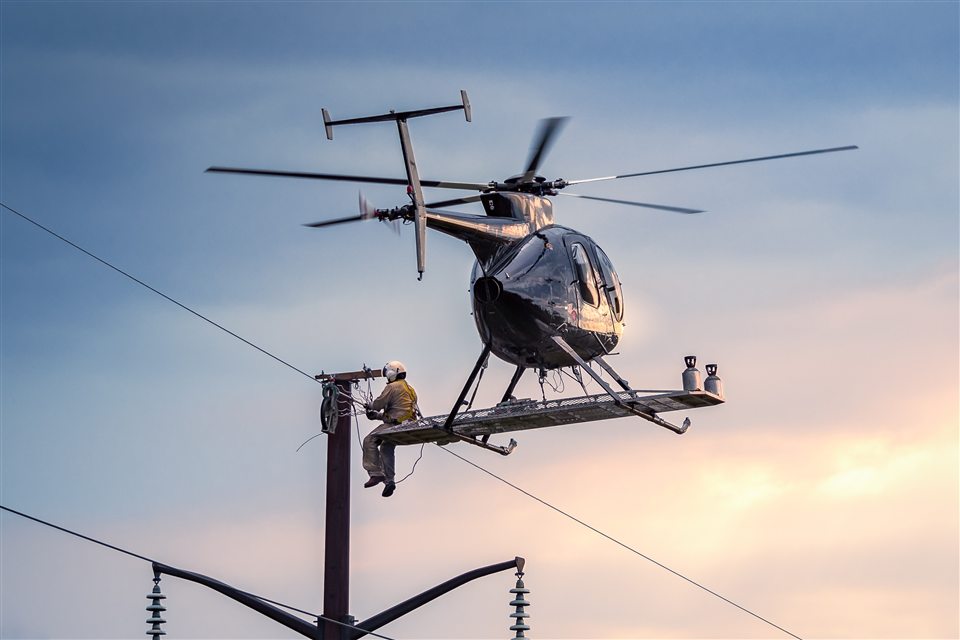
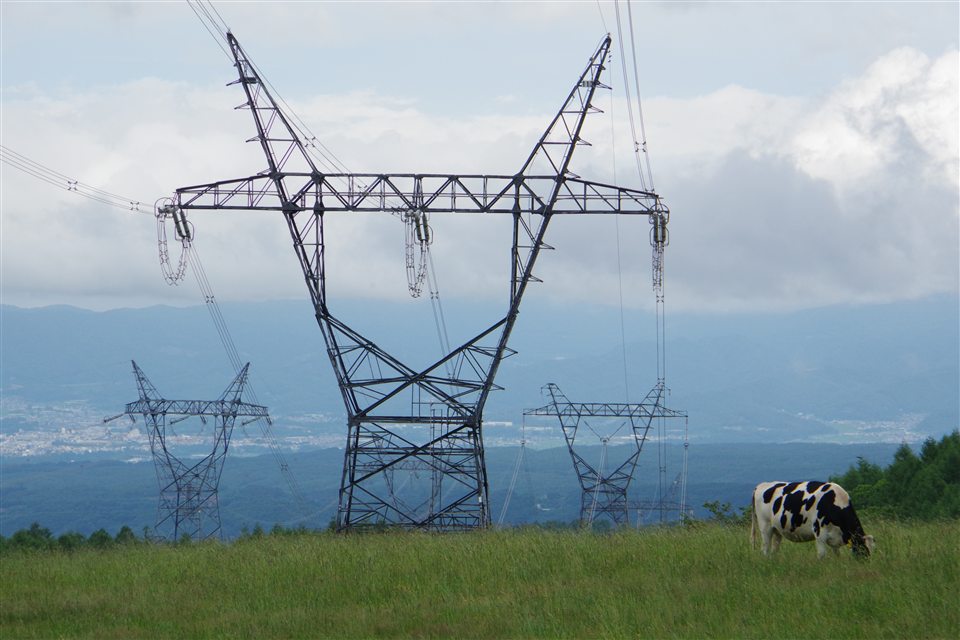
Mountain-front utility routes can change elevation quickly while crossing several land and road authorities. Map pickup access, set-point access, and public-way effects separately.
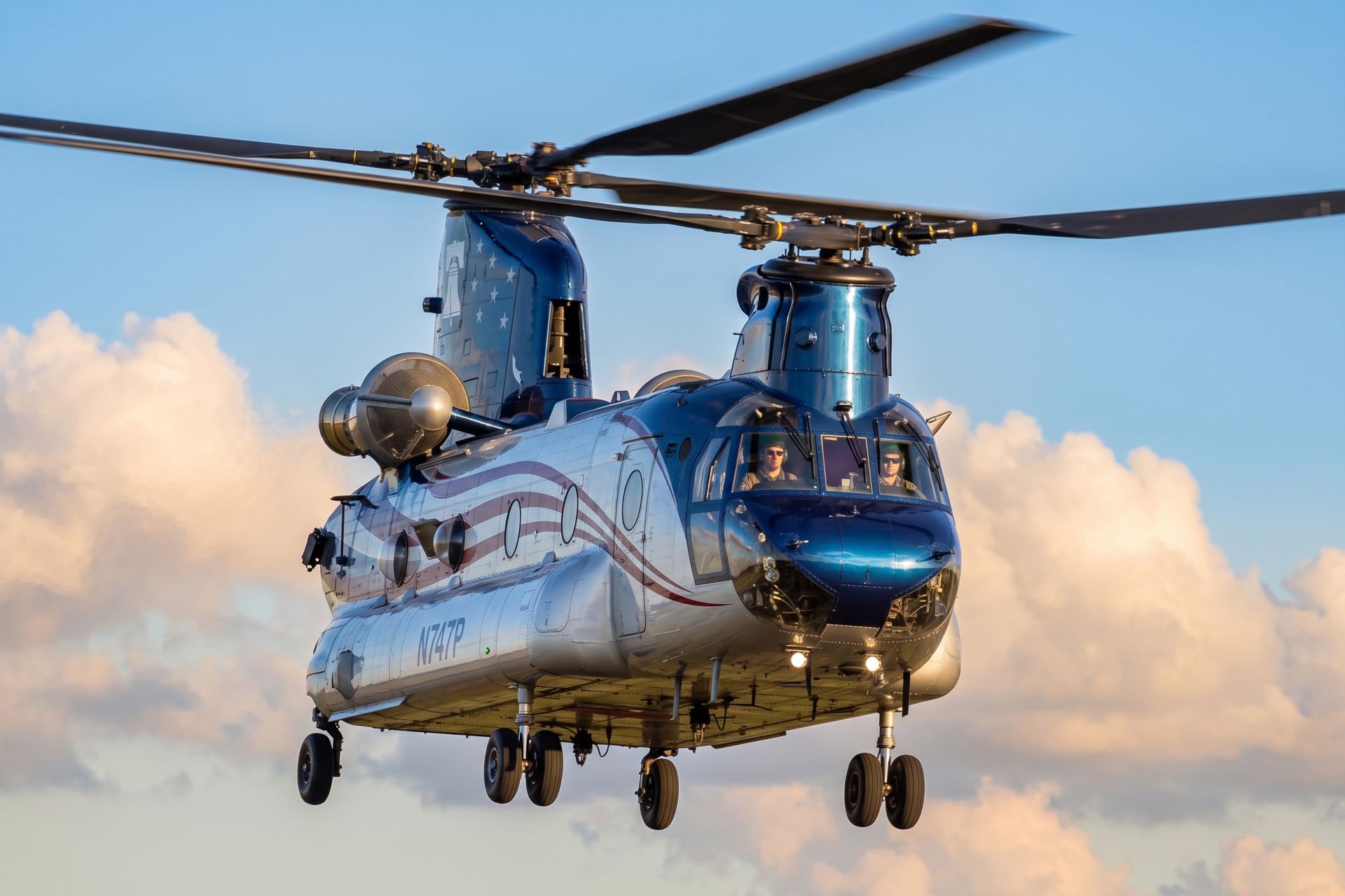
Snow, temperature extremes, and mountain weather can affect routes differently across the valley. Current forecasts, road conditions, incident authority, and a controlled work area govern the response plan.
Salt Lake City identifies logistics and manufacturing among its business-development industries and describes the area as an air, ground, and rail distribution hub. Warehouse systems and plant equipment are useful local planning examples, but the city profile does not establish a pending project or access to a named facility.
The same city industry profile includes life sciences and healthcare. Work at an occupied campus needs building authority, documented equipment data, and a controlled area below the load. The site-survey checklist keeps the air route and ground boundaries in one field record.