
HVAC & Rooftop Units
Hotels, venues, and institutional roofs can require strict control of guest circulation, emergency access, and street occupation.

Local lift planning
Four-runway airport traffic, a long lightning season, and heavily used public spaces demand exact control of both the air route and the ground below.
Photo: JER3L1337, CC BY 4.0, via Wikimedia Commons. Cropped, resized, and compressed under CC BY 4.0.
The Orlando-Kissimmee-Sanford metro ranks third in Florida at 2,957,672 residents in the Census Vintage 2025 workbook. Orlando is the representative city, but the metro’s airports, visitor districts, industrial sites, and road authorities extend across several jurisdictions.
The current FAA Orlando International airport diagram shows four parallel north-south runways. It assigns separate tower frequencies to the 17/35 and 18/36 runway pairs plus east and west ground-control frequencies. Work near MCO needs early coordinate and height screening against current aeronautical information.
The City’s right-of-way permit guidance covers work in streets, under sidewalks, and in grassed public areas. It warns that some rights-of-way belong to FDOT or a county, and a street or sidewalk closure requires a separate request. That split makes the permit jurisdiction guide directly relevant before a public-ground plan is treated as complete.
NWS Melbourne identifies central Florida as the country’s most active lightning hotspot in its lightning safety statement. Thunderstorms occur almost daily from mid-May through mid-October as sea-breeze boundaries form and collide. Lightning can strike more than ten miles from a storm, and outdoor work should wait 30 minutes after the last thunder before resuming.
The agency’s 2026 hurricane and flooding guidance identifies damaging wind and tornadoes as tropical-system hazards, with downed power lines, debris, and flooded roads among common post-storm dangers. A recovery plan still needs safe access, stable staging, and a current aviation picture.
Orlando’s right-of-way process requires approved permits, stamped plans, and applicable Sunshine 811 clear-locate records at the site. A city permit does not approve a separate road closure or work in another agency’s right-of-way.
Hotels, venues, and institutional roofs can require strict control of guest circulation, emergency access, and street occupation.
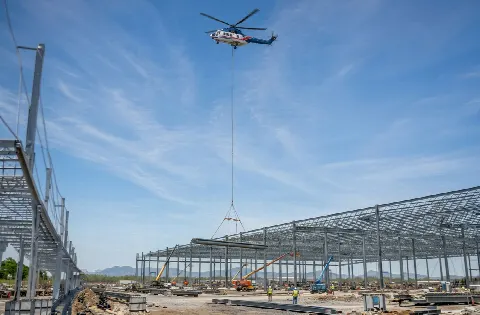
Venue and campus construction may create short placement tasks where public access and the four-runway airport environment shape timing.
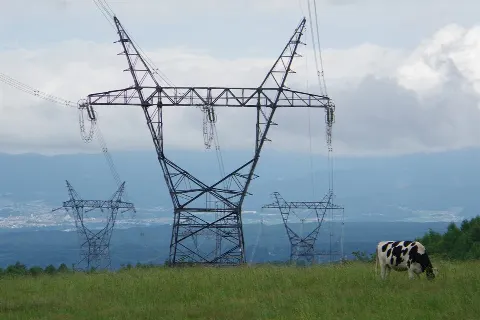
Communication work across the metro must account for MCO, reliever airports, published obstacles, and the exact work coordinates.

Occupied visitor districts reward disciplined load control, but the exclusion zone and contingency route remain nonnegotiable.

Lightning, tropical wind, flooding, and debris can damage infrastructure while closing the same roads and staging areas needed for recovery.
The City’s draft 2026-2030 Consolidated Plan summary identifies aerospace and defense, including the regional modeling and simulation cluster, as part of Orlando’s economic base. This is draft planning evidence, not a claim that any named facility has a lift project.
The same draft City plan describes arts, entertainment, and accommodations as foundational to the economy. Large venues, hotels, and visitor campuses create rooftop and infrastructure contexts where public circulation may control the schedule.