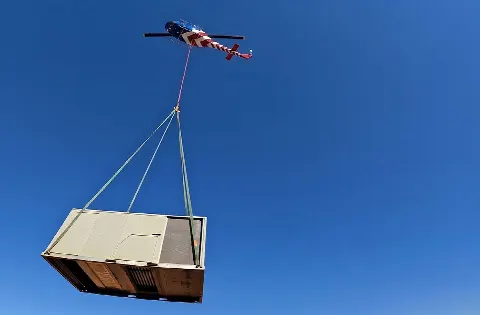
HVAC & Rooftop Units
Healthcare, retail, and institutional buildings carry the rooftop plant most likely to need replacement in a low-rise metro.

Local lift planning
A very large low-density city, a river corridor that limits crossings, and Class D airspace at the county field put access and airspace under one review.
Port St. Lucie represents its own single-county MSA, tenth among Florida metros at 568,721 residents in the Census Bureau’s Vintage 2025 estimate. It is one of the largest cities in the state by land area while remaining overwhelmingly low-rise, which shapes both the work available and the way ground crews reach it.
The metro field is Treasure Coast International at Fort Pierce. The current FAA FPR Chart Supplement page lists three runways, the longest 6,492 by 150 feet, with Class D airspace and ARFF Index B. Port St. Lucie sits south of that surface area, so airspace review depends on the actual site coordinates rather than the city name.
The North Fork of the St. Lucie River and its preserve corridor divide the city, and crossings are limited. As in other water-divided Florida metros, drivable distance can considerably exceed straight-line distance, which is the comparison the crane-versus-helicopter cost guide is designed to make explicit.
Port St. Lucie falls inside the NWS Melbourne forecast area on Florida’s Atlantic coast. The National Hurricane Center’s tropical cyclone climatology places the Atlantic season from June through November with peak activity in late summer, and the Treasure Coast has taken direct landfalls. Late-season lift windows deserve contingency dates.
The FAA FPR airport page notes trees on multiple runway ends and advises VFR training aircraft outside Class D airspace to broadcast intentions. That establishes an active general-aviation training environment, which is a traffic-density consideration for any nearby operation.
Florida’s convective season brings frequent afternoon thunderstorms and lightning statewide, as the National Weather Service describes in its Florida rainy-season guide. Short-range weather review is required through the warm months regardless of which coast a site sits on.
Healthcare, retail, and institutional buildings carry the rooftop plant most likely to need replacement in a low-rise metro.
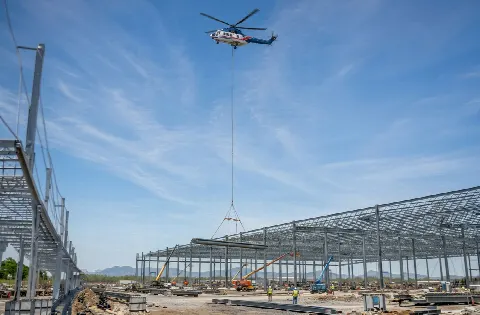
River and preserve crossings can involve components whose access route deserves a direct aerial-versus-ground comparison.
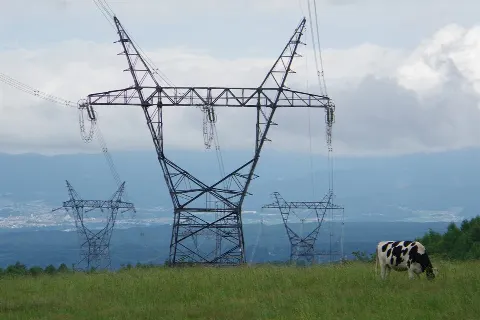
Class D operations at the county field and a training-heavy traffic environment make current route review necessary.

Preserve and waterway corridors require verified weights, protected ground, and careful load control.
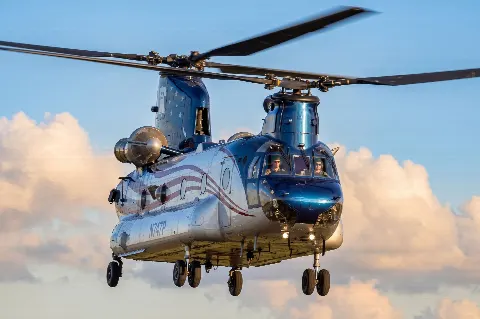
Atlantic landfalls can damage infrastructure while flooding and limited river crossings restrict ground access.
St. Lucie County publishes development and permitting information through its county government. In a metro dominated by residential and light commercial construction, the recurring lift-relevant work is rooftop mechanical plant on healthcare, retail, and institutional buildings rather than heavy industrial components.
Utility and drainage infrastructure crosses preserve land and water where ground access is deliberately restricted. Structures set in those corridors still require verified weights and engineered pick points, as set out in the Part 133 external load reference.