
HVAC & Rooftop Units
Plant and distribution buildings can present rooftop equipment work. Verified weight, shutdown limits, and the public-space footprint remain site-specific.

Local lift planning
A cargo airport, active plant investment, and industrial redevelopment meet city streets where staging and oversize moves require permits.
Photo: WMrapids, CC0, via Wikimedia Commons. Cropped, resized, and compressed.
Census Vintage 2025 estimates the Flint metropolitan area at 401,093 residents. The whole-metro figure places Flint fourth in the Michigan set and is not a city-only population count.
The current FAA Chart Supplement places Bishop International Airport four miles southwest of Flint at 782 feet elevation. It lists two 150-foot-wide paved runways, continuous attendance, and Jet A. Current airport approval and aircraft fit remain project-specific.
Flint’s industrial context includes announced investment at Flint Assembly and Flint Metal Center plus planned light-industrial distribution at the former Buick City site. Operating plants and redevelopment parcels require different access and shutdown plans.
The FAA entry lists deer and birds on or near the airport, a FNT NOTAM file, and time-bounded Class C service. Published dimensions and facilities do not replace current NOTAMs, airport instructions, permission, or a route review for the actual site.
An NWS monthly summary gives Flint a normal December snowfall of 11.4 inches and recorded a 55 mph peak gust in December 2025. The month is a narrow historical sample, not an annual wind baseline. The weather and performance guide explains why current conditions control.
Flint requires a permit before closing or blocking a city street. Oversize equipment movements and stationary items that impede public right-of-way also need special-use review. Street control does not settle property, utility, or aviation authority.
Plant and distribution buildings can present rooftop equipment work. Verified weight, shutdown limits, and the public-space footprint remain site-specific.
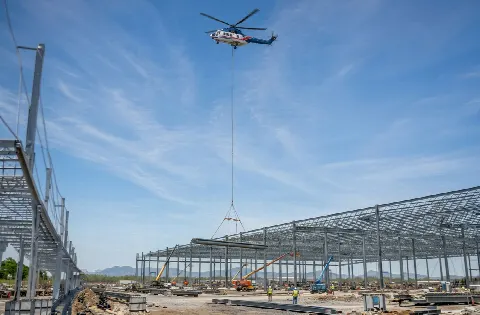
Industrial redevelopment and plant modifications may involve structural components. Current construction phase and receiving-zone access govern the comparison.

Bishop airport traffic, cargo-facility permission, city street control, and current NOTAMs remain separate planning gates.

Winter gusts, airport traffic, and the actual obstacle environment require current weather and route review.

Flint requires permits for street blockage and oversize equipment. Utility and private-property authority must be identified along the full alignment.
The city’s 2023 report describes plant investment in body-shop expansion, paint systems, tooling, conveyors, and press equipment. Those are concrete industrial systems, though the report records announcements rather than proof that every project is complete.
Bishop International reports FedEx and FedEx Ground facilities on airport property. Cargo infrastructure supplies regional context, not staging permission. The ground-crane comparison keeps airport proximity from becoming a method decision by itself.