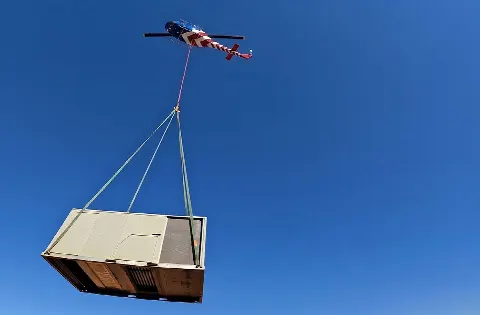
HVAC & Rooftop Units
Industrial and commercial roofs need verified unit weight, receiving capacity, winter access, and a protected ground route.

Local lift planning
Western North Dakota puts highway access, winter exposure, and active industrial land use into the same planning problem.
Photo: Andrew Filer, CC BY-SA 2.0 via Wikimedia Commons. Cropped, resized, compressed, and distributed under the same license. License terms.
North Dakota has only four metropolitan statistical areas in the Census Bureau’s Vintage 2025 workbook. The directory therefore uses the 2020 Census urban-area table for one consistent five-place ranking. Williston is fifth at 29,510 residents. This whole urban-area count selects the guide and does not measure city demand.
Williston Basin International Airport is nine miles northwest of the city at 2,356 feet elevation. The current FAA North Central Chart Supplement lists a 7,503-by-150-foot grooved concrete runway and a second 4,502-by-75-foot grooved concrete runway. It also reports bird and deer activity and periods when surface conditions are not monitored. Current charts, NOTAMs, weather, and exact coordinates still control.
Williston’s official zoning ordinance places contractor yards, freight terminals, public utilities, heavy manufacturing, pipe yards, and extraction-related uses in defined industrial districts. Oil and gas applications require detailed site-plan information. These rules identify the industrial setting. They do not prove that any listed parcel needs aviation support.
The National Weather Service winter-weather criteria distinguish outlooks, watches, and warnings by timing and confidence. For western North Dakota, a blizzard warning means sustained wind or frequent gusts of at least 35 mph with visibility below one-quarter mile for three hours or more. An extreme cold warning uses a wind-chill threshold of minus 40 degrees Fahrenheit. Current observations and forecasts must set the work window.
North Dakota’s Highway Patrol e-permit guidance handles single-trip oversize and overweight movements. A single-trip permit is valid for one load movement up to five days. Its special-mobile-equipment category includes cranes and concrete pumps. Determine whether support equipment or the load needs a highway permit before selecting a staging plan. That permit is separate from aviation authority.
XWA combines wildlife cautions with daily periods when field conditions are not monitored. Industrial sites may add pipe storage, extraction traffic, or restricted internal roads. Verify the pickup and receiving surfaces in person, protect the full ground path, and compare Minot separately because its river, airport, and military constraints differ.
Industrial and commercial roofs need verified unit weight, receiving capacity, winter access, and a protected ground route.
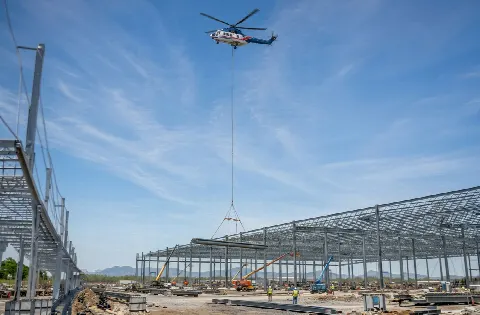
Pipe-yard and manufacturing work requires confirmed member weights, pickup geometry, site traffic control, and an exact set sequence.
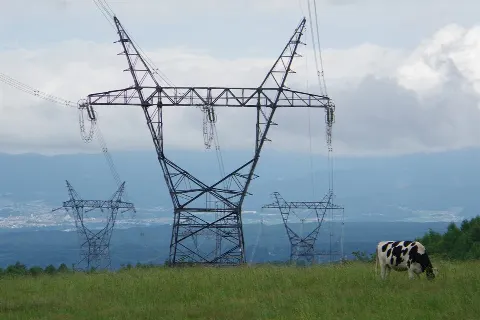
Airport wildlife cautions, field-monitoring hours, current obstacles, and western weather all belong in the route review.

Energy-corridor work needs verified conductor control, highway access, public-space authority, and exclusion-zone protection.
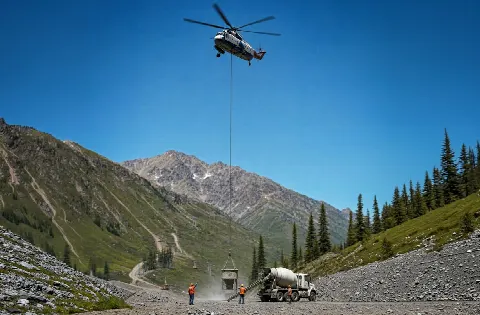
Extraction and aggregate sites require current surface conditions, loose-material control, haul-road review, and measured load data.
Williston zoning expressly accommodates pipe yards, extraction activity, heavy manufacturing, and contractor facilities. At a real site, document load weight, rigging points, production boundaries, and the receiving surface before evaluating industrial construction methods.
The regional highway-permit system matters when cranes, concrete pumps, transformers, or other large support equipment must reach a remote property. Compare road delivery limits with remote-site freight planning only after confirming the entire ground route and actual load data.