
Helicopter placement of a rooftop generator or chiller starts with the weight and lifting points of each piece as it will fly. The roof must be ready to receive it. In one documented generator installation, an 18 metric ton system reached the roof in five separate lifts.
The equipment schedule needs a weight for each lift
A generator's electrical output and a chiller's cooling capacity help specify the equipment. The lift team needs a different set of numbers. Start with the exact unit, its dimensions and the documented weight of the configuration that will leave the ground. Account for the enclosure, base and accessories that stay attached. Identify shipping fixtures that come off and any lifting hardware that goes up with the equipment.
A pickup weight and a roof design weight can differ. The pickup weight describes the equipment as rigged for the lift. The roof supports the installed equipment, which may include fluids, accessories and framing added later. Keep those two configurations visible in the schedule. The load-weight documentation guide shows how to resolve discrepancies before they reach the operator.
| Decision | Generator | Chiller |
|---|---|---|
| Define the pickup | Confirm which base, enclosure, cooling and exhaust pieces travel with the set. | Confirm the exact model, transport hardware and the fluid condition for the move. |
| Check the attachment | Match the package's lifting drawing to the delivered assembly. | Match the unit's lifting diagram and balance information to its delivered configuration. |
| Prepare the landing | Match the support and isolator locations to the installed base. Confirm access for exhaust and electrical connections. | Match support points and service clearances to the selected unit. Confirm space for piping and airflow. |
| Restore service | Plan for connections and testing before relying on standby power. | Plan the piping and electrical work before the cooling outage can end. |
Planning questions for the specific equipment and structure. The equipment manufacturer, structural engineer and flight operator resolve their respective checks.
A generator system may arrive in several pieces
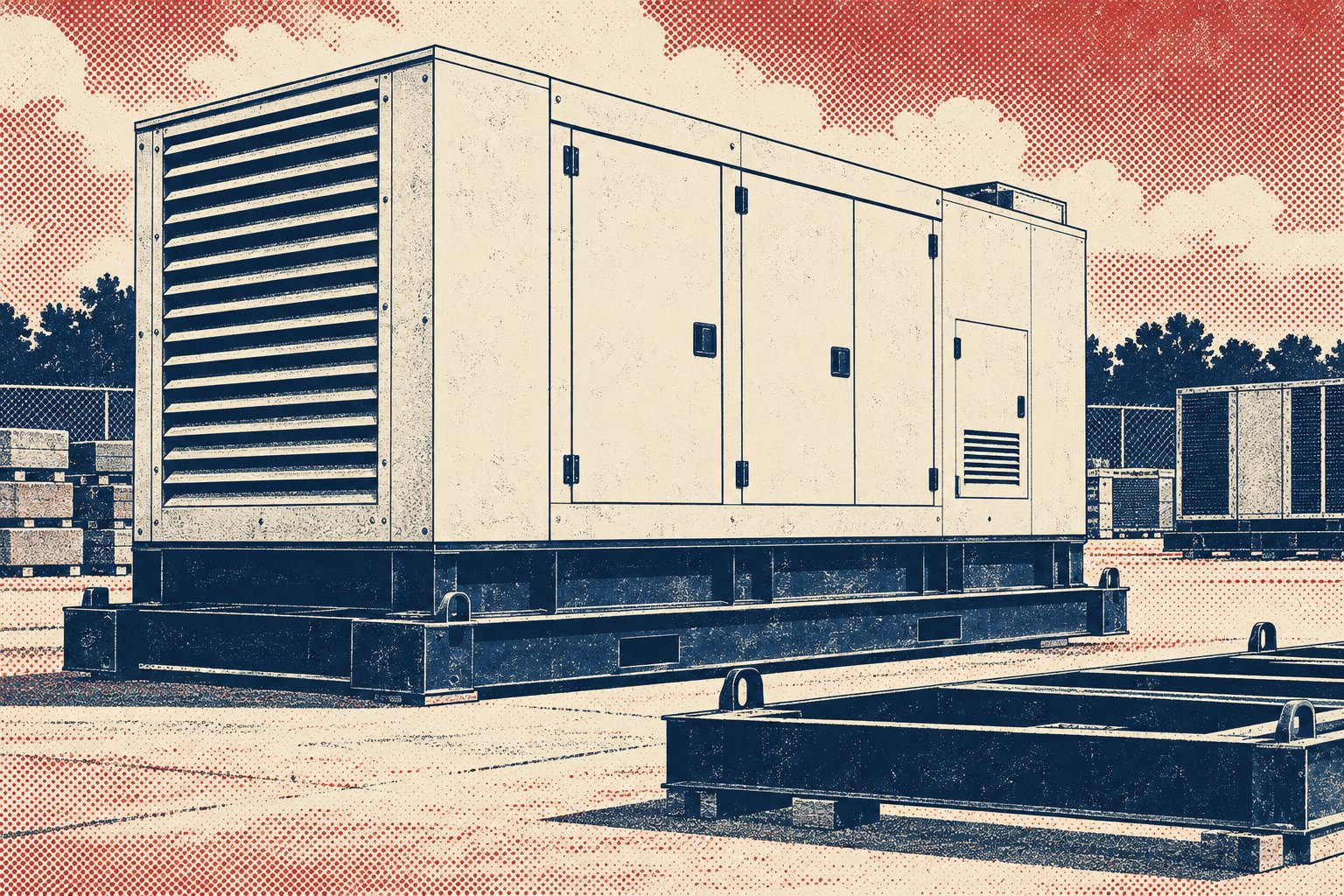
Helirig reports lifting an 18 metric ton standby generator system onto the Birmingham government hub in the United Kingdom. The base, generator, housing and two sound attenuators went up separately. An attenuator reduces noise through an air opening. The heaviest of the five pieces weighed 4,500 kilograms, about 9,920 pounds. The project team identified basement structures beneath the surrounding area as a constraint on crane support. Helirig project account.
That split changes what has to be ready on the roof. The base must be in position before the components that depend on it. Each piece needs a verified weight, balance and approved lifting arrangement. The manufacturer and installation team need to establish what can be separated and reassembled, especially when a delivered package was designed to move as one assembly. The lift plan should identify each piece in installation order so that staged equipment stays accessible when it is needed.
Use the chiller drawing for the actual model
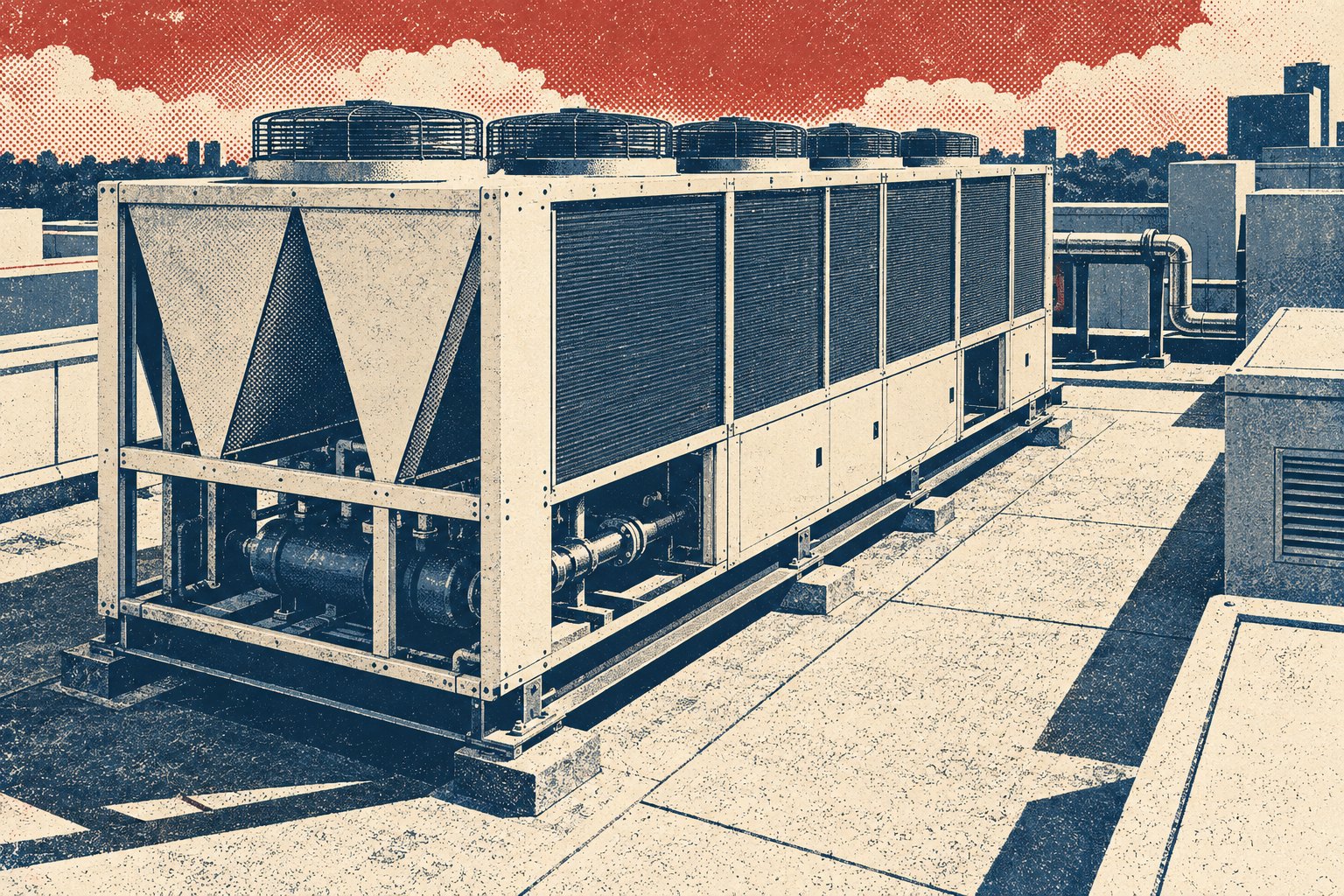
A chiller's center of gravity, the point around which its weight balances, may sit away from its geometric center. Trane provides shipping weights and center-of-gravity information in its installation manuals for the equipment covered by its lifting bulletin. Those values belong with the matching equipment drawing and the actual delivered condition. A replacement model can change the support spacing as well as the weight. Trane lifting bulletin.
Carrier reports removing two existing chillers and placing two new AquaSnap units at the London Hilton Metropole. The original crane concept raised a bearing concern because the road ran above an Underground line. The supplier describes a separate aviation planning process before the helicopter work. The case illustrates how the ground beneath the crane can govern the method choice even when the equipment and destination are both known. Carrier project account.
Compare the crane and the aircraft at the real site
The ground crane is the baseline where it fits. Check reach at the proposed radius and whether the setup can be supported. For the helicopter, the operator evaluates the complete suspended weight with the specific aircraft and the conditions expected during the work. Temperature and elevation affect density altitude, a way to express how thin the air is relative to standard conditions. A workable lift must also fit the route between staging and roof. The guide to density altitude and usable payload explains why a published hook figure cannot settle that calculation.
For qualifying U.S. operations over congested areas, 14 CFR 133.33(d) sets aircraft eligibility and requires the operator to coordinate and obtain approval of an operating plan from the responsible Flight Standards office. The plan includes the local agreement to exclude unauthorized people and a chart of routes and altitudes. Site access and local permits also belong on the project calendar. 14 CFR 133.33.
14 CFR 133.33 Congested area plan
Get the supports and the outage ready before dispatch
The structural review needs the installed loads at the actual support points. A temporary landing location or a partially assembled base may put load into a different part of the roof. The installation team should confirm that the supports and access match the plan before the aircraft arrives. The rooftop readiness checklist covers the handoff between the delivery crew and the people receiving the load.
Placement and service restoration have separate finish times. A generator still needs connections and testing. A chiller still needs the planned piping work and startup. Put those activities on the outage schedule and identify how service will be maintained if the lift moves to another day. The mobilization planning guide explains how to keep a backup window usable.