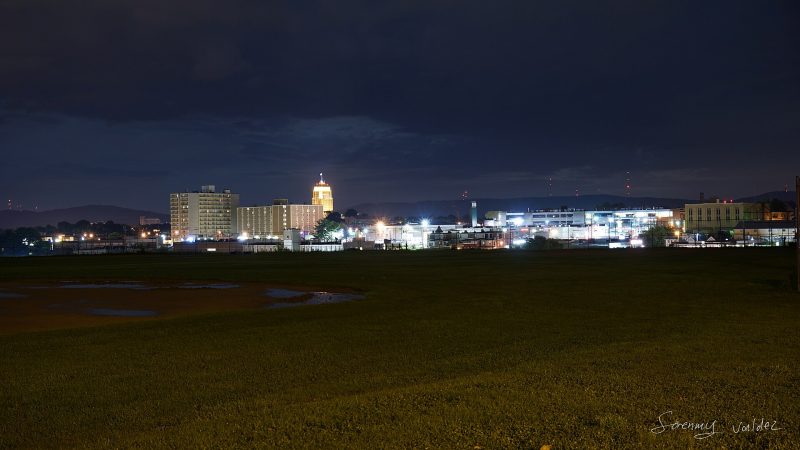
Allentown
Crossing runways, a growing cargo gateway, and city crane permits put flight coordination and the support footprint on the same drawing.
State field guide
Pennsylvania’s five guides follow the Census Bureau’s Vintage 2025 metropolitan estimates. Philadelphia-Camden-Wilmington ranks first among metropolitan areas containing Pennsylvania territory at 6,329,118 residents, followed by Pittsburgh at 2,421,992, Allentown-Bethlehem-Easton at 887,615, Harrisburg-Carlisle at 617,427, and Scranton--Wilkes-Barre at 574,418. Lancaster ranks sixth at 563,159. The whole-area counts select the guides. They do not measure city population or lifting demand.
Philadelphia-Camden-Wilmington includes territory in New Jersey, Delaware, and Maryland. Allentown-Bethlehem-Easton includes New Jersey territory. Each guide uses a Pennsylvania city as its editorial anchor and keeps population evidence separate from site authority, aviation review, load data, and access.
Crossing runways, a growing cargo gateway, and city crane permits put flight coordination and the support footprint on the same drawing.

A long runway, a flood-sensitive riverfront, and split city-state property control make authority mapping an early task.

Class B airspace, two working rivers, and a city permit category written for helicopter lifts leave little room for an improvised ground plan.

Two airport systems, steep riverbanks, and a working inland port make the route below the helicopter as important as the route through the air.

Steep airport terrain, valley freight routes, and a separate state right-of-way process make site access an aviation issue and a ground issue.
From the technical library