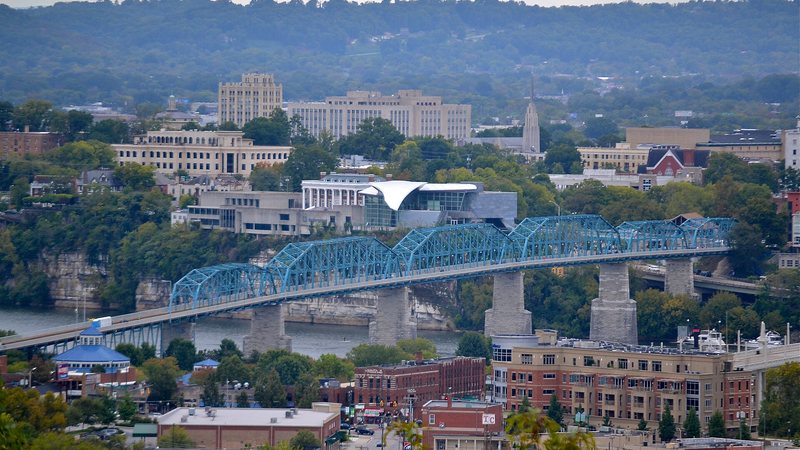
Chattanooga
Chattanooga sits in a valley crossed by ridges, a major river, and industrial transport corridors. Short ground miles can hide a terrain break or a public right-of-way problem.
State field guide
Census Bureau Vintage 2025 estimates identify the five largest metropolitan statistical areas containing Tennessee territory as Nashville-Davidson--Murfreesboro--Franklin, Memphis, Knoxville, Chattanooga, and Clarksville. Whole-area totals are used, including territory outside Tennessee in the Memphis, Chattanooga, and Clarksville metropolitan areas.
Nashville ranks first at 2,197,416 residents, followed by Memphis at 1,341,412, Knoxville at 968,137, Chattanooga at 594,530, and Clarksville at 349,001. These estimates select the guides. They do not measure lifting demand. Each guide treats airport context, weather, access, and property authority as separate questions.
Chattanooga sits in a valley crossed by ridges, a major river, and industrial transport corridors. Short ground miles can hide a terrain break or a public right-of-way problem.
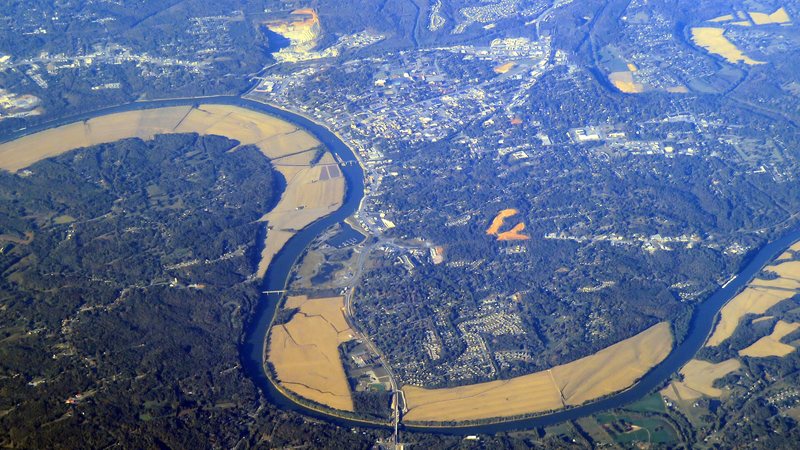
Military and civilian training share the local airport environment, while the Cumberland River puts bank condition and drainage into ground planning.

McGhee Tyson’s Class C airspace lies south of a river city between two mountain ranges. Flight routing and ground access need to be worked out together.
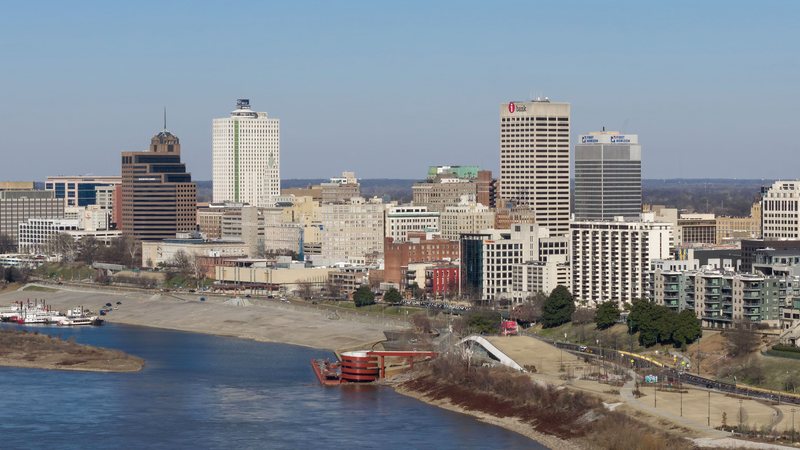
Memphis puts airport, rail, highway, and river freight into one tight map. That concentration helps deliveries move but multiplies the active corridors a lift plan must separate.
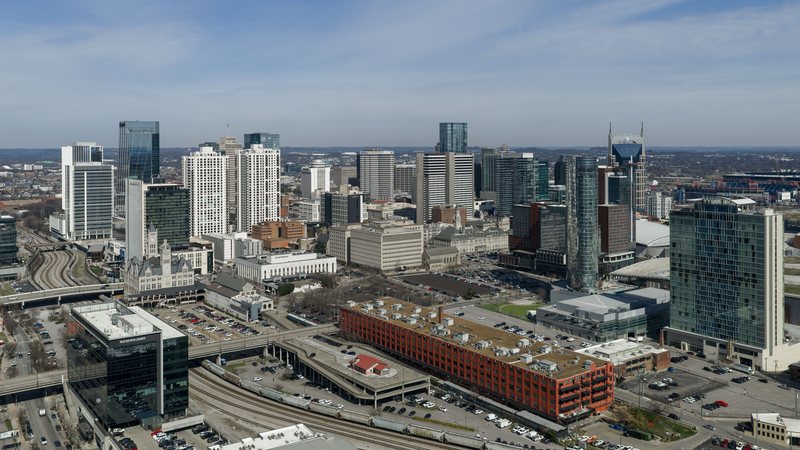
Nashville combines busy Class C airspace with fast-changing streets and industrial parcels. The route above the city and the route into staging need separate checks.
From the technical library